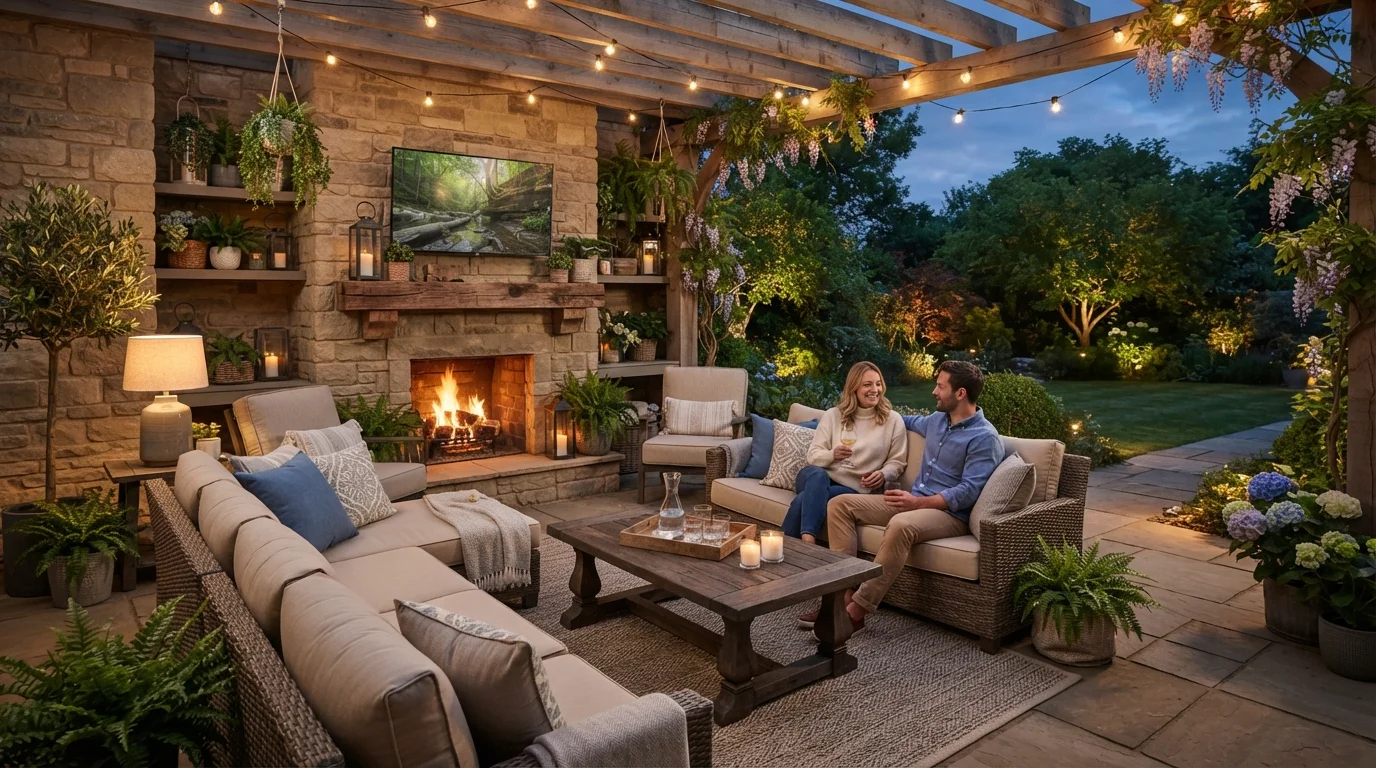
Your backyard holds more potential than a patch of grass and a rusty grill. Imagine stepping outside onto a space that feels as comfortable, styled, and functional as your favorite sofa setup indoors. With a few strategic choices, you can create an outdoor living room that rivals—and maybe even surpasses—your interior lounge.
Whether you crave morning coffee in the sun or evening cocktails under string lights, this guide walks you through every layer: from flooring and furniture to lighting and tech. Let’s build a room without walls that you’ll never want to leave.
1. Start With a Solid Foundation: Flooring That Works
Before you place a single cushion, think about what lies beneath your feet. The ground defines the room’s boundaries and sets the tone. Swap bare grass or cracked concrete for materials that blend durability with style.
Large-format porcelain tiles mimic natural stone without the maintenance. For a softer feel, consider weatherproof carpet tiles or interlocking deck tiles made from recycled wood composites. Your choices should always prioritize slip resistance and drainage.
Need layout inspiration? Check out our guide on space planning for more ways to divide an open area into distinct zones. A defined “floor” instantly makes the outdoors feel intentional.
2. Furniture That Fights the Elements (and Looks Good Doing It)
Your indoor sofa would suffer after one rainstorm. The solution? purpose-built outdoor furniture crafted for sun, wind, and moisture. Look for quick-dry foam cushions wrapped in solution-dyed acrylic fabrics. They resist fading, mildew, and stains.
Aluminum and powder-coated steel frames stay rust-free for years. Teak and eucalyptus offer natural oil resistance without chemical sealants. Mix a deep-seated sofa with swivel chairs and a sturdy coffee table to create conversation clusters.
For a budget-friendly alternative, consider all-weather wicker. It’s lightweight, easy to move, and available in neutral tones that match any patio design ideas you have in mind.
3. Define Zones With Rugs, Screens, and Greenery
An outdoor living room needs anchors. An indoor-outdoor rug—made from polypropylene or recycled plastics—instantly warms the space. Choose a pattern that hides dirt and ties your color scheme together.
Use freestanding screens, lattice panels, or tall planters to create partial walls. This trick blocks wind, adds privacy, and visually separates the lounge from the cooking or dining area. Bamboo screens also introduce a natural texture that softens hard edges.
Strategically placed pots with evergreen shrubs or ornamental grasses add vertical interest without overwhelming the footprint. Layer in trailing plants like ivy or petunias for a lush, nested feel. For more inspiration on blending nature with structure, browse our garden design section.
4. Light It Like a Living Room: Three-Layer Lighting
Your indoor lounge probably uses ambient, task, and accent lighting. Apply the same principle outdoors. String lights or a cantilever umbrella with built-in LEDs provide ambient glow. Solar pathway lights guide the eye and mark edges.
For task lighting, place waterproof LED lanterns on side tables or a floor lamp near your reading chair. Accent lighting can highlight a specimen tree, a water feature, or architectural details. Dimmers and smart plugs give you control from your phone.
Pro tip: battery-operated flicker-free candles are safe, wind-resistant, and create the same ambiance as real fire without the smoke. They’re especially useful for smaller spaces like balconies.
5. Bring the Indoors Out With Textiles and Accessories
Layering is everything. Add weatherproof throw pillows in varying sizes—mixes of solid and patterned covers keep things fresh. Store them in a waterproof deck box when not in use.
Incorporate durable curtains around a pergola or gazebo for a soft, dramatic feel. These block late-afternoon sun and offer extra privacy. Opt for Sunbrella fabric in off-white or light gray to keep the space airy.
A side table with a built-in cooler or a bar cart stocked with glassware and coasters adds host-friendly convenience. Small touches like a ceramic sculpture, a metal wind chime, or a weather-resistant journal turn the area into a true extension of your home.
6. Tech Upgrades for Comfort and Convenience
Modern outdoor living rooms can be smarter than your indoor ones. Install a weatherproof Bluetooth speaker for music during gatherings. A portable projector and a foldable screen turn a warm evening into a movie night under the stars.
Consider a misting system or a ceiling fan (if you have a covered structure) to keep temperatures comfortable on hot days. For cooler nights, a freestanding propane fire table provides heat and a natural focal point.
Don’t forget power. Waterproof USB outlets integrated into a side table or a dedicated weatherproof electrical box keep devices charged without stretching extension cords across the patio. For a full collection of design ideas, visit our outdoor living category.
When planning your budget and material choices, you can find excellent resources at this home and garden resource for product comparisons and setup guides.
7. Weatherproof Storage and Maintenance Tips
Even the best outdoor living room needs a little TLC. Invest in a high-quality cover for your sofa set during harsh weather. Use a storage bench or a large weatherproof trunk to stash cushions, pillows, and small electronics overnight.
Clean aluminum or wicker frames with mild soap and water twice a year. Treat teak with wood oil if you want to preserve its honey color, or let it weather naturally to silver-gray. Reapply fabric protector on cushions annually to maintain water repellency.
Keep a small broom nearby for quick leaf sweeps. For deeper cleans, a handheld steamer works wonders on upholstery without harsh chemicals.
8. Real Budget Examples: What Works for Different Spaces
You don’t need a mansion-sized yard to make this work. Here’s how costs and features scale for three common setups:
| Space Type | Approx. Budget | Key Features |
|---|---|---|
| Balcony (50 ft²) | $800–$1,200 | 2 folding chairs, small table, string lights, vertical planter |
| Patio (200 ft²) | $2,500–$4,000 | 3-seat sofa, coffee table, rug, side table, fire pit |
| Large deck (400 ft²) | $5,000–$8,000 | Sectional, dining set, pergola, outdoor TV, multiple light layers |
Choose materials that match your climate. If you live in a rainy region, prioritize drainage and quick-dry cushions. In sunny areas, choose UV-resistant fabrics and light-colored surfaces to reflect heat.
Frequently Asked Questions
1. What is the best flooring for an outdoor living room?
Large porcelain tiles, interlocking deck tiles, or weatherproof carpet tiles offer the best balance of comfort and durability. Avoid untreated wood or unsealed concrete because they crack or stain quickly.
2. How do I protect outdoor furniture from rain?
Use custom-fitted covers during storms, and store cushions in a waterproof deck box when not in use. Choose furniture made from aluminum, teak, or all-weather wicker—they handle moisture best.
3. Can I put a TV in an outdoor living room?
Yes, but buy a TV specifically rated for outdoor use. It must have an IP rating (like IP54 or higher) to protect against dust and water, and a bright screen (1,000+ nits) to remain visible in sunlight.
4. What lighting is safest for outdoor use?
Low-voltage LED string lights, solar path lights, and battery-operated flameless candles are very safe. Always check the IP rating—look for IP65 or higher for plugs and fixtures exposed to rain.
5. How can I make a small outdoor space feel bigger?
Use mirrors on a fence or wall to reflect light, choose furniture with visible legs to create openness, and stick to a cohesive color palette. Avoid bulky sectionals in favor of slim sofas or benches.
6. Do I need a permit to build a pergola or deck?
Permit requirements vary by location. Check with your local building department before starting any permanent structure. In many areas, a pergola under 200 ft² doesn’t require a permit, but rules differ.
7. What fabric is best for outdoor cushions?
Solution-dyed acrylic fabrics like Sunbrella are top-tier. They resist fading, mold, and stains, and they dry quickly. Polyester blends are cheaper but may fade faster in direct sun.
8. Can I use indoor furniture outdoors in a covered area?
Not recommended. Indoor wood warps, and indoor foams absorb moisture and develop mold. Even under a roof, humidity and temperature swings will damage non-outdoor materials.
Conclusion
Your outdoor living room should feel like an invitation—a place where you gather, relax, and breathe fresh air without sacrificing the comforts of home. From choosing the right outdoor furniture and weatherproof materials to layering lights and textiles, every decision brings you closer to an extension of your personal style.
Start with one zone: a corner for reading, a fireside nook, or a full lounge set. Then build outward as your budget and inspiration grow. The result won’t just rival your indoor space—it’ll pull you outside more often. For more tips on integrating your interior and exterior life, visit the home design section of our blog and keep exploring.