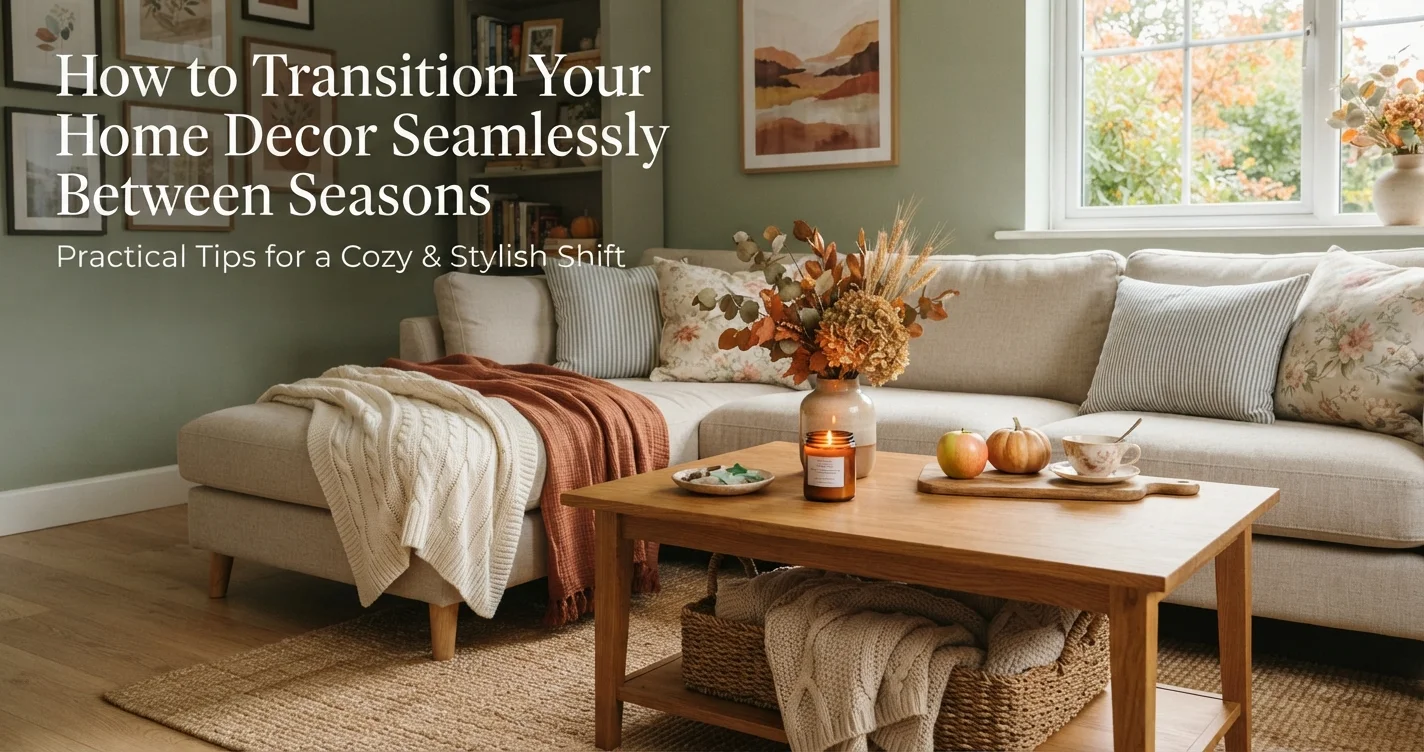
Changing your home decor with every season doesn’t have to mean a full renovation or a big budget. The secret is learning how to transition your home decor seamlessly between seasons using smart swaps, strategic color shifts, and a neutral foundation. Whether you’re preparing for a cozy winter living room or a breezy spring refresh, these tips will keep your space feeling fresh without the stress.
Think of your home like a wardrobe. You don’t throw away everything when the weather changes — you layer, swap accessories, and switch fabrics. The same logic applies to your interior. With a few intentional moves, you can make your home feel seasonally appropriate while maintaining a cohesive style year-round.
Start with a Neutral Foundation
A neutral base is your best friend when you want to transition your home decor seamlessly between seasons. Choose large furniture pieces — sofas, dining tables, and bed frames — in timeless shades like warm beige, soft gray, or creamy white. These neutrals act as a canvas, allowing you to introduce seasonal pops of color without clashing.
Think of it as building a core wardrobe. Just like a white button-down shirt works with everything, a neutral sofa can handle bright summer pillows in coral and deep winter throws in burgundy. The versatility saves you money and effort in the long run.
For inspiration on creating a balanced layout around your neutral pieces, check out our space planning guides that help you arrange furniture for maximum flow and comfort.
Swap Textiles for Instant Impact
Textiles are the fastest way to shift the mood of a room. In summer, opt for lightweight linen curtains, cotton slipcovers, and breathable throws. When autumn arrives, switch to chunky knit blankets, velvet cushions, and flannel sheets.
Here’s a quick textile swap checklist:
- Pillow covers: Swap bright linen for wool or faux fur in cooler months.
- Rugs: Replace a flatweave cotton rug with a thicker, higher-pile wool rug.
- Curtains: Sheer panels for spring; blackout velvet for winter warmth.
- Bedding: Change percale sheets for flannel or sateen sets.
These changes take less than an hour but completely transform how a room feels. It’s one of the most effective seasonal home decor tips that interior designers swear by.
Layering with Seasonal Colors and Patterns
Color psychology plays a huge role in how we experience a space. During a spring home refresh, introduce soft pastels like sage green, blush pink, and sky blue. These hues evoke freshness and renewal. In fall, lean into earthy tones — terracotta, mustard, and deep olive.
Don’t be afraid to mix patterns, either. A striped pillow paired with a floral throw can work beautifully if they share a common color palette. The key is balance: keep larger items neutral and let the accessories do the talking.
Remember, you don’t need to repaint walls every season. A simple vase of seasonal flowers, a stack of coffee table books with autumn leaves on the cover, or a new set of ceramic coasters can create the same effect with zero commitment.
Bring the Outdoors In — Season by Season
Nature provides the best decorating cues. In spring, fill your home with budding branches, tulips, and hyacinths. Summer calls for lush greenery, eucalyptus stems, and fresh herbs on the windowsill. Come fall, dried pampas grass, wheat bundles, and cinnamon sticks add warmth. Winter is perfect for evergreen garlands, pinecones, and amaryllis blooms.
This approach not only connects your interior to the outside world but also adds organic texture and fragrance. If you love extending your living space outdoors, browse our collection of outdoor living ideas to create a seamless transition between your interior and patio or garden.
Storage Solutions for Off-Season Items
You can’t transition your home decor seamlessly between seasons without a solid storage plan. Invest in clear, labeled bins for off-season pillows, throws, and decorative objects. Store them under the bed, in closet top shelves, or in a dedicated hall closet.
Vacuum-seal bags are a game-changer for bulky winter blankets and duvets. They shrink down to a fraction of their size, freeing up valuable space. For delicate items like silk cushions or hand-knitted throws, use acid-free tissue paper to prevent damage.
Proper rotation also keeps your decor looking fresh. When you pull out spring items, take the opportunity to clean and air out winter gear before storing it away. This habit extends the life of your textiles and keeps your home smelling fresh.
Update Lighting for the Season
Lighting needs change dramatically from summer to winter. In warmer months, maximize natural light by pulling back curtains and using sheer fabrics. Switch to cooler-toned bulbs (4000K-5000K) to mimic bright daylight.
When daylight shrinks in autumn and winter, warm up your home with layered lighting. Add table lamps with soft amber bulbs (2700K-3000K), floor lamps in cozy corners, and candles or fairy lights for ambiance. A dimmer switch on your main overhead light is one of the cheapest ways to adjust the mood instantly.
For more comprehensive design ideas that tie lighting, layout, and texture together, visit our home design category for expert articles and inspiration.
Seasonal Decor Comparison Table
| Element | Spring / Summer | Fall / Winter |
|---|---|---|
| Pillow Fabrics | Linen, cotton, bamboo | Velvet, wool, faux fur |
| Color Palette | Pastels, whites, brights | Earthy tones, jewel tones |
| Rug Material | Flatweave, jute, sisal | Shag, wool, patterned |
| Window Treatments | Sheer, linen curtains | Blackout, velvet, drapes |
| Scents & Greenery | Citrus, fresh flowers, herbs | Cinnamon, pine, dried foliage |
This table gives you a quick visual reference for planning your next decor shift. Keep it saved on your phone or pinned to your mood board.
Frequently Asked Questions
How often should I change my seasonal decor?
Most people refresh their decor twice a year — once in spring and once in fall. Some add a third transition for winter holidays. The key is not to overdo it; focus on textiles and small accents rather than big furniture changes.
Can I mix decor from different seasons?
Absolutely. A neutral base allows you to blend warm and cool elements. For example, keep a chunky winter throw on the sofa but add a bright spring pillow. The mix creates a lived-in, curated look.
What’s the most affordable seasonal decor swap?
Pillow covers and throw blankets are the cheapest and most impactful changes. You can find affordable options at home goods stores or even thrift shops. Swap them out in under 10 minutes.
How do I store seasonal decor without clutter?
Use clear plastic bins with labels. Store them in out-of-the-way places like under beds, above cabinets, or in a garage shelf. Vacuum-seal bags work great for bulky textiles.
Should I repaint walls for each season?
Not at all. Stick to a neutral wall color and bring in seasonal color through accessories. If you really want a wall change, consider peel-and-stick wallpaper panels that are easy to remove.
How do I transition my decor if I live in a mild climate?
Focus on texture and scent rather than heavy temperature-related changes. Light linen in the “warmer” months and soft knits in the “cooler” months still create a sense of seasonal rhythm.
What’s one mistake people make when switching decor?
Buying too many seasonal-specific items. Stick to versatile pieces that work across two seasons — for instance, a throw that’s warm enough for fall but light enough for a spring evening. This saves storage space and money.
Conclusion
Learning how to transition your home decor seamlessly between seasons is about working smarter, not harder. With a neutral foundation, smart textile swaps, proper storage, and a few nature-inspired touches, your home can evolve beautifully throughout the year without breaking the bank or your back.
For even deeper insights into seasonal styling and garden integration, explore our garden design tips and blog articles where we cover everything from curb appeal to cozy corners. And if you’re ready to take your home to the next level, check out this comprehensive guide to year-round home design for advanced strategies and curated product recommendations.
Start small, stay consistent, and enjoy the process. Your home should be a reflection of the season — and your personal style.