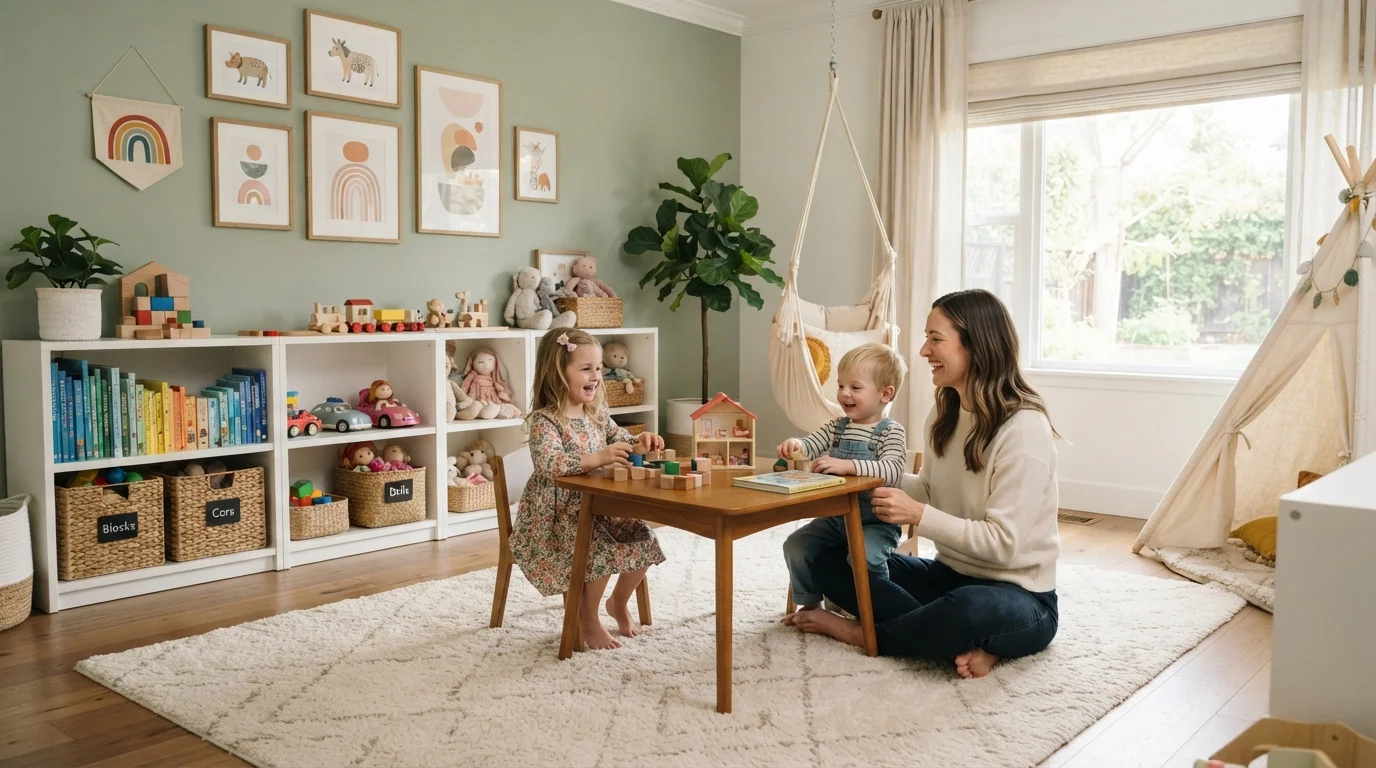
Let’s be honest: most playrooms look like a tornado passed through a toy store. But it doesn’t have to be that way. You can design a space where your kids can run wild, and you can still sip your coffee without cringing.
The secret is blending smart kid-friendly playroom design with grown-up aesthetics. Think washable rugs, hidden storage, and furniture that pulls double duty. Here’s exactly how to pull it off without losing your sanity—or your style.
Start With a Zone Layout for Maximum Function
Open floor plans sound great until every single puzzle piece ends up mixed with the Lego bricks. Instead, create clear activity zones. Divide the room into a quiet corner for reading or art, a messy zone for playdough and paint, and an active area for movement.
Use a low bookshelf or a floor cushion to define each zone visually. This helps kids understand where things belong, which makes cleanup easier. It also gives the room a curated, intentional feel—not just a pile of toys.
For smaller spaces, consider a smart space planning approach where zones overlap. A craft table can double as a snack station if you choose wipeable surfaces.
Choose Durable Materials That Look Expensive
Kids will spill, drop, and drag. That doesn’t mean you have to live with plastic bins and beanbags. Look for performance fabrics like indoor-outdoor polyester for sofas and ottomans. They resist stains and feel luxe to the touch.
For flooring, avoid wall-to-wall carpet. Instead, go for luxury vinyl plank or cork. Then top it with a washable wool or cotton blend rug. If something spills, you just toss the rug in the machine. Easy.
MDF furniture with a matte lacquer finish mimics solid wood at half the cost. And it wipes clean with a damp cloth—perfect for sticky fingers. That’s durable playroom furniture that doesn’t scream “toddler zone.”
Use Storage That Disappears Into the Decor
Clutter is the enemy of a gorgeous room. But open bins and bright plastic baskets ruin the aesthetic fast. Opt for closed cabinetry with doors, or cubbies with pull-out canvas bins in neutral tones like oatmeal, charcoal, or sage.
Consider built-in window seats with storage underneath. They give you a cozy reading nook and hide bulky toys in one move. Floating shelves at different heights also keep books and collectibles on display without taking up floor space.
Here are a few playroom storage solutions that actually look good:
- Wicker baskets with fabric liners for stuffed animals
- Low credenzas with child-safe soft-close drawers
- Wall-mounted pegboards for art supplies and dress-up costumes
- Ottomans with hidden compartments for blocks and cars
Pick a Calm, Neutral Color Palette
Primary colors are tempting at the paint store, but they overstimulate both kids and parents. A soft, neutral base—think warm white, beige, or pale gray—lets the toys provide the pops of color. It also grows with your child, so you don’t have to repaint every two years.
Add personality through accessories: a mustard-yellow floor cushion, a teal art cart, or a pink lamp. These are easy to swap as tastes change. The result is a stylish kids playroom idea that feels calm and curated.
According to experts in the home design world, neutral backdrops also make rooms feel larger and more open—a big win for tight spaces.
Prioritize Safety Without Sacrificing Style
Anchor all heavy furniture to the wall, even if your child is past the climbing stage. Choose rounded-edge coffee tables and avoid glass tops. Outlet covers should be low-profile and match the wall color so they don’t stand out.
Window treatments are huge. Skip long cords from blinds and go with cordless shades or Roman shades. For windows low to the ground, install safety film so glass doesn’t shatter on impact.
For a safe playroom layout, keep the active zone away from sharp corners and doorways. A simple room diagram can help you visualize traffic flow before you move any furniture.
Design a Wall That Grows With Them
Kids outgrow wall decals faster than you can peel them off. Instead, install a large magnetic chalkboard or a whiteboard wall. It serves as an art gallery, a homework station, and a doodle space all in one.
Or use a curtain rod and hang a roll of butcher paper. Let them paint directly on it, then roll it up and replace it. This keeps your actual walls pristine while encouraging creativity.
For older kids, swap the chalkboard for a corkboard where they can pin photos, awards, and ticket stubs. It lets them personalize the space without permanent damage.
Comparison Table: Flooring Options for Playrooms
| Material | Durability | Comfort | Cleanability | Price per sq ft |
|---|---|---|---|---|
| Luxury Vinyl Plank | Excellent | Medium | Very easy | $3–$7 |
| Cork | Good | High | Easy | $4–$8 |
| Engineered Hardwood | Very good | Medium | Moderate | $5–$10 |
| Indoor-Outdoor Carpet Tiles | Excellent | High | Very easy | $2–$5 |
For the best balance of looks and function, many designers recommend luxury vinyl plank. It resists scratches, feels warm underfoot, and cleans up in seconds.
Let the Kids Have a Say (Within Reason)
A playroom that feels entirely adult-designed will likely be ignored by your kids. Give them ownership over one element. Maybe they choose the rug or the cushions. Or let them pick a single accent color for accessories.
This small concession makes them proud of the space. They’ll actually put toys away because they feel part of the design process. Plus, it adds personality that no store can replicate.
If you need more inspiration, check out the Sansouka blog for real family room makeovers and reader-submitted success stories.
FAQ: Kid-Friendly Playroom Design
1. How do I keep the playroom feeling grown-up?
Stick to a neutral palette for walls and large furniture. Let toys and small accessories provide the color. Use closed storage to hide clutter and only display curated items like books or wooden blocks.
2. What’s the best flooring for a playroom?
Luxury vinyl plank or cork are top choices. They’re durable, easy to clean, and comfortable for sitting and playing. Avoid high-pile carpet, which traps dust and stains.
3. How can I make a small playroom functional?
Use vertical space with wall shelves and pegboards. Choose furniture that does double duty, like a storage ottoman or a craft table with bins underneath. A safe playroom layout with defined zones also helps a small room feel larger.
4. Should I use open bins or closed cabinets?
A mix of both works best. Closed cabinets hide messy toys like puzzles and action figures. Open bins on lower shelves can hold books or blocks that kids access daily. Just keep the open stuff looking tidy.
5. What materials are safest for kids?
Look for low-VOC paints, solid wood (avoid particleboard with high formaldehyde emissions), and rounded furniture edges. Always anchor tall furniture to the wall. For more resources on family-friendly spaces, check out this verified guide on child-safe home products.
6. How often should I change the playroom decor?
Every 1–2 years, depending on your child’s age. Rotate toys and swap wall art often to keep the space fresh. Expensive furniture like a solid wood table can last through multiple phases.
7. Can I include electronics in the design?
Yes, but limit screens to a designated corner. Use a low cabinet with doors to hide a tablet or game console when not in use. Set a timer for screen time so the room stays primarily for active, creative play.
8. How do I handle cleanup without losing my mind?
Label bins with simple icons your child can recognize. Use a “one bin out, one bin in” rule. And end each day with a 5-minute tidy-up song. This habit keeps the room gorgeous with minimal effort.
Conclusion
Designing a kid-friendly playroom that still looks gorgeous isn’t a fantasy. It’s about smart choices: neutral colors, durable materials, clever storage, and a layout that puts safety first. Your kids get a magical space to explore. You get a room that doesn’t ruin your vibe.
Start small—pick one zone or one storage solution today. Then watch your home transform into a place where both you and your kids can thrive. For more family-friendly inspiration, explore our outdoor living ideas to extend the fun beyond the walls.