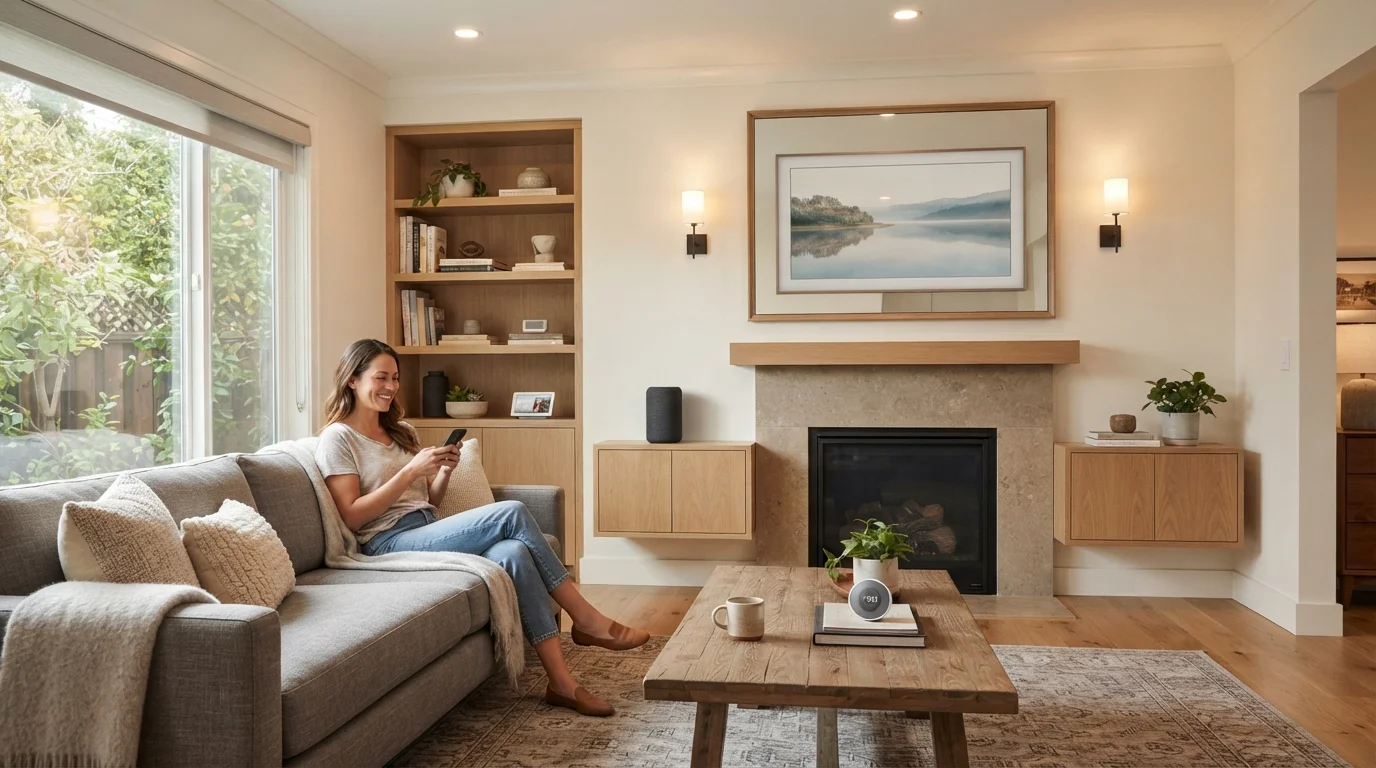
Gone are the days when smart home technology meant clunky white plastic boxes sticking out like a sore thumb. Today, the best innovations hide in plain sight—or look so good you’ll want them on display. If you’ve ever hesitated to upgrade your home because you worried about ruining your carefully curated aesthetic, it’s time to take another look. The market is now flooded with smart home technology that blends seamlessly with your decor, and it’s easier than ever to create a connected home that feels intentional, not intrusive.
Whether you’re a renter or a homeowner, the goal is the same: make your life easier without sacrificing style. From speakers that masquerade as art to thermostats that look like sculptures, these devices prove that function and form can coexist beautifully. In this guide, we’ll explore the best ways to integrate tech into your living space while keeping your home looking like a magazine spread.
Why Your Smart Home Should Match Your Vibe
Your home is your sanctuary, and every element—from the furniture to the lighting—should reflect your personality. Adding tech that clashes with your palette or style can disrupt the harmony you’ve worked so hard to achieve. That’s why more homeowners are prioritizing design-forward gadgets.
Think of it this way: a sleek, matte-black thermostat on a white wall can feel like an intentional accent piece. A bulky router sitting on a mid-century console? Not so much. The secret lies in choosing devices that complement your existing home design choices rather than competing with them.
Beyond aesthetics, there’s a practical benefit. When your tech blends in, you’re more likely to use it. A voice assistant that looks like a stylish vase invites interaction. A charging station that doubles as a decorative tray keeps your surfaces clean. It’s the kind of seamless integration that makes a smart home feel second nature.
The Hidden Heroes: Smart Devices That Disappear
Some of the most impressive smart home technology is the kind you never see. These “invisible” gadgets handle the heavy lifting while staying completely out of sight.
- In-wall speakers: Perfect for whole-home audio without cluttering your shelves. They mount flush and can be painted to match the wall.
- Smart blinds: Motorized shades that sit quietly behind curtains or recess into the window frame. No ugly cords, just a clean profile.
- Wireless charging furniture: Nightstands and desks with built-in charging pads. Just place your phone down—no cables, no fuss.
- Concealed smart hubs: Mount your router and hub in a cabinet or behind the TV. Keep the tech organized and hidden.
These options are particularly great for space planning, as they free up valuable surface area. You get all the convenience of a connected home without the visual clutter. Out of sight, out of mind—until you need them, of course.
Design-Forward Gadgets That Steal the Show
On the flip side, some devices are designed to be seen—and they’re gorgeous. Brands like Nest, Sonos, and Philips Hue have proven that minimalist smart home gadgets can double as decor.
Take the Nest Learning Thermostat, for example. With its reflective display and brushed metal finish, it looks more like a piece of modern art than a temperature controller. Or consider the Sonos Era 100, which comes in a soft white or black finish that blends into bookshelves without screaming “speaker.”
Lighting is another area where design meets tech. Philips Hue bulbs let you add color and ambiance, and the new gradient lightstrips can be tucked behind cabinets or headboards for a soft glow. The result? A home that feels both futuristic and cozy.
How to Integrate Tech Without Sacrificing Style
Worried about cables, bulky boxes, and mismatched finishes? Here’s a practical roadmap to achieving smart home decor integration in your own space.
Start with a plan: Walk through each room and identify what you really need. Do you want voice control in the kitchen? Automated lighting in the living room? Prioritize function first, then find a design-friendly version.
Use cable management solutions: Adhesive cord clips, cable sleeves, or even a simple basket can hide unsightly wires. For a cleaner look, consider in-wall cable routing if you’re handy (or hire a pro).
Match finishes and materials: Many smart devices now come in metal, wood, or fabric finishes. Choose options that echo your furniture—brass, matte black, or natural oak. Consistency is key.
Finally, don’t forget about scale. A tiny smart plug might seem harmless, but a dozen of them scattered around can look chaotic. Opt for smart power strips or whole-room solutions that consolidate controls. For more inspiration on organizing your spaces, check out the latest insights on our blog.
Hidden Smart Home Tech for Every Room
Let’s break it down by room, so you know exactly where to start.
| Room | Recommended Hidden Tech | Design-Forward Option |
|---|---|---|
| Living Room | In-wall speakers, hidden surge protector | Nest thermostat, Sonos speaker |
| Bedroom | Smart blinds, under-mattress sleep tracker | Philips Hue gradient lightstrip, wireless charger nightstand |
| Kitchen | Under-cabinet power strip, smart faucet | Smart display with fabric finish (e.g., Google Nest Hub) |
| Home Office | Cable management tray, in-desk charging | Minimalist smart plug, modern desk lamp with voice control |
Every room has its own challenges and opportunities. The key is to think about what you need most, then hunt for the most aesthetically pleasing version. You’d be surprised how many hidden smart home devices are now available in designer finishes.
For outdoor spaces, consider checking out garden design ideas that incorporate weather-resistant smart lighting and automated irrigation systems. Your patio can be just as connected as your living room.
Top Brands Leading the Design Revolution
If you’re ready to shop, start with these standout brands that prioritize both technology and aesthetics.
Nest (by Google): Their thermostat and doorbell are iconic for a reason. Clean lines, premium materials, and a refined color palette make them easy to incorporate.
Sonos: Their speakers and soundbars come with removable fabric grilles and minimalist shapes. Perfect for any decor style, from boho to modern.
Philips Hue: Smart bulbs and lightstrips that offer millions of colors and a sleek physical design. Their new ceiling lights look like standard fixtures.
SwitchBot: Great for renters. Their curtain bots and hub mini attach without drilling and are small enough to hide behind furniture.
Want to explore more? For a curated selection of home improvement tools and gadgets, we recommend visiting this resource for home and garden enthusiasts. It’s a solid starting point for discovering products that marry innovation with design.
FAQ: Smart Home Technology That Blends Seamlessly with Your Decor
1. Can smart home tech work in a rental apartment?
Absolutely. Look for renter-friendly options like plug-in smart blinds, adhesive light switches, and portable hubs. Avoid anything that requires hardwiring unless you have permission.
2. How do I hide ugly smart plugs and hubs?
Use decorative boxes, baskets, or cable sleeves. Some hubs are small enough to mount behind furniture or inside a drawer. For visible areas, choose smart plugs with minimalist designs.
3. What’s the best design-forward smart speaker?
Sonos speakers are a top pick. Their fabric finishes and slim profiles blend into any bookshelf. For a more decorative option, look at the IKEA x Sonos Symfonisk picture frame speaker.
4. Do smart bulbs affect the color temperature of my decor?
Not at all. Smart bulbs let you adjust warmth and brightness. You can set a warm amber glow for cozy evenings or daylight white for reading. Many match standard bulb shapes exactly.
5. Are there smart devices that look like art?
Yes. The Meural Canvas looks like a framed painting but displays digital art and also works as a smart device. Some smart mirrors even have built-in screens for weather and news.
6. How much does design-forward smart tech cost?
Prices vary. A high-end designer thermostat might run $250, while a minimalist smart plug can be under $20. Think of it as an investment in both convenience and your home’s visual appeal.
7. Can I install these devices myself?
Most are DIY-friendly. Smart plugs, bulbs, and speakers are plug-and-play. For in-wall speakers or smart blinds, you might need professional help. Always check the installation requirements before buying.
8. Will smart home technology become obsolete quickly?
Not necessarily. Stick to brands with strong ecosystems (like Matter-compatible devices) that support updates. Hardware lasts 5-10 years on average, and firmware updates keep them current.
Conclusion: Your Home, Smarter and More Beautiful
Integrating smart home technology that blends seamlessly with your decor is no longer a dream—it’s a reality. With so many hidden options and design-forward gadgets on the market, you can automate your home without compromising on style.
Start with one room, pick one device that solves a real problem, and choose a version that complements your existing look. Over time, you’ll build a connected home that feels natural, intuitive, and genuinely yours. The future of home design is smart—but it’s also beautiful.
For more ideas on making every square foot count, explore our outdoor living category and discover how to bring seamless tech to your patio and garden. Your perfect home is just a few smart upgrades away.