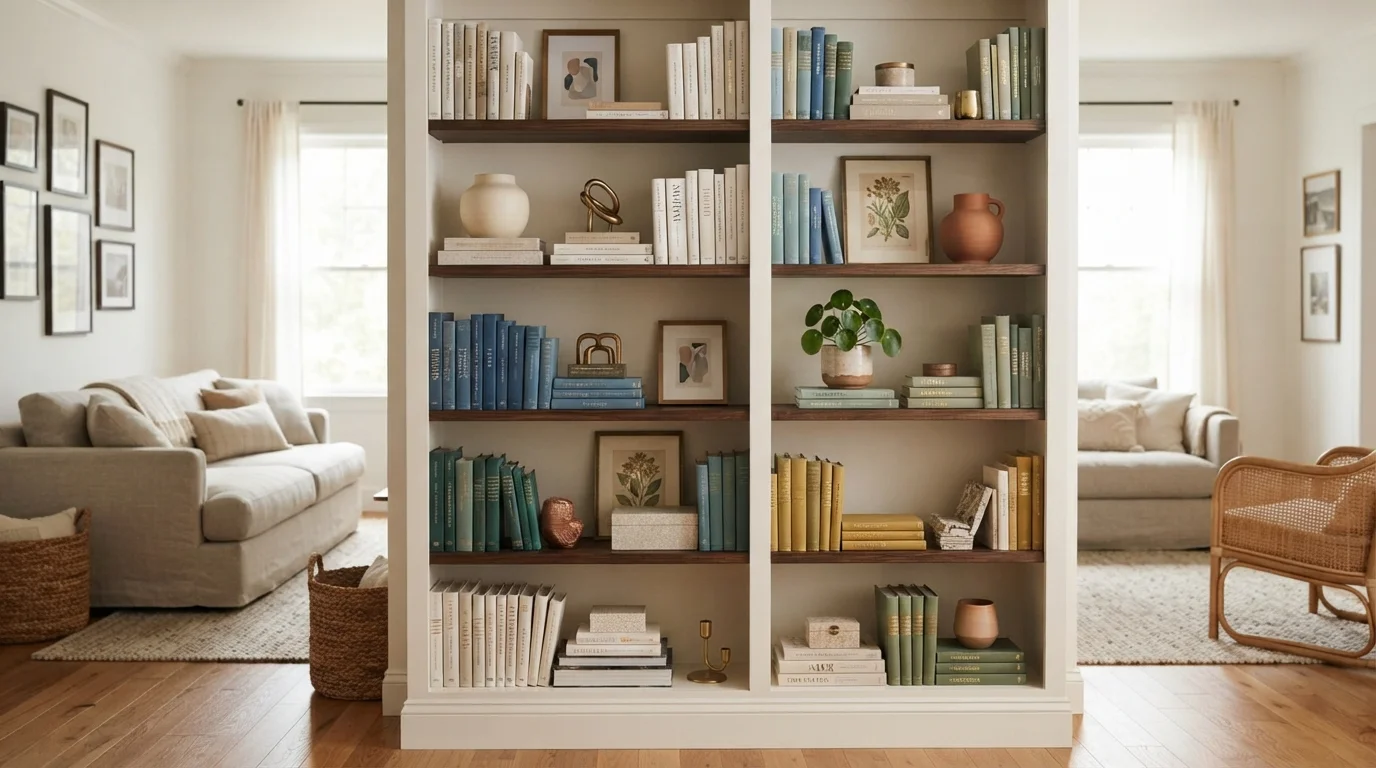
Styling a bookshelf might seem simple: put books on a shelf. But if you want a space that feels intentional, curated, and undeniably chic, there’s an art to it. Whether you’re refreshing a living room built-in or organizing a compact office bookcase, the right approach transforms stored items into a design statement.
Think of your bookshelf as a mini gallery. Each shelf is a vignette, and every object—from a leather-bound novel to a small ceramic vase—plays a role. Below, I’ll walk you through a professional method for how to style bookshelves so they look polished, personal, and never cluttered.
1. Start With a Full Edit
Before you arrange anything, take everything off the shelves. I mean everything. This gives you a blank canvas and lets you see the actual shape, color, and condition of your items. It also forces you to decide what truly earns a spot.
Sort your books by size, color, or genre. Keep only the ones you love or use. Let go of faded paperbacks or dusty academic texts you’ll never open again. A curated bookshelf starts with ruthless editing.
This step is non-negotiable in home design tips for any room. When you remove the noise, you can actually see what works together.
2. Use the Rule of Three (And Other Odd Numbers)
Once your shelves are bare, it’s time to group items. Odd numbers—especially three—feel more organic and balanced to the human eye than even pairs. A trio of stacked books topped with a small plant looks infinitely more intentional than two books side by side.
Vary the heights within each group. Place a tall vase next to a short stack of books, then lean a small framed photo against them. This creates visual rhythm and keeps the eye moving across the shelf.
- Group 1: 3 stacked books + a small ceramic bowl
- Group 2: 2 vertical books + 1 leaning framed photo + a short candle
- Group 3: 1 tall sculpture + 1 horizontal book + a trailing plant
These bookshelf decor ideas prevent that “matchy-matchy” look while still feeling cohesive.
3. Mix Verticals and Horizontals
One of the biggest secrets in professional styling is varying the orientation of your books. If every book stands upright, the shelf looks like a library shelf—not a design feature. Instead, create stacks of 2 to 4 books laid flat.
Place a decorative object on top of a horizontal stack to anchor it. Then, on the same shelf, add a cluster of upright books. This contrast adds depth and prevents the shelf from feeling monotonous.
For a truly styled bookcase, try alternating: the left side of a shelf has upright books, the right side has a flat stack with a plant. Repeat this pattern loosely across the height of the unit.
If you’re working with multiple shelves in a larger living room, check out our space planning category for tips on arranging furniture around your new focal point.
4. Anchor Each Shelf With a Focal Point
Every shelf needs one item that draws the eye first. This is your “anchor”—usually the largest or most visually interesting object. It could be a framed piece of art, a sculptural vase, a vintage globe, or a stack of oversized coffee table books.
Place this anchor slightly off-center. Then, arrange the rest of your items around it, balancing it with smaller objects on the opposite side. This asymmetric approach feels much more dynamic than placing everything in the middle.
Keep the anchor item between 1/3 and 1/2 the width of the shelf. Anything larger will overpower the composition; anything smaller will look lost.
5. Add Layers With Art and Frames
Leaning art against the back of a shelf adds incredible depth. Instead of hanging every piece on the wall, lean a 5×7 or 8×10 frame against the back panel of the bookcase. This creates a subtle backdrop that makes the books in front of it pop.
Use consistent frame colors for a cohesive look—black and natural wood work with almost any scheme. Mix in a small mirror or a personal photograph to add warmth.
This technique is especially effective for building a curated look without spending money on new decor. You’re just recontextualizing pieces you already own.
6. Bring in Greenery and Natural Textures
Plants bring life to any arrangement, and bookshelves are no exception. A trailing pothos cascading over the edge of a stack of books adds softness and movement. A small snake plant or a dried eucalyptus bunch adds structure.
If your shelf doesn’t get natural light, opt for high-quality faux greenery. Mix it with natural materials like a woven basket, a stone bookend, or a ceramic vase. These textures contrast nicely with the sharp lines of books.
For more ideas on integrating nature into your interiors, take a look at the garden design section for inspiration that works both indoors and out.
7. Break Up the Space With Color and White Space
You don’t need to fill every inch of shelf. In fact, empty space is your best friend when styling a bookcase. Leave a few bare gaps—maybe 4 to 6 inches—between groupings. This allows each vignette to breathe.
When it comes to color, you have two paths: monochromatic or rainbow. For a calm, sophisticated look, group books by color (all white, all navy, all blush). For a playful vibe, arrange them in a rainbow gradient. Both work—just pick one and stick with it per shelf.
A well-executed color layout can make even inexpensive paperbacks look designer.
8. Use a Table to Plan Your Shelf Composition
Before you finalize placement, use this simple table to map out the balance of your shelves:
| Shelf Height | Left Side | Center | Right Side |
|---|---|---|---|
| Top | Small framed photo + candle | Tall vase with dried flowers | Empty space (breather) |
| Middle | Horizontal stack of 3 books + small plant | Upright books (grouped by color) | Leaning abstract art print |
| Bottom | Large sculptural object (e.g., antique globe) | Stack of coffee table books | Woven basket with extra throw blanket |
Use this as a starting template, then adjust based on the specific items you have at home.
FAQ: Common Questions About Styling Bookshelves
How do I style a bookshelf without it looking cluttered?
Edit ruthlessly. Keep only your favorite books and objects. Leave empty spaces between groupings, and never overcrowd a single shelf. Stick to the rule of three and vary heights.
Should I arrange books by color or by size?
That depends on your goal. Arranging by color creates a striking visual statement, while arranging by size (largest to smallest) feels more traditional and orderly. You can also mix both: use color on one shelf and size on another.
How many decorative objects should I use per shelf?
Aim for 3 to 5 objects per shelf, including books. Anything more starts to feel busy. A typical shelf might have: 2–3 books, 1 small decor piece, and 1 plant or framed photo.
What are the best decorative items for bookshelves?
Ceramic vases, small sculptures, framed photos, candles, coasters, small plants, and unique bookends all work well. Avoid anything too large or overly shiny—it distracts from the overall composition.
Do I need to style all shelves the same way?
No. In fact, each shelf should have its own personality while still feeling part of a whole. Vary the color scheme, the type of objects, and the height of groupings from shelf to shelf. This keeps the bookcase interesting.
Can I style a bookshelf with no books at all?
Absolutely. A bookshelf can function as a display cabinet for ceramics, plants, art, or travel souvenirs. Just keep the composition balanced and use the same layering principles described in this guide.
How do I keep my bookshelf organized long-term?
Set aside 10 minutes every season to re-edit your shelves. Remove items you no longer use, dust everything, and rotate out decor pieces. A quick refresh keeps the look feeling curated instead of stagnant.
Where can I find more home design inspiration?
For a constant stream of ideas, visit our blog where we share weekly tips for making your home look polished and personal. You can also browse the home design category for deep dives into specific rooms and projects.
Final Thoughts on Achieving a Curated Look
Styling a bookshelf is not about perfection—it’s about personality. The best-looking shelves tell a story: they show what you read, what you collect, and what you love. Don’t be afraid to experiment, swap items around, or change things out with the seasons.
Remember that how to style bookshelves is a skill you build over time. Start with one shelf. Put your edits into practice. And if you feel stuck, look at well-styled interiors for reference—sites like Home & Garden Decor offer fantastic visual inspiration for incorporating textures and objects into your home.
With these bookshelf decor ideas, you’ll transform a simple storage piece into a true design moment. Start small, trust your eye, and enjoy the process. Your bookshelf has never looked this good.