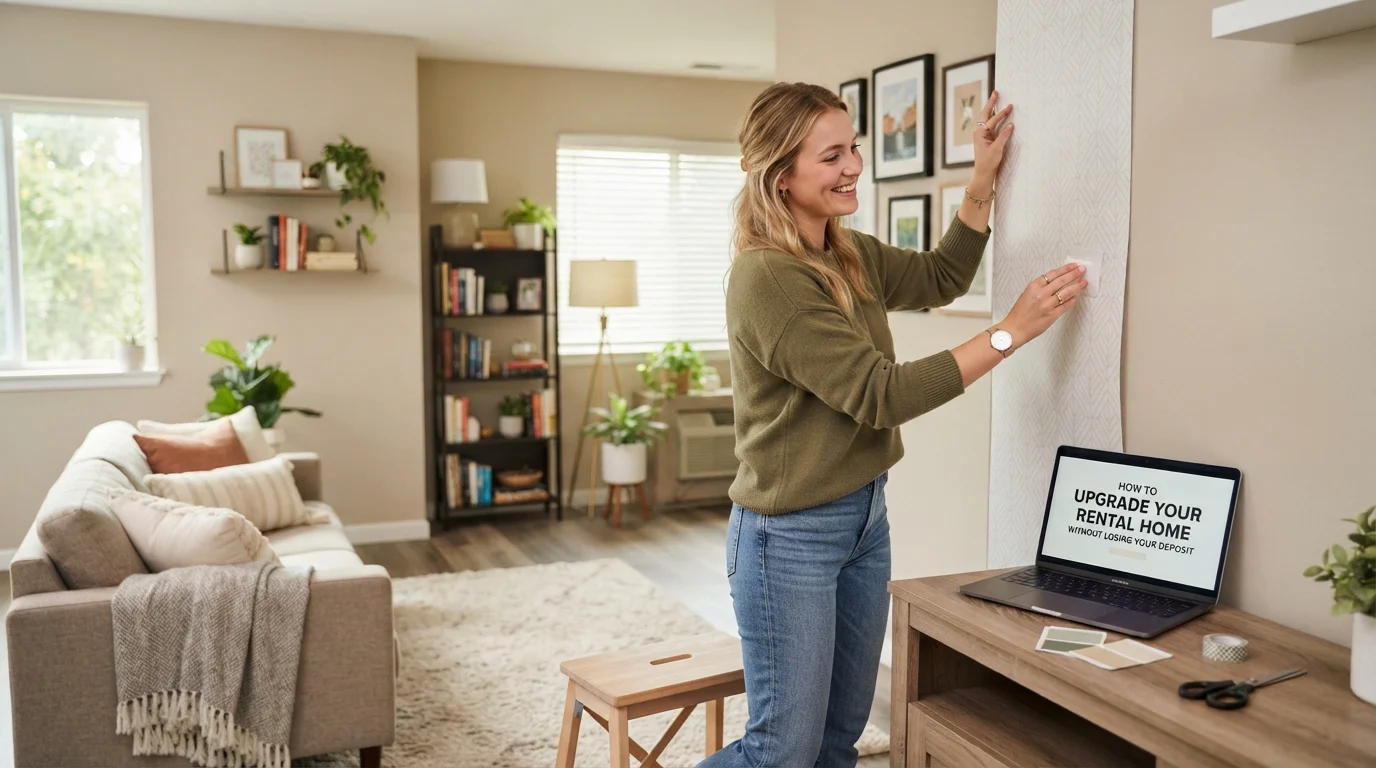
Living in a rental doesn’t mean you have to settle for beige walls, outdated fixtures, or boring blinds. You can absolutely transform your space into a home that feels like yours — the trick is doing it without peeling paint, drilling holes, or making changes that will cost you your security deposit.
The key is thinking temporary. Think removable, reversible, and landlord-friendly. With a little creativity, you can upgrade your rental home without losing your deposit, and still walk away with every penny when it’s time to move.
Below, I’ll walk you through practical, stylish upgrades that work within the rules of almost any lease. Whether you’re in a tiny apartment or a rented house, these ideas will help you put your stamp on the space — safely.
1. Start With Removable Wall Treatments
Bare white walls can make a rental feel cold and temporary. But painting is usually a no-go without permission, and even then, you have to paint it back. The solution? Removable wallpaper and peel-and-stick wall decals.
Today’s peel-and-stick wallpaper is durable, comes in thousands of patterns, and peels off cleanly without damaging the paint — as long as your walls are in decent condition. It’s perfect for an accent wall behind your bed or a bold pattern in the entryway.
Another option: removable tile backsplashes for the kitchen or bathroom. These come in sheets that look like subway tile or marble, but they’re essentially thick vinyl that sticks on and comes off with no residue. It’s one of the best renter-friendly decor upgrades you can make.
If you want to add texture without a full wall treatment, use washi tape to create geometric patterns or temporary picture frames. It’s cheap, fun, and completely reversible in seconds.
- Peel-and-stick wallpaper — great for accent walls
- Removable tile sheets — instant kitchen or bathroom refresh
- Washi tape art — zero commitment, high impact
2. Swap Out Hardware and Fixtures (But Keep the Originals)
One of the fastest ways to change the look of a room is to swap out cabinet pulls, drawer knobs, and light switch plates. You can transform a builder-grade kitchen into something that looks custom — for under $50.
Just keep every original screw and handle in a labeled bag. When you move out, you’ll spend 20 minutes putting everything back. Your landlord will never know the difference, and your deposit stays safe. This is a classic landlord-approved change because it doesn’t alter anything permanently.
You can also swap out shower heads and faucet aerators. Many modern handheld shower heads screw right onto existing pipes. Keep the old one in a box, and reinstall it before you leave. Just check your lease first — some old buildings have specific plumbing restrictions.
Lighting matters too. If your rental has outdated ceiling fixtures, replace them with something from a thrift store or IKEA, as long as you keep the original. Always take photos of the original installation so you can reverse it perfectly.
3. Use Temporary Flooring and Large Rugs
Rental carpets often look tired. Landlord-grade vinyl flooring can be cold and ugly. Your solution? Layer large rugs. A big, neutral rug can anchor a living room and hide a world of ugly flooring underneath.
If you want to go a step further, consider interlocking floor mats or peel-and-stick carpet tiles. These are not permanent, and they can cover an entire bedroom floor. When you move out, just pick them up — no glue, no damage.
The same logic applies to outdoor spaces. If your rental has a concrete balcony or patio, outdoor carpet tiles or large weatherproof rugs instantly make the space feel like an extension of your home. For more ideas on transforming outdoor areas, check out our outdoor living tips and inspiration.
Just remember: no adhesives that can peel paint or leave sticky residue. Stick to products that are explicitly labeled “rental safe” or “no residue.”
4. Upgrade Your Lighting (No Wiring Required)
Harsh overhead lighting is a common complaint in rentals. You’d be surprised how much warmer a room feels with the right lamps and plug-in fixtures. The trick is to avoid any electrical work that requires an electrician.
Look for plug-in pendant lights that hang from a ceiling hook (the hook uses a small adhesive patch, not a drill). You can also find wall sconces that plug into an outlet and mount with removable wall solutions like command strips. These give you that cozy, layered look without cutting into drywall.
Smart bulbs are another renter-friendly win. You can change the color temperature from cool white to warm amber with your phone. No need to rewire anything — just screw them in and connect to an app.
If you have dark corners, use corner floor lamps or LED strip lights behind furniture. The glow transforms a space instantly, and it’s all temporary. For more apartment design hacks like this, browse our space planning guides.
5. Use Furniture as Room Dividers and Storage
Many rentals lack defined spaces — especially studios or open-concept layouts. You can create “rooms” without building a single wall. Tall bookshelves, folding screens, or even a long console table can define a living area from a sleeping area.
Multi-purpose furniture is your best friend. An ottoman with hidden storage holds blankets and doubles as a coffee table. A kitchen cart on wheels provides extra counter space and can be moved when you clean. These pieces add function without any permanent changes.
If you want to add a touch of nature, a tall plant (like a fiddle leaf fig in a decorative pot) can act as a natural room divider. For more ways to bring greenery into your rental, see our garden design articles for small spaces.
The best part? Every piece of furniture you buy is yours to keep. It moves with you, so it’s an investment in your future home too.
6. Dress Up Windows Without Drilling
Standard rental blinds are often cheap plastic or vertical strips that scream “landlord special.” Luckily, you can change your window treatments without any hardware.
Tension rods are the hero of renter window decor. They fit inside the window frame and require no screws. Use them for sheer curtains, blackout curtains, or even a valance. They hold surprisingly well and come down in seconds.
Another option: adhesive curtain rod brackets. These stick to the wall or window frame with heavy-duty adhesive and can hold lightweight to medium curtains. Just follow the instructions for weight limits, and remove them gently when you move out.
If your window has a deep sill, consider a window seat cushion or a few potted plants. It draws the eye away from the blinds and makes the window feel intentional. Even temporary temporary home improvements like these can completely shift the feel of a room.
7. Add Removable Wall Art and Gallery Walls
Empty walls feel sterile. But drilling holes for nails and screws is one of the fastest ways to lose your deposit. Use command strips and removable hooks designed for picture frames. They come in different weight ratings — just use the correct size for your frame.
Create a gallery wall with lightweight frames arranged on the floor first, then hung with strips. When you leave, the strips come off cleanly with a gentle pull (pull down, not out). Many landlords won’t even know you had art up.
You can also hang tapestries, fabric, or woven wall hangings using temporary adhesive clips. These add color and texture without any damage. Another trick: lean large frames on the floor against the wall. It looks intentional and requires zero hardware.
If you’re decorating a home office or creative space, check out our home design category for more renter-friendly inspiration.
8. Bring in Plants and Greenery
Plants are the ultimate renter-friendly upgrade. They’re completely temporary, they improve air quality, and they make any space feel alive. No holes, no paint, no deposit risk.
If you don’t have a green thumb, start with low-maintenance options like snake plants, pothos, or ZZ plants. They thrive in low light and tolerate neglect. Use decorative pots that match your style — you can even switch pots when you redecorate.
For outdoor spaces, container gardens are perfect. You can grow herbs, flowers, or even small vegetables in pots on a balcony or patio. Since nothing is planted in the ground, you take it all with you when you move. Get more ideas in our blog posts about balcony gardening.
Remember: always use saucers under pots to protect floors and carpets. A water stain on the carpet could cost you part of your deposit.
| Upgrade Idea | Deposit Risk? | Cost Range | Reversible? |
|---|---|---|---|
| Peel-and-stick wallpaper | Very low | $30–$80 per roll | Yes |
| Cabinet hardware swap | Zero (if originals saved) | $10–$50 | Yes |
| Large area rugs | None | $50–$300 | Yes |
| Command strip gallery wall | Very low | $5–$20 for strips | Yes |
| Plug-in pendant lights | None | $20–$100 | Yes |
As a general reference for the home and garden niche, you can explore more tools and resources that focus on renter-friendly home improvement guides and products.
9. Don’t Forget the Bathroom and Kitchen
These two rooms often need the most love in a rental. For the bathroom, swap the shower curtain and liner for a stylish fabric version. Add a memory foam bath mat. Use adhesive hooks for towels and robes (they come off cleanly).
In the kitchen, removable contact paper can cover ugly countertops or cabinet fronts. There are marble, wood, and tile patterns that look shockingly real. Just make sure the surface is clean and smooth before applying, and peel slowly when removing.
You can also replace the faucet with a modern model, as long as you keep the original. Many faucets connect with simple nuts and supply lines. Watch a YouTube tutorial, and you can do it in 30 minutes. This is a higher-effort upgrade but can really impress in a dated rental.
If you want to upgrade your kitchen or bathroom on a budget, looking at affordable rental decor solutions can give you more ideas that won’t break the bank or your lease agreement.
Frequently Asked Questions
Can I paint my rental without losing my deposit?
Only if your landlord specifically allows it in writing. Most leases prohibit painting, and even if they allow it, you often need to paint it back to the original color. Stick to peel-and-stick wallpaper or removable wall decals for color without risk.
Do removable wallpapers damage walls?
Quality peel-and-stick wallpaper from reputable brands shouldn’t damage walls if applied to clean, smooth, well-painted surfaces. Avoid using them on textured walls or fresh paint that hasn’t fully cured. Always test in a small corner first.
What are the best command strips for heavy frames?
Use Command brand “large picture hanging strips” for frames up to 24 pounds. Make sure the wall is clean and dry before applying. For extra peace of mind, use two sets of strips per frame. They remove cleanly when you pull the tab downward.
Can I install shelving in a rental?
Generally no, unless your lease explicitly says yes. Shelves require drilling into drywall, which damages the surface. Instead, use freestanding bookshelves, leaning shelf ladders, or over-the-door organizers that don’t require holes.
Will swapping light fixtures affect my deposit?
Not if you keep the original fixture and reinstall it perfectly before moving out. Take a photo of the wiring before you disconnect anything. If you’re not comfortable with electrical work, stick to plug-in lighting instead.
What if my landlord requires professional cleaning?
Some leases have a clause about professional carpet cleaning or move-out cleaning. Always read your lease carefully. Even with a professional cleaning, reversible upgrades won’t affect your deposit as long as you return the unit to its original condition.
Are stick-on tiles safe for kitchen backsplashes?
Yes, as long as they are designed for kitchen use and rated for heat and moisture. Avoid placing them directly behind a stove where heat could weaken the adhesive. They are easy to remove with a hair dryer and a gentle pull.
Conclusion
You don’t need to own a home to live in a space that feels like yours. With a few smart, temporary upgrades, you can transform a generic rental into a warm, stylish, and functional home. The golden rule is always: leave no trace. Keep the originals, document everything, and use products designed for easy removal.
Focus on the areas you interact with most: the walls you see, the floors you walk on, and the light that sets the mood. A few strategic changes — like removable wallpaper, a large rug, or modern cabinet hardware — will completely change how you feel about your space.
And when it’s time to move out? Just reverse everything in a weekend. Your deposit stays in your pocket, and your next rental will benefit from all the clever tricks you’ve learned. Happy decorating — and remember, everything you buy can come with you to your next place.