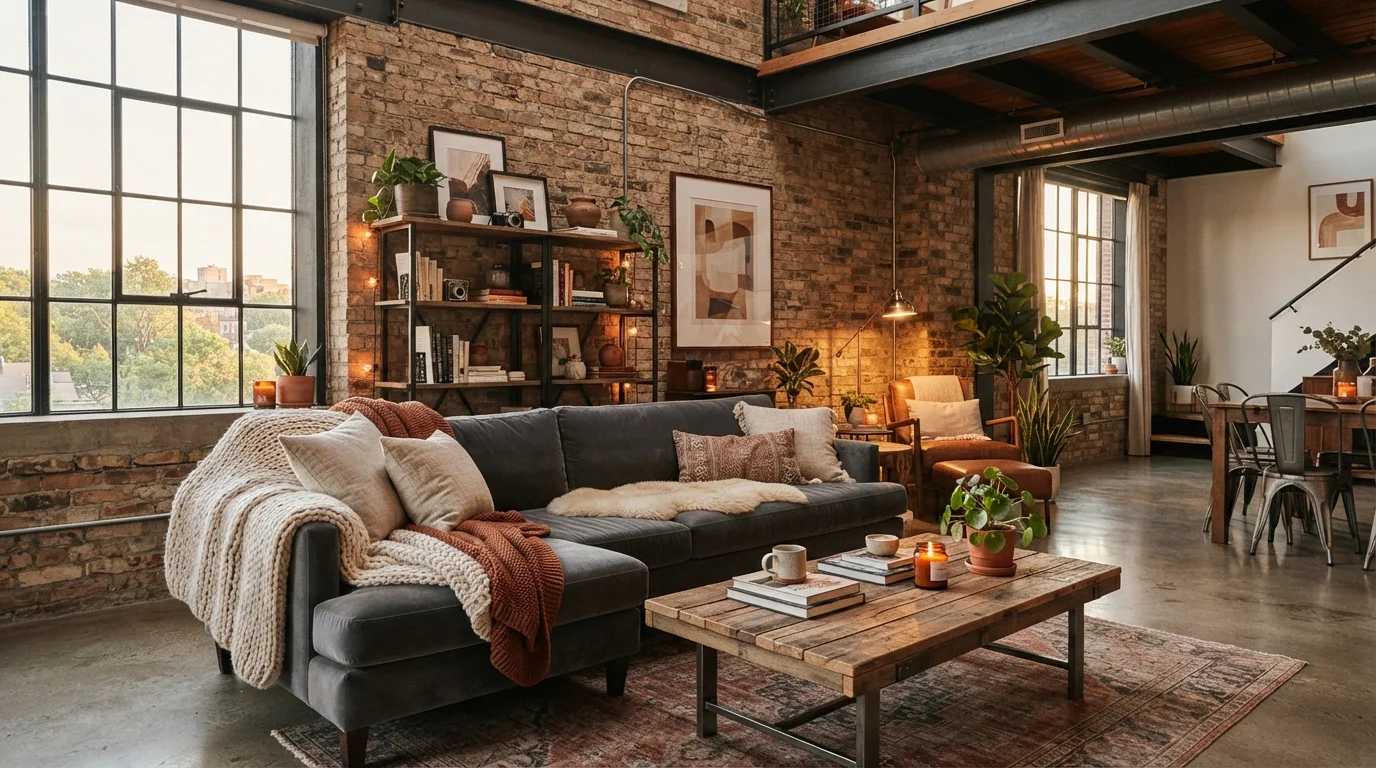
Industrial interior design has taken the home world by storm. With its raw edges, exposed bricks, and metal accents, it is bold and beautiful. But let’s be real: it can also feel cold and uninviting if you are not careful. The secret lies in balance. You want that edgy loft vibe without sacrificing comfort. So how do you keep industrial interior design warm and inviting? I have spent years helping homeowners crack this code, and today I am sharing everything I know.
Think of industrial style as a sturdy skeleton. It provides structure and attitude. Now you get to add the soft tissue—the layers, textures, and colors that make a house a home. Whether you are renovating a downtown loft or just adding industrial touches to a suburban living room, these strategies will transform your space. Let’s dive into the specifics, one layer at a time.
Why Industrial Interiors Can Feel Cold (And How to Fix It)
The hallmark of industrial design includes concrete floors, exposed ductwork, and steel beams. These materials are hard, slick, and often gray or black. Without intervention, the room echoes like a warehouse. Your goal is to interrupt that hardness with warmth. Think of it as a dialogue between rough and smooth, cool and cozy.
Start by assessing the surfaces you cannot change. Exposed brick is a gift—its earthy red tones already add warmth. But if you have gray concrete walls, consider a wash of white paint to soften the look. Then bring in textiles like wool rugs and linen curtains. These are the quickest way to shift the energy of the room. For more ideas on layering textures in your home, check out our full blog archive.
Master the Warm Industrial Palette
Color is your first and most powerful tool. Industrial palettes lean toward neutrals: black, white, gray, and brown. But not all neutrals are created equal. Swap cool grays for warm greiges (gray-beige blends). Choose browns with red undertones, like cognac leather or walnut wood. These small shifts make a huge difference.
Add a few accent colors inspired by nature. Olive green, rust orange, and deep mustard yellow bring life to a concrete-and-steel backdrop. Paint one accent wall in a soft terracotta or place a velvet sofa in burnt sienna. Suddenly, the room feels intentional and inviting. Remember, you are not abandoning industrial roots—you are just adding a cozy layer.
Soft and Hard: The Texture Balance
Texture is where industrial interior design really comes to life. You have the hard textures: concrete, metal, glass, and brick. Now counter them with soft textures: chunky knit throws, sheepskin rugs, velvet pillows, and sisal mats. The contrast creates visual interest and physical comfort.
Here is a quick checklist of textures to introduce:
- Plush area rugs (wool or shag) to soften concrete floors
- Linen or velvet upholstery on sofas and chairs
- Wooden elements like reclaimed barn doors or floating shelves
- Woven baskets for storage and planters
- Canvas or linen curtains instead of metal blinds
Think of each item as a warm hug for your industrial space. The more layers you add, the more inviting the room becomes. This is exactly the kind of insight we explore in our space planning category.
Lighting: The Cozy Game-Changer
Industrial lighting is iconic: exposed bulbs, metal pendants, and track lights. But if every light source is harsh and direct, you will feel like you are in a mechanic’s shop. The trick is to combine ambient, task, and accent lighting. Dimmers are your best friend. They let you control the mood.
Add warm-toned LED bulbs (2700K to 3000K) instead of cool white. Use floor lamps with fabric shades to cast soft pools of light. String lights or a few candles on a metal shelf bring instant coziness. A brass or copper chandelier over the dining table adds both warmth and industrial charm. For more ways to bring softness into your home, explore our home design section.
Furniture That Bridges the Gap
Your furniture choices can make or break a warm industrial look. Opt for pieces that blend raw materials with plush comfort. A leather sectional with a metal frame works beautifully. A reclaimed wood coffee table with a live edge adds organic warmth. Mix in a fabric armchair or an ottoman with storage.
Consider this simple comparison table for balancing furniture materials:
| Hard Industrial Element | Soft Companion Piece |
|---|---|
| Metal-framed dining table | Upholstered chairs with padded seats |
| Concrete countertop | Wooden cutting boards and ceramic canisters |
| Steel shelving unit | Baskets, plants, and books with fabric covers |
| Exposed brick wall | Large canvas art or a woven tapestry |
Notice how each hard surface gets a soft companion. This pairing is the secret sauce to making industrial interior design feel like home.
Greenery and Natural Elements
Nothing softens a hard space like living plants. They bring organic shapes, movement, and color. Large fiddle-leaf figs, snake plants, or cascading pothos look stunning against brick or concrete. Use simple ceramic or woven planters to keep the industrial vibe intact. Even dried branches in a metal vase add texture.
Beyond plants, incorporate natural wood, stone, and clay. A stone vessel on the coffee table, a wooden bowl on the kitchen island, or clay tableware on open shelves. These small touches ground the industrial aesthetic. They remind us that nature lives inside these manufactured walls. For more ideas on blending indoor and outdoor elements, you might enjoy our outdoor living tips.
According to a trusted resource on home styling, incorporating natural materials is a proven way to increase comfort and reduce visual coldness in modern spaces (check out this guide on home and garden design). It is a simple shift with big results.
Personal Touches and Vintage Finds
Industrial design can look sterile if it only uses new, factory-made items. Break that by adding vintage and personal pieces. A worn leather trunk as a coffee table. An antique mirror with a patina frame. Your grandmother’s ceramic vase on a metal shelf. These items carry history and warmth.
Display your favorite books, travel souvenirs, or family photos. The contrast between the raw backdrop and your personal story makes the space feel lived-in. Do not worry about perfection—industrial style thrives on imperfection. A scratch on the floor or a chipped mug adds character. Let your space tell your story.
Frequently Asked Questions
What is industrial interior design?
It is a style inspired by factories and warehouses. It features exposed materials like brick, concrete, steel, and wood. The aesthetic is raw, minimal, and functional, often with open floor plans.
How do you make industrial design feel cozy?
Balance hard surfaces with soft textures. Add plush rugs, warm lighting, plants, and natural fabrics like linen and wool. Use warm paint tones and incorporate vintage pieces.
What colors work best for a warm industrial look?
Warm grays, greiges, cognac browns, olive greens, and rust oranges. Avoid cool grays and stark whites. Leather and wood tones also add natural warmth.
Can I do industrial design in a small apartment?
Absolutely. Focus on key elements like an exposed brick accent wall, metal shelving, and a concrete-look floor. Keep furniture low and light to avoid overwhelming the space.
What type of lighting is best for industrial interiors?
Use a mix of metal pendants, floor lamps with fabric shades, and wall sconces. Always choose warm LED bulbs (2700K-3000K) and install dimmers for flexibility.
Do I need exposed brick for industrial style?
No. You can mimic the look with brick veneer, textured wallpaper, or concrete-look paint. Focus on the materials and the feeling of raw, unfinished edges.
How do I choose artwork for an industrial room?
Go for large-scale pieces with bold colors or abstract patterns. Black-and-white photography also works well. Avoid overly ornate frames—simple metal or wood frames keep it authentic.
Is industrial design expensive?
It can be affordable. Many elements like reclaimed wood, metal pipes, and vintage furniture are budget-friendly. Focus on a few statement pieces and DIY what you can.
Conclusion
Industrial interior design does not have to feel like a cold warehouse. With the right balance of textures, colors, lighting, and personal touches, you can create a space that is both edgy and deeply inviting. Start with one room—maybe your living room or bedroom—and experiment. Add a soft rug under a metal coffee table. Swap a cool gray wall for a warm greige. Bring in a plant or two.
The goal is not to hide the industrial character but to complement it. Embrace the raw beauty, then soften it with life. Your home should feel like a sanctuary, even if it has exposed pipes and concrete floors. Follow these tips, and you will master the art of warm industrial style. For more inspiration, browse through our articles on garden design and home inspiration—and start creating your cozy loft dream today.