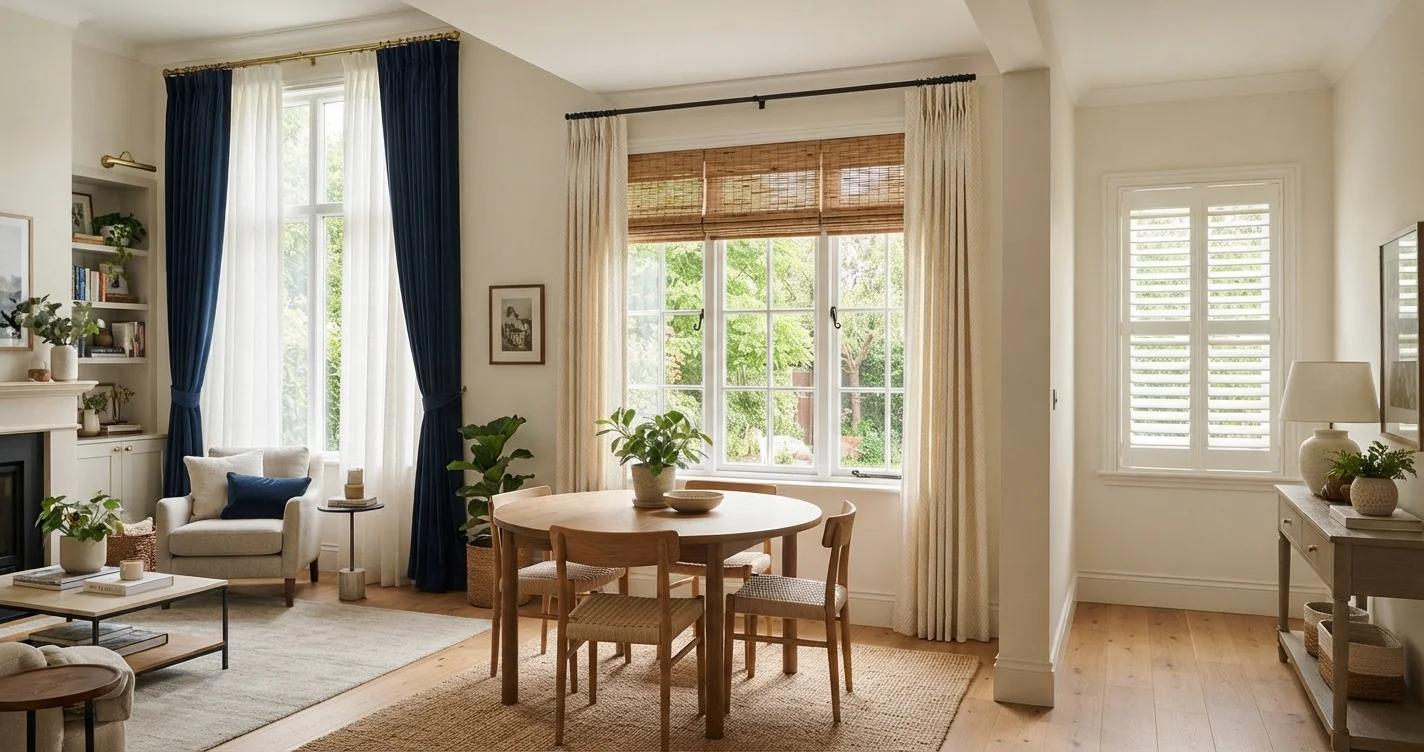
Window treatments do more than just cover glass. They control natural light, provide privacy, insulate your home, and tie an entire room’s design together. But with so many options—from Roman shades to wooden blinds—it’s easy to feel overwhelmed.
Choosing the perfect window treatments doesn’t have to be stressful. In this guide, I’ll walk you through the key factors to consider for each room in your house. By the end, you’ll know exactly what works best for your space, your lifestyle, and your budget.
Whether you’re refreshing a single bedroom or planning a full home makeover, these window treatment ideas will help you make confident, stylish decisions.
Why Room Function Matters Most
Before you pick a fabric or color, think about how you actually use the room. A home office needs different light control than a cozy living room. A kitchen demands easy cleaning, while a nursery requires blackout capabilities.
Start by asking three questions: How much privacy do you need? How much natural light do you want? And how will the treatment affect the room’s temperature?
For example, if your bedroom faces a busy street, best curtains for privacy might be heavy drapes with a blackout lining. But in a sunroom, you’ll prioritize UV-filtering shades that protect furniture without blocking the view.
Living Room: Layering Style and Function
The living room is a multifunctional space. During the day, you want soft, diffused light. At night, you want warmth and privacy. That’s why layering is the smartest approach here.
Start with a neutral base—like cellular shades or woven wood blinds—and top them with decorative curtains. This gives you flexibility. Adjust the blinds for daytime glare control, then draw the curtains for a cozy evening look.
If your living room opens to a garden, consider a light-filtering shade that connects the indoors with your garden design aesthetic. Sheer panels work beautifully for this.
- Cellular shades: Great for insulation and energy savings.
- Roman shades: Offer a soft, tailored look with fabric options.
- Floor-length curtains: Add drama and warmth to larger windows.
Bedroom: Prioritizing Darkness and Privacy
Your bedroom should be a sanctuary. That means blocking out morning light and street noise as much as possible. Blackout curtains or room-darkening shades are non-negotiable for most people.
Blackout roller shades are affordable, easy to install, and come in hundreds of colors. For a plusher feel, opt for blackout drapes with a thermal lining—they also help reduce heating and cooling costs.
Remember, light leaks around the edges can ruin your sleep. Measure carefully and consider using a valance or cornice board to cover the top gap. This attention to detail is what makes room-by-room window coverings truly effective.
Kitchen: Balancing Light and Practicality
Kitchens are high-humidity, high-traffic zones. Your window treatments need to handle steam, grease, and frequent cleaning. Fancy drapes rarely survive here.
Instead, look for moisture-resistant options like faux wood blinds, aluminum mini blinds, or vinyl roller shades. They wipe clean easily and won’t warp in humidity.
If you love natural light while cooking, top-down/bottom-up shades are a game-changer. You can raise the bottom for ventilation while lowering the top for privacy—perfect for kitchens with windows above the sink.
Home Office: Reducing Glare Without Sacrificing Light
Working from home means staring at screens for hours. The wrong window treatment can create harsh glare on your monitor, leading to eye strain and headaches.
Adjustable options like slatted blinds (wood, aluminum, or vertical) let you tilt the slats to redirect light. Double-cell honeycomb shades are another excellent choice—they diffuse sunlight evenly across the room.
For a more professional look, consider installing sheer shades or solar screens. They filter UV rays while maintaining a clear view, helping you stay productive without shutting out the world. For more layout ideas, check out the space planning section of our site.
Bathroom: Moisture and Modesty
Bathrooms require treatments that resist mold and offer clear privacy. Fabric curtains might look nice, but they trap moisture and can grow mildew quickly.
Top picks for bathrooms include:
| Type | Best For | Moisture Resistance |
|---|---|---|
| Faux wood blinds | Classic look, easy to clean | Excellent |
| Aluminum mini blinds | Budget-friendly, modern | Very good |
| Woven wood shades | Warm, natural texture | Moderate (use with liner) |
| Privacy film + roller shade | Maximum light + privacy combo | Excellent |
Remember, if you have a frosted window or high-up skylight, you might not need any treatment at all. Sometimes the simplest solution is the choosing window blinds you already have.
Dining Room: Elegance and Ambiance
The dining room is where you entertain. Your window treatments here should set a mood. Rich fabrics like velvet or silk drapes add instant sophistication, while tailored Roman shades offer a clean, classic silhouette.
Think about the height of your ceiling. Floor-to-ceiling curtains make a room feel taller and more formal. If you have wainscoting or molding, consider mounting the curtain rod near the ceiling to emphasize the architectural details.
Don’t forget about seasonal changes. In summer, you might want lighter linen curtains. In winter, heavy drapes can insulate the room and make dinner parties feel cozier. This kind of thinking is central to good home design.
Nursery or Kids’ Room: Safety and Darkness
Safety comes first in children’s spaces. Choose cordless or motorized blinds and shades—cords are a strangulation hazard. Blackout roller shades or cellular shades are ideal for nap times and early bedtimes.
Look for treatments made from non-toxic materials. Many brands now offer Greenguard certified options that are free from harmful chemicals.
As your child grows, you’ll appreciate easy-to-clean surfaces. Faux wood blinds or washable Roman shades are practical choices that still look great. For more inspiration on designing functional family spaces, visit our blog.
Frequently Asked Questions
1. What is the most energy-efficient window treatment?
Cellular or honeycomb shades are the best for insulation. Their air pockets trap heat in winter and keep rooms cool in summer, reducing your energy bills significantly.
2. How do I measure for blinds and curtains?
For inside-mount blinds, measure the width and height at three points (top, middle, bottom) and use the narrowest width. For curtains, measure from the rod to where you want them to end—typically 1/4 inch above the floor.
3. Are motorized blinds worth the cost?
Yes, especially for hard-to-reach windows or for home automation systems. They add convenience and can help with child safety since they often eliminate cords.
4. Can I mix different window treatments in the same room?
Absolutely. Layering is a popular design technique. For example, combining blinds with curtains gives you flexibility in light and privacy control while adding visual depth.
5. What color should my window treatments be?
Neutral colors like white, beige, gray, or taupe are timeless and work with most decor. If you want a bold accent, choose curtains in a contrasting color but keep blinds neutral.
6. How often should I clean my window treatments?
Dust blinds and shades every two weeks with a microfiber cloth or vacuum attachment. Wash curtains every 3-6 months, depending on exposure to dust and sunlight.
7. What’s the best treatment for a sliding glass door?
Vertical blinds or panel track blinds work well. They slide aside easily and offer full coverage. If you prefer a softer look, long drapes on a traversing rod are also effective.
8. Can window treatments help with noise reduction?
Yes. Heavy curtains with a thick lining or cellular shades with multiple layers can absorb sound. For the best results, look for treatments specifically labeled “acoustic” or “soundproof.”
Conclusion
Choosing the perfect window treatments is about balancing beauty with real-world function. Start by identifying the room’s primary need—sleep, light, privacy, or durability—and then let your style guide the rest.
Whether you opt for sleek blinds, flowing curtains, or a layered combination, the right treatments transform a room from ordinary to intentional. They’re an investment in comfort and aesthetics that pays off every single day.
Take your time, measure twice, and don’t be afraid to experiment with textures and materials. For more expert advice on creating spaces you love, explore our outdoor living guides. And if you want to dive deeper into sustainable home upgrades, check out this resource on eco-friendly home improvements.
Your windows deserve more than an afterthought. Give them the attention they deserve, and your entire home will feel brighter, cozier, and more you.