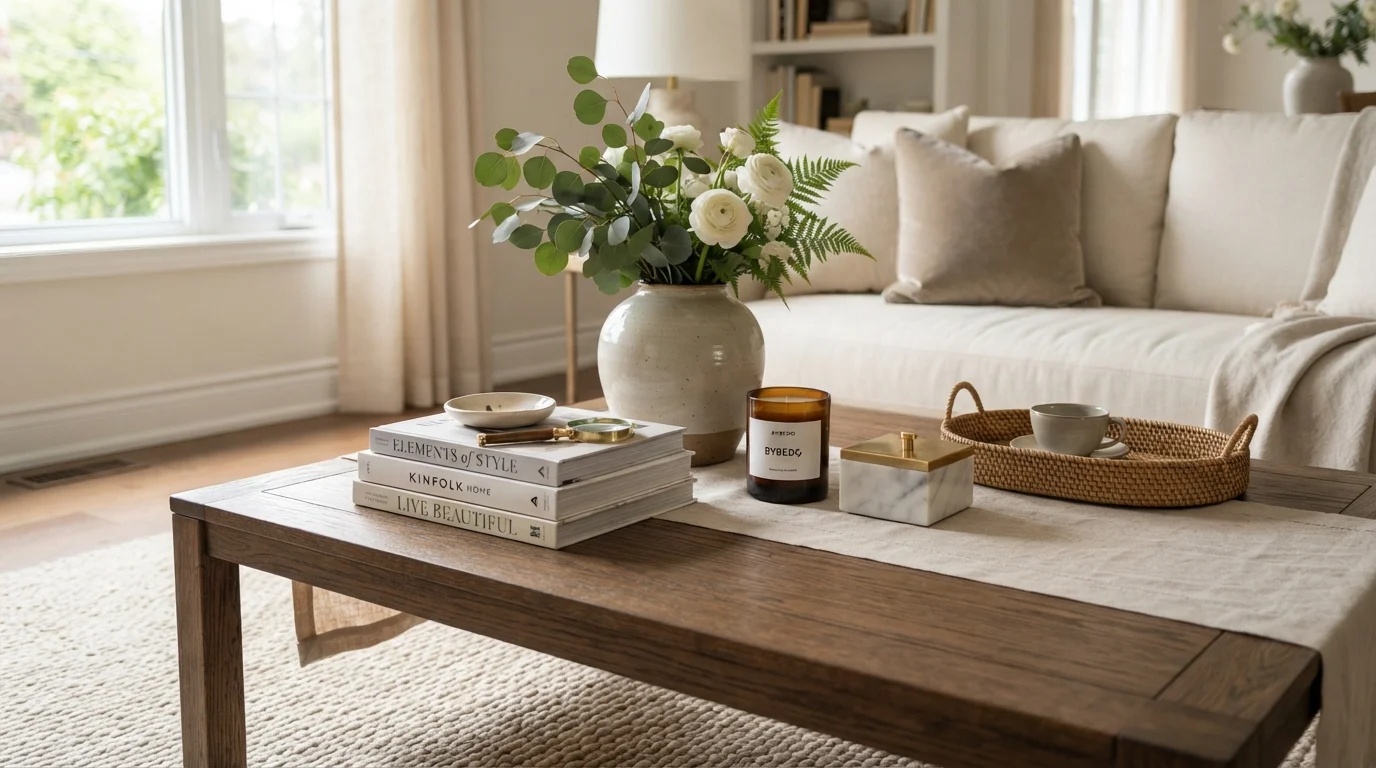
You walk into a room, and your eyes land on the coffee table. It’s the centerpiece of your living room, the spot where drinks rest, books pile up, and conversations happen. But more than that, it’s a stage for your style.
Professional stylists know that a well-dressed coffee table can transform the entire feel of a room. It’s not about filling the surface with stuff; it’s about creating a curated, intentional vignette. If you’ve ever struggled to make your coffee table look effortlessly chic, you’re in the right place.
In this guide, we’ll break down the exact rules and techniques interior stylists use to style coffee tables like a pro. We’ll cover proportions, layering, and the magic of mixing textures. Get ready to turn your coffee table from cluttered to curated.
Start With a Clean Slate
Before you place a single object, clear the entire table. Every remote control, stray coaster, and old magazine needs to go. A clear surface is your blank canvas.
Wipe it down and assess the size and shape of your table. Round tables call for different arrangements than rectangular or square ones. Knowing your dimensions will guide your object choices.
This step is about resetting your mind. You’re not just tidying; you’re preparing for a composition. Trust the process—a clean start always leads to a stronger final look.
Use the Rule of Three (or Five)
The most foolproof rule in styling is working with odd numbers. Groups of three or five objects feel more organic and visually interesting than even pairs.
Think of three items of varying heights. A tall vase, a medium stack of books, and a small sculptural object. Or try five: a large tray, a candle, a small plant, a coaster, and a remote box.
Odd numbers create a natural sense of movement. Your eye travels between the pieces without feeling static. Professional stylists rarely use symmetrical pairs unless they’re executing a very specific, formal look.
Layer in Height and Texture
Flat surfaces are boring. You need vertical interest. Introduce height with a tall ceramic vase, a stack of coffee table books, or a slender sculpture. Then balance it with low, grounding pieces like a tray or a ceramic bowl.
Texture is just as important. Combine smooth ceramics with rough wood, soft linen with glossy glass. The contrast adds depth and makes the arrangement feel rich and intentional.
For a modern living room, try pairing a matte black stone coaster with a glossy white marble tray and a woven seagrass bowl. That mixture of finishes creates a tactile, layered experience.
Anchor the Arrangement With a Tray
A tray is your best friend for coffee table styling. It defines the space where items belong, keeping everything contained and intentional. Without a tray, objects can feel scattered.
Choose a tray that complements your table’s finish and your room’s aesthetic. Go for wood for warmth, metal for edge, or marble for luxury. Place it slightly off-center for a relaxed yet deliberate feel.
Inside the tray, group your smaller essentials—coasters, a remote, a small candle. This gives the table structure while still allowing for larger, statement pieces outside the tray’s boundaries.
- Tray types: Wooden for rustic, lacquered for glam, woven for boho.
- Items for the tray: Coasters, remotes, small candles, a matchbox.
- Items outside the tray: Books, a vase, a sculpture, a plant.
Balance Practicality With Beauty
A coffee table isn’t a museum display; it’s a functional surface. You need to balance visual appeal with real-life use. If you have nowhere to set a drink, the styling has failed.
Always include a designated spot for coasters and a place for the TV remote. Use a decorative box or a small ceramic dish to corral these everyday items.
The best coffee table arrangements feel effortless because they’re designed for living. A stack of books that can be picked up, a tray that catches keys, a candle you actually light—these details make the table feel lived-in and loved.
If you’re looking for broader ideas on making your space more functional, check out our home design tips for cohesive living room solutions.
Incorporate Greenery or Botanicals
Plants bring life to any surface. A small potted succulent, a fresh eucalyptus branch in a test tube, or a dried pampas grass stem all work beautifully on a coffee table.
Choose greenery that fits your light conditions and your willingness to water. Real plants offer the best visual payoff, but high-quality faux botanicals are a great alternative for low-light rooms.
Place the plant off-center and let it contrast with the hard surfaces of books and trays. The organic shape breaks up the geometric lines and softens the overall look.
Use Books as Building Blocks
Coffee table books are not just for reading—they are styling tools. Stack two or three large books horizontally to create a pedestal for a small sculpture or a candle.
Alternatively, lean a single book against a taller object for a casual, layered feel. Choose books with neutral or complementary covers to avoid visual clutter.
The content of the books can also reflect your personality. Art, travel, architecture, or photography books all make excellent choices. They double as conversation starters when guests visit.
A Failsafe Formula for Any Table
If you’re ever in doubt, use this professional stylist’s formula: one tray, one stack of books, one organic element, and one personal object. Adjust the scale to fit your table size.
For a small table, scale down: a small tray, two slim books, a tiny succulent, and a single ceramic dish. For a large table, scale up: a big tray, three stacked books, a large vase with branches, and a sculptural objet.
Here’s a quick reference table to help you visualize proportions:
| Table Size | Tray | Books | Organic Element | Personal Object |
|---|---|---|---|---|
| Small (under 36″) | Small, compact | 2 stacked | Small succulent | Single ceramic dish |
| Medium (36″-48″) | Medium, oval | 3 stacked + leaned | Eucalyptus bundle | Small sculpture |
| Large (over 48″) | Large, rectangular | 4-5 stacked in two piles | Tall vase with branches | Large objet d’art |
Using this formula removes the guesswork and guarantees a professional, balanced result every single time.
Don’t Forget Negative Space
One of the most common amateur mistakes is overcrowding. Professional stylists respect negative space—the empty areas that allow the eye to rest.
Aim to leave at least 40% of your coffee table surface bare. This makes the objects you do display feel more important and intentional. Clutter is the enemy of elegance.
Step back and look at your arrangement from different angles. If it feels busy, remove one or two items. Less is almost always more when it comes to sophisticated coffee table design.
For more guidance on arranging furniture and decor throughout your home, visit our space planning resources.
Frequently Asked Questions
How many items should I put on my coffee table?
Between three and five items for a small table, five to seven for a large table. Group them in odd numbers for the best visual balance.
What if my coffee table is very small?
Use a single tray with one small plant and a coaster. Keep it minimal. A tiny table can still feel styled without being cluttered.
Do I need a tray on my coffee table?
Not strictly, but trays are highly recommended. They define the arrangement and keep small items from looking messy. It’s a simple trick that stylists rely on every day.
Can I use scented candles?
Absolutely. Candles add warmth and a sensory layer to your styling. Place them in a tray or on a stack of books to add height.
How do I style a coffee table with kids at home?
Choose durable materials like wood or metal. Keep fragile items on a high shelf and use a tray to corral remotes and toys. A beautiful but practical setup is possible.
What’s the best way to style a round coffee table?
Place a single large tray in the center, then arrange items around it in a circular flow. Avoid placing items symmetrically—let them orbit naturally.
Should coffee table books face the same direction?
Yes, for a clean look. Stack them with spines aligned. You can also lean one book with the cover facing out for visual variety.
How often should I change my coffee table decor?
Every season is a good rule. Swap out botanicals, change the candle scent, and rotate your books. It keeps the room feeling fresh without a full redesign.
Conclusion
Mastering the art of coffee table styling doesn’t require a degree in interior design. It just takes a few clear rules, a willingness to edit, and an eye for balance.
Start with a clean slate, rely on odd-number groupings, layer in height and texture, and always leave room for negative space. Use a tray to anchor your composition, and don’t forget to include a personal, functional touch.
Your coffee table is more than a surface—it’s a canvas for your personality. With these professional techniques, you’ll create a vignette that feels both polished and perfectly yours.
If you enjoyed these ideas, you might also enjoy our articles on outdoor living and other home decor inspiration to take your style from the living room to the patio.