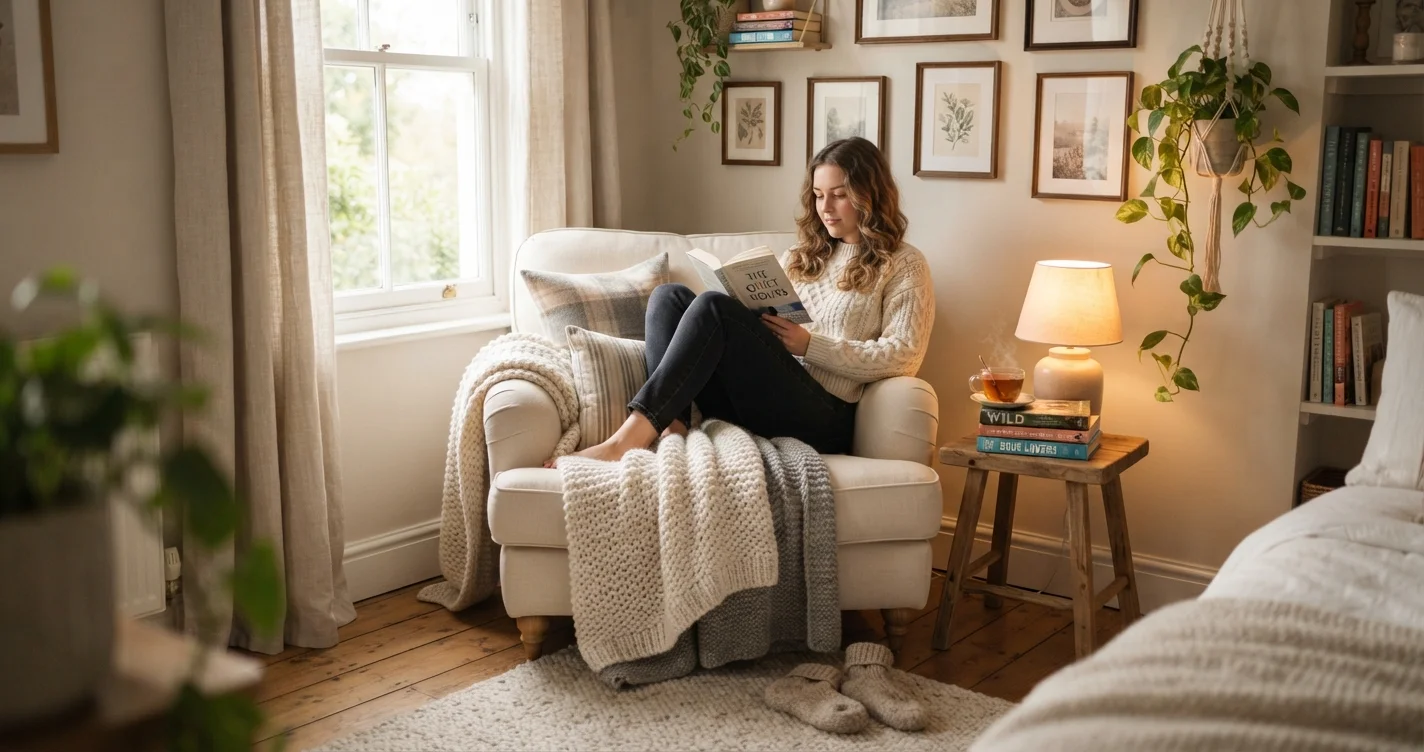
There’s nothing quite like curling up with a good book at the end of a long day. Your bedroom should be more than just a place to sleep—it can also be your personal sanctuary for relaxation. A dedicated cozy reading corner transforms an unused corner into a peaceful escape, no matter how much square footage you’re working with.
Whether you have a spacious master suite or a compact studio, carving out a bedroom reading nook is easier than you think. The key lies in choosing the right elements: comfortable seating, proper lighting, and a touch of your personality. Let’s walk through everything you need to build a space you’ll actually want to sink into.
Why Your Bedroom Needs a Reading Nook
Your bedroom is naturally the most intimate room in your home. It’s where you unwind, recharge, and disconnect from the outside world. Adding a reading corner reinforces that calm atmosphere without requiring a full renovation.
Studies show that reading before bed reduces stress levels by up to 68%. Having a dedicated spot encourages that habit, making it easier to put your phone away and dive into a physical book. Plus, a well-designed nook adds character and depth to your home design—it shows attention to detail and intentional living.
Another practical benefit? It keeps your bed strictly for sleeping. That separation helps improve sleep hygiene, as your brain learns to associate the bed only with rest.
Choosing the Perfect Spot in Your Bedroom
Before buying anything, take a good look at your bedroom layout. The ideal location for your reading corner gets natural light during the day but remains cozy at night. An empty corner near a window is the classic choice, but don’t overlook other possibilities.
If you have an alcove or a bump-out near the door, that’s prime real estate. Even a narrow wall beside a dresser can work if you keep the furniture compact. The goal is to use dead space without blocking traffic flow.
For smaller rooms, think vertically. A wall-mounted reading lamp and a slim chair can fit into a spot that’s only 24 inches deep. Remember, you don’t need a lot of square footage—just a quiet corner where you can sit without distractions. Check out our space planning tips for more ways to maximize tricky layouts.
Selecting the Right Seating for Comfort
The star of your cozy reading corner is the chair. You’ll be spending hours here, so comfort is non-negotiable. A comfortable reading chair should support your back and have armrests wide enough to rest a cup of tea or a tablet.
Here’s what to look for when shopping:
- Depth and height: Choose a seat depth that lets your feet touch the floor or rest on a small ottoman.
- Material: Upholstered chairs with high-density foam or plush cushions work best. Linen and cotton blends breathe well.
- Reclining ability: Not mandatory, but a slight recline takes pressure off your lower back during long reading sessions.
- Size: Measure your intended spot twice. A bulky armchair can overwhelm a tiny corner.
If floor space is tight, consider a chaise lounge or a papasan chair with a removable cushion. Even a sturdy floor pillow with a backrest can work wonders for a bohemian vibe.
Lighting That Won’t Strain Your Eyes
Lighting can make or break your reading experience. Overhead ceiling lights create harsh shadows and glare on pages. Instead, layer your lighting for flexibility and warmth.
A dedicated reading lamp is non-negotiable. Look for an adjustable arm floor lamp that directs light exactly where you need it. Aim for bulbs with a color temperature between 2700K and 3000K—that warm yellow glow mimics sunset and prevents eye fatigue.
For a softer option, wall-mounted sconces with swing arms save floor space and add architectural interest. Battery-operated LED puck lights are a clever choice if you’re renting and can’t wire anything. Pair your main light with a dimmer switch to transition from bright reading to ambient relaxation.
Natural light also matters during daytime reading. Position your chair so the window is to your side, not directly in front of you, to avoid glare on glossy pages.
Texture, Layers, and Cozy Accessories
Once the big pieces are in place, it’s time to layer in comfort. Think about texture first: a chunky knit throw blanket draped over the chair instantly signals “cozy.” Add a soft floor cushion or a small rug underfoot to define the zone visually.
Side tables are essential for keeping your coffee, bookmark, and reading glasses within arm’s reach. A slim C-table that slides over the chair arm is perfect for tight spaces. Alternatively, a stack of hardcover books can double as a makeshift tabletop.
Don’t forget the small touches: a scented candle (cozy scents like vanilla or sandalwood), a small plant for fresh air, and a woven basket for storing your current reads. These elements add warmth and make the corner feel intentional rather than thrown together.
How to Style a Small Space Reading Area
If your bedroom is on the smaller side, don’t worry. A small space reading area can be just as inviting as a large one—it just requires smarter choices. Use floating shelves above the chair to store books instead of a bulky bookcase.
Choose furniture with legs. A chair with exposed legs (rather than one that sits flush on the floor) makes the room feel airier. Mirrors nearby can reflect light and visually double the space.
Consider a corner-mounted shelf unit that hugs the wall. Pair it with a folding chair or a backless stool that tucks away when not in use. The trick is to keep the visual weight low so the room doesn’t feel cramped.
Here’s a quick comparison of seating types for small bedrooms:
| Seating Type | Footprint | Best For |
|---|---|---|
| Armchair (slim profile) | 28″ x 30″ | Long reading sessions |
| Papasan chair | 36″ round | Deep lounging |
| Floor cushion + backrest | 20″ x 20″ | Minimalist or bohemian decor |
| Chaise lounge (compact) | 60″ x 24″ | Napping and reading |
For more inspiration tailored to small spaces, browse our blog for reader-submitted nook transformations.
Frequently Asked Questions
What is the best color scheme for a cozy reading corner?
Warm, earthy tones work best. Think deep greens, terracotta, navy blue, or soft beige. These colors are calming and make the space feel more enclosed and intimate.
Do I need a window for a reading nook?
No. While natural light is nice, you can create a cozy atmosphere with layered artificial lighting. Use warm LED bulbs and a lamp with a shade to diffuse light softly.
How much space do I really need?
You only need about 12 to 16 square feet—roughly the size of a loveseat. A corner that’s 3 feet by 4 feet is plenty if you choose compact furniture.
Can a reading corner double as a workspace?
It’s not ideal because the energy is different. Reading is relaxing; working is productive. If you must combine them, use a chair with a small laptop table and separate lighting settings for each activity.
What type of rug works best under a reading chair?
A low-pile rug or flatweave is easiest to clean and won’t catch the chair legs. For maximum coziness, a sheepskin or shag rug adds incredible texture but requires more maintenance.
How do I make a reading nook pet-friendly?
Choose washable fabric for the chair (like performance velvet or Crypton) and avoid delicate throw pillows. A sturdy woven basket can store both books and pet toys.
Should I use a magazine rack or a bookshelf?
If you read one book at a time, a magazine rack or a small cube shelf is enough. For serial readers with active TBR piles, install floating shelves within arm’s reach.
What’s a quick way to freshen up my existing nook?
Swap out your throw pillow covers seasonally. Add a new scented candle or a small framed print at eye level. Sometimes just rearranging the books on your side table changes the whole feel.
Final Thoughts on Building Your Reading Sanctuary
Creating a cozy reading corner in your bedroom doesn’t require a huge budget or a professional designer. Start with one corner, one comfortable chair, and one good light source. Build outward from there.
Remember that this space is for you. Make it personal—add your favorite blanket, stack of books, and maybe even a small plant. For more bedroom decor ideas and inspiration on transforming your entire home, check out resources like this comprehensive home and garden guide that dives deeper into room-by-room design strategies.
Your reading corner is more than decor—it’s an invitation to slow down. Curl up, turn the page, and enjoy the quiet.