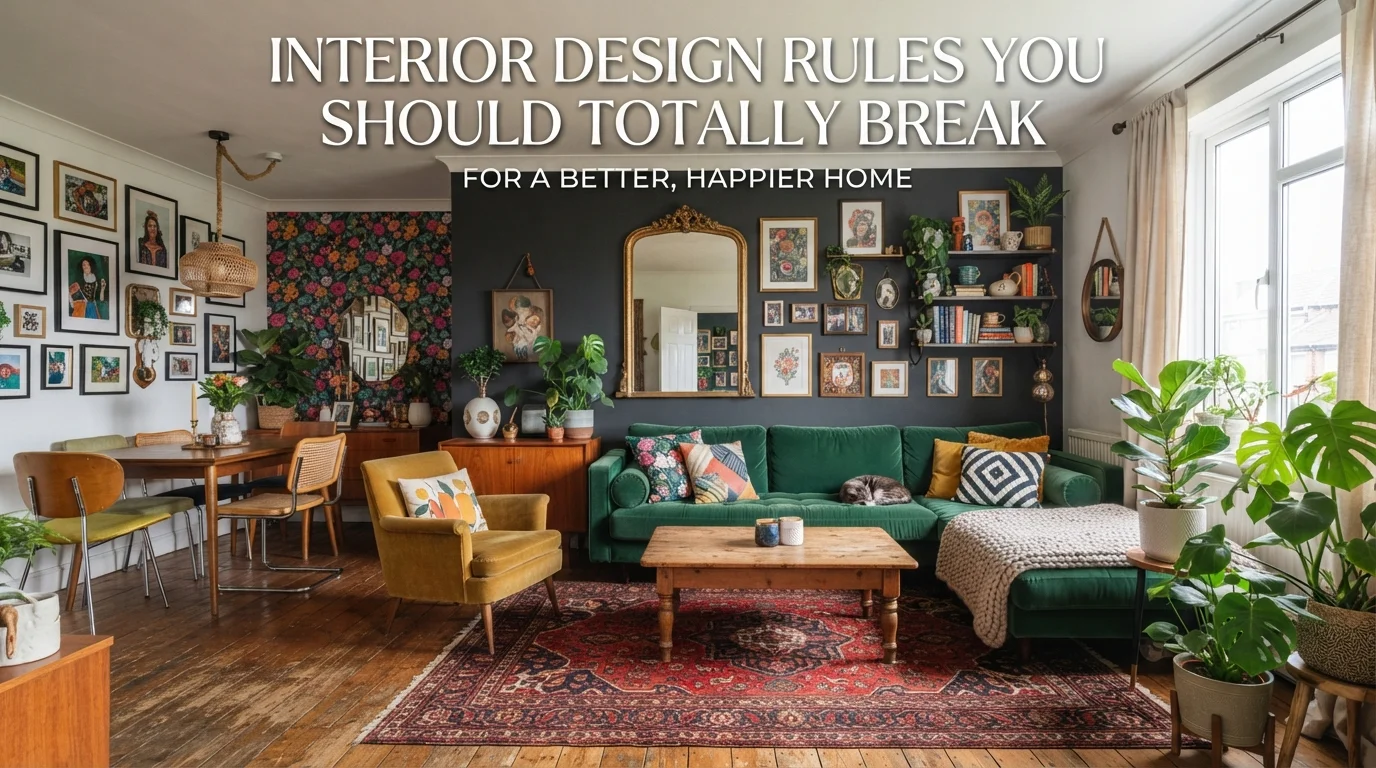
For decades, we’ve been told that good interior design follows a strict playbook: all furniture must touch the walls, every room needs a single focal point, and you should never mix metals. But here’s the truth—some of the most memorable homes are the ones that break the rules. If you’ve ever felt confined by traditional advice, it’s time to relax. The best interior design rules to break are the ones that stifle your personality and creativity.
In this guide, we’ll walk through seven common design commandments you can confidently ignore. Whether you’re decorating a small apartment or a sprawling house, learning when to bend the rules will help you create a space that feels genuinely yours. For more inspiration on crafting a unique look, explore our home design category for ideas that prioritize function and flair over rigid formulas.
1. The “All Furniture Against the Wall” Myth
This is probably the oldest rule in the book: push every sofa and chair against the perimeter to make the room look bigger. In reality, this often creates a cavernous, uninviting void in the center. Floating your furniture—even just a few inches away from the wall—can define conversation areas and make a space feel cozier and more intentional.
Try pulling your sofa forward and placing a console table or a slim bookshelf behind it. This trick works especially well in open-concept layouts, where you need to visually separate the living area from the dining zone. You’ll be surprised how a few inches can transform the flow of the entire room.
2. Matching Everything Is Outdated
Remember the days of buying a full matching bedroom set? That look became dated for a reason. Identical furniture pieces make a room feel like a showroom, not a home. Mixing styles, wood tones, and eras adds depth and tells a story about who lives there.
For example, pair a mid-century modern coffee table with a plush, contemporary sofa, or set a rustic wooden dining table with sleek metal chairs. The contrast creates visual interest. If you’re unsure where to start, check out our space planning tips to learn how to balance different pieces without cluttering the room.
3. Breaking the “One Focal Point” Rule
Conventional wisdom says every room should have a single focal point—usually a fireplace, a large window, or a piece of art. While that works well in some spaces, many modern rooms benefit from multiple points of interest. A living room can feature both a stunning gallery wall and a conversation-starting light fixture without feeling chaotic.
The key is to distribute visual weight evenly. If you have two strong focal points, arrange your furniture so that each area feels anchored. This approach makes rooms feel layered and lived-in rather than flat and predictable. It’s a great way to showcase your collections or travel souvenirs without creating a museum.
4. Small Rooms Should Only Use White
We’ve all heard the advice to paint small spaces white to make them feel larger. While white can work, it often makes a room feel cold or sterile. Darker colors, when used intentionally, can make a compact room feel cozy and dramatic. The trick is to use light-reflecting finishes and adequate lighting.
Consider painting a small powder room in a deep navy or charcoal. Pair it with a large mirror and soft, warm lighting, and you’ll create a jewel-box effect that feels intentional and luxurious. If you need guidance on choosing the right palette, looking at successful home decoration case studies can provide a clearer idea of what works in tight spaces.
5. Don’t Be Afraid of “Wrong” Rug Sizes
The standard advice is to choose a rug that fits under all major furniture pieces. But a “too small” rug placed strategically can actually define a specific zone, like a reading nook or a pet corner. Similarly, a “too large” rug can make a small room feel more expansive by anchoring the entire floor area under the bed or sofa.
Experiment with scale. A small, round rug under a single accent chair creates a cozy vignette, while a large runner in a hallway can guide the eye and extend the perceived length of the space. There’s no one-size-fits-all solution, so trust your eye and the function of the room.
6. The “No Open Shelving” Kitchen Rule
For years, designers warned against open shelving in kitchens because of dust and clutter. However, breaking this rule can actually make a small kitchen feel more spacious and accessible. Open shelves force you to curate your items, which reduces visual noise and encourages a cleaner aesthetic.
Display only your most beautiful dishes, glassware, or cookbooks. Use baskets or ceramic canisters to hide less attractive items. If you’re worried about maintenance, consider a mix of open and closed storage. This approach balances practicality with personality, and it aligns perfectly with many contemporary minimalist home design ideas.
7. Ignoring the “No Pattern Mixing” Rule
Mixing patterns used to be a major faux pas, but it’s now a hallmark of confident design. The trick isn’t to avoid patterns—it’s to coordinate them by scale or color. For instance, pair a large floral print with a small geometric stripe and a solid block of color to ground the look.
Start with one dominant pattern and layer in smaller, complementary ones. A striped area rug, a polka-dot throw pillow, and a plaid armchair can coexist beautifully if they share a common color palette. This approach adds energy and prevents a room from feeling flat. For further reading on how textures and fabrics influence a room’s feel, the experts at Home Garden Spaces offer excellent resources on combining materials.
Quick Reference: Rules vs. Better Approaches
Here’s a simple table to compare the old rules with the smarter, more flexible alternatives you can try today:
| Old Rule | Better Approach |
|---|---|
| Push furniture against walls | Float pieces to create zones and flow |
| Match all furniture | Mix styles, eras, and wood tones |
| One focal point per room | Use multiple interest points with balance |
| White only in small rooms | Try dark, cozy colors with good lighting |
| Perfect rug size under all feet | Use scale intentionally for zones |
| Avoid open kitchen shelves | Curate beautiful items on display |
| Never mix patterns | Coordinate by scale and color |
FAQ: Breaking Interior Design Rules
1. Can I really break all these rules at once?
Absolutely, but start slowly. Pick one or two rules to break per room so you don’t feel overwhelmed. The goal is intentionality, not chaos.
2. Will breaking rules make my home look messy?
Not if you balance bold choices with restraint. Use cohesive color palettes and thoughtful placement to keep the space feeling curated, not cluttered.
3. What if I rent and can’t paint walls?
You can still break color rules with removable wallpaper, large art, or colorful textiles like rugs and curtains. Think temporary but impactful.
4. How do I know when a rule is worth keeping?
Keep rules that serve your daily life. For example, functional rules about traffic flow and lighting are usually worth following—but aesthetic “shoulds” are often negotiable.
5. Does breaking rules work in very small spaces?
Yes, it can work especially well. Breaking the “all white” rule with a dark accent wall, for example, can make a tiny room feel like a cozy retreat instead of a cramped box.
6. Can I mix wood tones in the same room?
Yes, and it’s encouraged. Mix warm and cool wood tones, but repeat each shade at least twice in the room to create a sense of rhythm and intention.
7. Is it okay to break the “art at eye level” rule?
Yes, especially in rooms with high ceilings or in hallways. Hanging art slightly higher or lower can create a more dynamic and unexpected gallery feel.
8. Should I ignore rules from professional designers?
Not entirely—their principles often have good reasoning. But adapt them to fit your lifestyle. Great design serves you, not a magazine cover.
Conclusion: Your Home, Your Rules
Ultimately, the most important interior design rule is that there are no hard-and-fast rules. Trends change, and so do our needs. The homes we love most are the ones that feel authentic, comfortable, and full of personality. By learning which interior design rules to break, you give yourself permission to experiment and create spaces that truly reflect you.
Start with one small change today—move a chair away from the wall, swap a matching set for something eclectic, or add a bold pattern. You might just discover that breaking the rules leads to a better, more beautiful home.