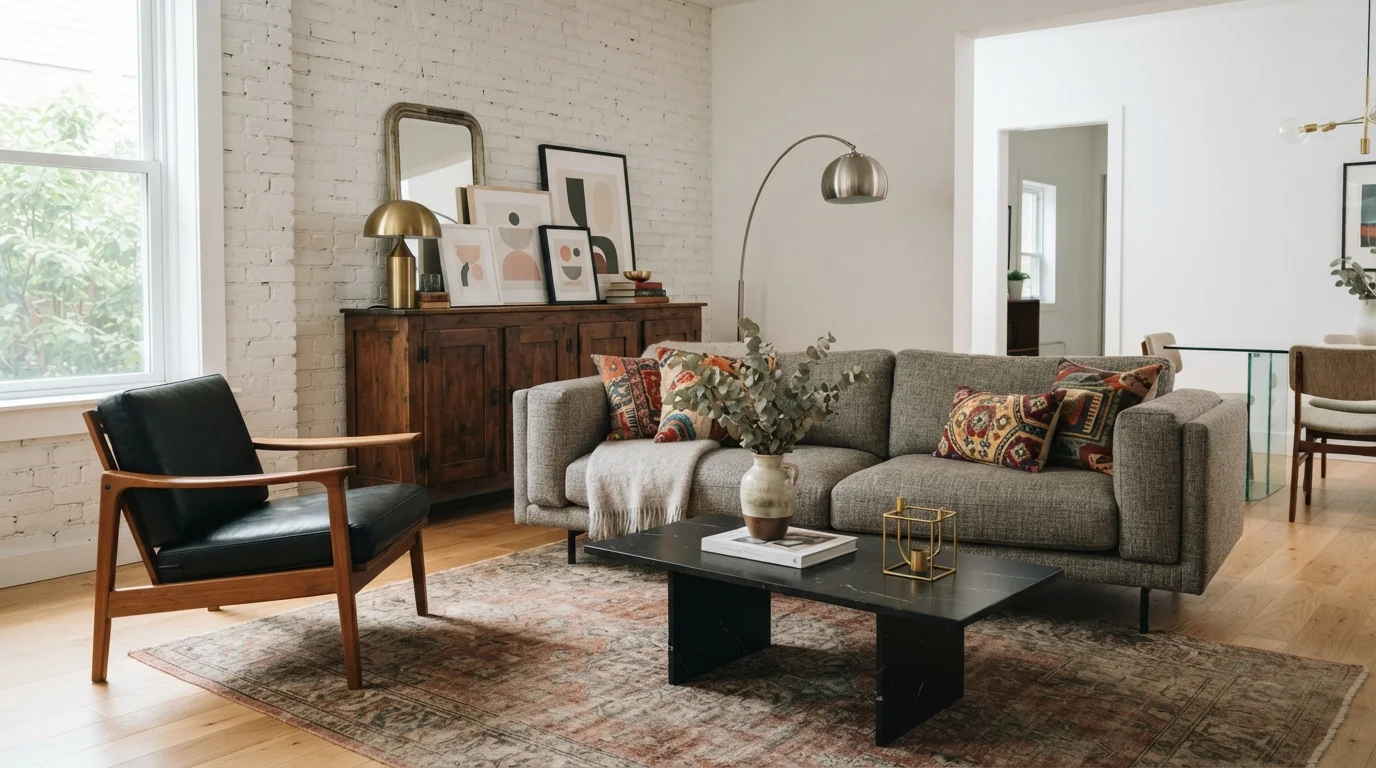
Mixing the charm of vintage furniture with the clean lines of modern design sounds like a decorator’s dream — and a potential nightmare. Without a clear strategy, your living room can quickly look more like a flea market explosion than a curated space.
The good news? Blending vintage and modern decor is actually one of the most rewarding design approaches. It adds character, warmth, and a personal story to your home that no catalog can replicate. The key is balance, not chaos.
In this guide, you’ll learn how to merge eras intentionally, avoid common pitfalls, and create a space that feels both soulful and contemporary. Whether you’re styling a single corner or an entire house, these principles will help you nail the look.
Why Mixing Vintage and Modern Works So Well
Designers love this combination because it creates visual tension that feels alive. A mid-century walnut credenza paired with a sleek glass coffee table — that contrast is what makes a room memorable.
Vintage pieces bring history, patina, and craftsmanship. Modern items add simplicity, function, and airiness. Together, they break the monotony of a fully modern home and prevent a vintage-only space from feeling dated.
It’s also a sustainable choice. By incorporating secondhand finds, you reduce waste and create a home that’s truly yours. For more inspiration on creating cohesive layouts, explore our space planning ideas to see how eclectic pieces can fit together logically.
According to decor experts from a leading home and garden resource, the key is to let one era dominate and the other accent — a principle that prevents visual overload.
Anchor Your Space with a Neutral Foundation
Before you bring in that Victorian armchair or the minimalist sofa, start with a neutral canvas. White, beige, warm gray, or soft taupe walls let both styles shine without competing.
The same goes for large surfaces like flooring and curtains. A natural wood floor or a low-pile wool rug in a solid color won’t scream vintage or modern — it simply grounds the room.
This neutral backdrop acts as the “silent partner” in your design. It connects the old and the new, making the transition feel seamless rather than shocking.
If you prefer a bolder look, consider a dark charcoal or navy accent wall behind a vintage hutch. Just keep the rest of the room neutral to maintain harmony.
Choose a Dominant Style, Then Subdue the Other
A common rule among interior designers: pick one era to lead. You can have a mostly modern room with vintage accents, or a predominantly vintage space with modern touches.
For example, a vintage modern living room might feature a classic Chesterfield sofa (vintage lead) with a sleek acrylic coffee table and minimalist floor lamps (modern accents).
If modern is your lead, try a contemporary modular sofa paired with an antique wooden trunk as a side table and a vintage Persian rug. This way, no single piece fights for attention.
Need more layout ideas for balancing large and small items? Browse our home design collection to see how pros arrange mixed-era furniture in real homes.
Use Color as a Bridge Between Eras
Color is your best tool for unifying disparate styles. If your vintage sofa has a faded teal velvet, echo that exact teal in a modern throw pillow or abstract art print.
Stick to a limited palette — two to three main colors plus one accent. This prevents the room from feeling chaotic even if the furniture shapes are wildly different.
For instance, a warm earth tone palette (terracotta, olive, cream) works beautifully with both a mid-century oak chair and a contemporary boucle armchair. The colors do the talking, not the era labels.
You can also use black as a connector. Black-framed modern art, black metal lamp bases, and black vintage iron pieces tie the entire scheme together.
Balance Proportions and Scale
One of the biggest mistakes in eclectic interior design is mismatched scale. A massive Victorian armoire next to a tiny modern side table looks unbalanced, no matter how beautiful each piece is alone.
Follow this simple table of visual weight:
| Vintage Piece Size | Ideal Modern Counterpart Size | Example |
|---|---|---|
| Large (e.g., armoire, buffet) | Medium to small (e.g., slim floor lamp, small side table) | Antique hutch + minimalist steel stool |
| Medium (e.g., armchair, desk) | Medium (e.g., coffee table, ottoman) | Tufted velvet chair + marble-top modern table |
| Small (e.g., vase, mirror) | Large (e.g., sofa, rug) | Vintage ceramic vase + large modern sectional |
If you’re working with an open floor plan, keep the same principle: group furniture by visual weight, not by era. This creates zones that feel intentional.
Mix Textures to Create Depth
Textures are your silent storytellers. Rough linen, smooth lacquer, warm wood, cool metal — each texture signals a different time period, and together they weave a rich tapestry.
Add a chunky knit throw on a glossy modern sofa. Place a sleek chrome lamp on a weathered wooden sideboard. The tactile variety keeps the eye moving and the space feeling layered.
Here are a few texture pairings that always work:
- Velvet (vintage) + Leather (modern)
- Brass (vintage) + Matte Black (modern)
- Rattan/Wicker (vintage) + Smooth Concrete (modern)
- Aged Wood (vintage) + Glass (modern)
If you’re blending styles outdoors too, check out our outdoor living design tips for mixing eras in your patio or garden.
Let Each Piece Breathe — Don’t Overcrowd
Vintage and modern items need space to be appreciated. Avoid packing a room with too many statement pieces. Clutter is the enemy of mixing old and new furniture successfully.
Give each era its own moment. Place a vintage trestle table alone against a wall with just a modern art piece above it. Let a contemporary sofa float in the center with a vintage side table beside it.
Negative space is your friend. It allows the eye to rest and the stories of each piece to come through. In crowded rooms, both styles just look like noise.
Use Art and Accessories as Unifiers
Art is the ultimate bridge. A large abstract painting above a vintage sideboard instantly modernizes the piece. Similarly, a classic landscape in a gilt frame can soften a stark modern wall.
Accessories like throw pillows, vases, and books can be swapped easily. Use them to repeat colors, materials, or themes from both eras. For example, a modern ceramic vase next to an antique clock on a shelf creates a vignette that celebrates contrast.
Don’t be afraid to group vintage and modern small items together on a tray or shelf. The combination looks curated, not accidental.
For more lifestyle and home design inspiration, browse the latest articles on our blog.
Frequently Asked Questions
Can I mix antique furniture with industrial modern decor?
Absolutely. The roughness of industrial metal and concrete pairs beautifully with ornate antique wood and gold. Just keep the color palette neutral and let textures lead.
What is the 80/20 rule for mixing styles?
It suggests that 80% of your room should follow one dominant style, while 20% comes from the contrasting era. This keeps the look intentional and prevents a cluttered feel.
How do I avoid making my room look like a thrift store?
Edit ruthlessly. Only keep pieces that serve a function or have strong emotional value. Make sure each item has enough space around it. Grouping similar items (e.g., three vintage vases) also helps them read as intentional.
Should I match wood finishes when mixing eras?
Not necessarily. Contrasting wood tones (e.g., dark walnut with pale ash) can look wonderful. The trick is to repeat one wood tone elsewhere in the room to create balance — like a walnut frame and a walnut table base.
Can I blend vintage and modern in a small apartment?
Yes. Focus on one or two vintage statement pieces (a rug, a lamp, a chair) and keep the rest minimal and modern. Use mirrors to create space and light. Small spaces benefit from the clarity of a focused palette.
What are the easiest pieces to start mixing?
Start with lighting, rugs, and side tables. A vintage brass lamp on a modern desk, or a modern floor lamp beside a vintage sofa, is a low-risk, high-impact introduction to mixing eras.
Is it okay to mix different decades of vintage?
Yes, but stay within a 20-30 year range (e.g., 1950s and 1970s) or use modern pieces to anchor the extremes. A Victorian chair with a 1960s lamp and a 2020s sofa can work if they share a color or material.
Conclusion: Embrace the Beautiful Tension
Blending vintage and modern decor isn’t about perfection — it’s about personality. The slight imperfection of a worn-in leather chair next to a glossy new table tells a story that a showroom can’t replicate.
Start small. Swap one modern lamp for a vintage one. Add a contemporary abstract painting above your heirloom buffet. Pay attention to color, scale, and texture, and let each piece earn its place.
The result is a home that feels collected over time, not decorated in a weekend. And that kind of home? It’s timeless.
For a deeper dive into designing with character, explore our garden and outdoor blend tips at garden design.