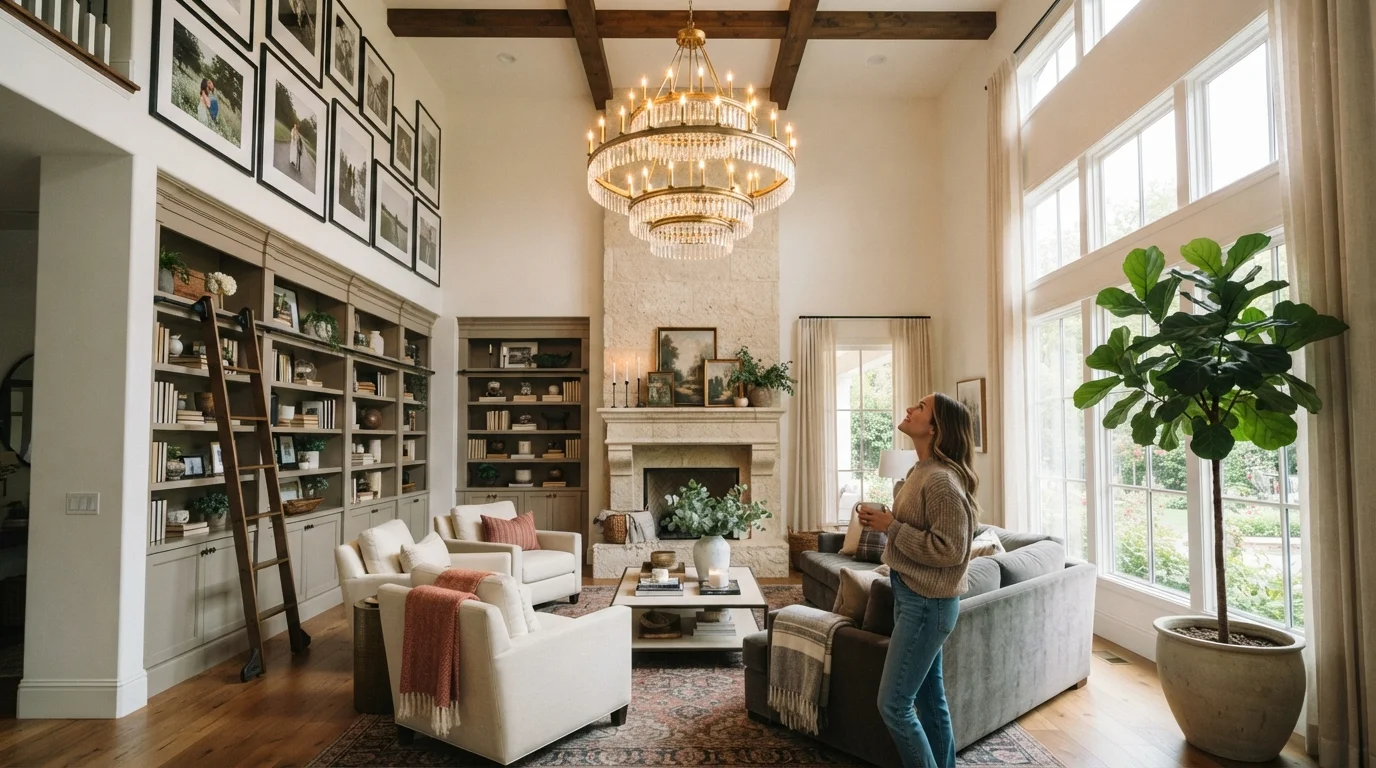
Standing in a room with soaring ceilings should feel grand, not depressing. Yet many homeowners struggle with that hollow, empty feeling that a large vertical space creates. The good news? You don’t need to spend a fortune to transform a cavernous room into a warm, inviting space. With the right mix of high ceiling wall decor, smart lighting, and furniture arrangement, you can make your home feel both spacious and snug.
Let’s walk through seven actionable ways to decorate high ceilings and banish that awkward emptiness for good.
1. Hang Statement Light Fixtures That Command Attention
Your lighting is the most powerful tool for filling vertical space. A single flush-mount light will make a tall ceiling feel like a black hole. Instead, go for oversized pendants, a dramatic chandelier, or a cluster of hanging lights at varying heights.
Pro tip: Hang fixtures lower than you think. For an eight-foot ceiling, a light hangs about 60 to 66 inches from the floor. For every additional foot of ceiling height, add about three inches. This keeps the visual focus in the living zone, not the empty air above.
If you’re still planning your overall layout, take a look at our guides on vertical space planning to see how lighting and furniture can work together.
2. Use Tall Art and Large-Scale Wall Decor
Small picture frames get lost on a tall wall. You need pieces that have serious visual weight. A single oversized canvas, a tall vertical tapestry, or a collection of mirrors arranged in a vertical column can anchor the space.
When you choose tall wall art placement, there is a simple rule: the center of the artwork should be at eye level (about 57 to 60 inches from the floor), regardless of the ceiling height. For a dramatic effect, lean an extra-tall floor mirror against the wall. It reflects light and makes the room feel even larger without feeling empty.
3. Bring the Ceiling Down with Color and Beams
Painting a high ceiling a darker shade than the walls is a classic trick. A soft charcoal, navy, or forest green on the ceiling visually lowers it, creating an intimate feel. You can also install faux wood beams — they break up the vast expanse of white drywall and add rustic warmth.
Another option: wallpaper on the ceiling. A subtle geometric or nature-inspired pattern draws the eye upward in an interesting way, rather than leaving it to stare at a blank void. This is one of the most effective large room lighting ideas when combined with a dark ceiling because the light fixtures pop beautifully against the darker background.
4. Install Full-Length Drapes from Ceiling to Floor
Your window treatments should match the scale of the room. Mount curtain rods as close to the ceiling as possible — not right above the window frame — and choose drapes that puddle slightly on the floor. This elongates the window visually and fills the wall with soft, fluid texture.
Heavy linen or velvet drapes also add sound absorption, which is critical in rooms with cozy high ceilings where sound tends to echo. This single change makes the entire room feel more grounded and comfortable.
5. Divide the Vertical Space with Furniture Height
Low furniture floating in the middle of a tall room only emphasizes the emptiness above. Use tall bookcases, floor-to-ceiling shelving units, or armoires to draw the eye up. A tall houseplant like a fiddle-leaf fig or a monstera also helps bridge the gap between the floor and the ceiling.
If you have an open floor plan, think about creating zones with level changes or room dividers. For more ideas on arranging furniture in open spaces, check out our home design category where we cover scaling and proportion.
Here is a quick guide to choosing furniture height based on your ceiling:
| Ceiling Height | Recommended Furniture Height | Best Art Size |
|---|---|---|
| 9 to 10 feet | 6 to 7 feet (tall bookcases, headboards) | 24 x 36 inches or larger |
| 11 to 14 feet | 7 to 9 feet (floor-to-ceiling shelving) | 40 x 60 inches or larger |
| 15+ feet | Custom-built units, architectural elements | Oversized canvas, multi-panel pieces |
6. Add Layers of Texture to the Walls
Flat drywall feels cold. Introduce texture to break up the monotony. Wainscoting, shiplap, vertical paneling, or even a stone accent wall that goes two-thirds of the way up can add depth. A large woven wall hanging or macrame piece also adds organic texture at a scale that fits the room.
If you enjoy bringing natural elements inside, be sure to visit our garden design section for inspiration on incorporating biophilic materials like wood and stone into your interior.
7. Create a Gallery Wall That Climbs
I know I said small frames get lost — but a carefully arranged gallery wall that climbs upward is the exception. Use a mix of large and medium frames, with the largest pieces at the bottom or center, and let the arrangement flow upward like a staircase. This fills the vertical real estate while keeping the eye moving.
For a cohesive look, keep all frames in the same color family (black and white, or gold and brass) and leave about four to five inches between each piece. It is an affordable way to decorate high ceilings without committing to a single massive artwork.
If you’re looking for more curated ideas, you can browse our blog for seasonal decor tips and real-home examples.
FAQ: Decorating High Ceilings
How can I make a room with high ceilings feel cozy?
Add warm lighting (multiple layers: floor lamps, table lamps, and pendants), use area rugs to define zones, and bring in soft textures like curtains, throws, and upholstered furniture. Warm colors on the walls or ceiling also help.
What is the best way to hang art on high ceilings?
Center the artwork at eye level (57 to 60 inches from the floor) for standard pieces. For oversized vertical art, you can start a few inches above the furniture below and let the piece take up the wall proportionally.
Should I paint my high ceiling a dark color?
Yes, if you want to make the room feel more intimate. Dark ceilings visually lower the height and create a cocooning effect. Just make sure to have good lighting so the room doesn’t feel like a cave.
Do I need special lighting for high ceilings?
You need fixtures with longer downrods or chains to bring the light closer to the living space. Look for damp-rated or adjustable pendants. Recessed lighting alone is rarely enough — you want statement light that fills the vertical void.
How do I clean and maintain decor on very high walls?
Use an extendable duster with a microfiber head for artwork and light fixtures. For large art, consider having a professional install it with a pulley system that allows you to lower it for cleaning or swapping.
Can I use wallpaper on high ceilings?
Absolutely. Wallpaper on the ceiling is a bold choice that adds pattern and visual interest. Use subtle, nature-based patterns for a soothing look, or bold geometric prints for a dramatic accent.
What are some budget-friendly ideas for high ceilings?
Use tall floor plants (snake plants, fiddle-leaf figs), lean large mirrors against walls, install inexpensive curtain rods high above windows, and create a gallery wall with thrifted frames. Even a simple painted vertical stripe can add interest without spending much.
Does a high ceiling make a room harder to heat or cool?
Yes, HVAC systems have to work harder in rooms with high ceilings. Ceiling fans on reverse mode in winter (pushing warm air down) and a programmable thermostat can help. Properly insulated drapes also reduce energy loss.
Conclusion
Empty high ceilings don’t have to be a design nightmare. By using layered lighting, large-scale decor, and thoughtful furniture proportions, you can turn that awkward vertical space into your home’s most striking feature. Start with one or two of these strategies — like adding oversized art or changing your curtain rod placement — and see how the room transforms. For a deeper dive into planning your entire layout, explore our outdoor living and indoor design resources. Remember, the goal is not to fill every inch of air, but to guide the eye in ways that feel intentional, comfortable, and beautiful.
For more expert inspiration on making your home feel complete, you can also check out resources like comprehensive home and garden guides that cover everything from decor to maintenance.