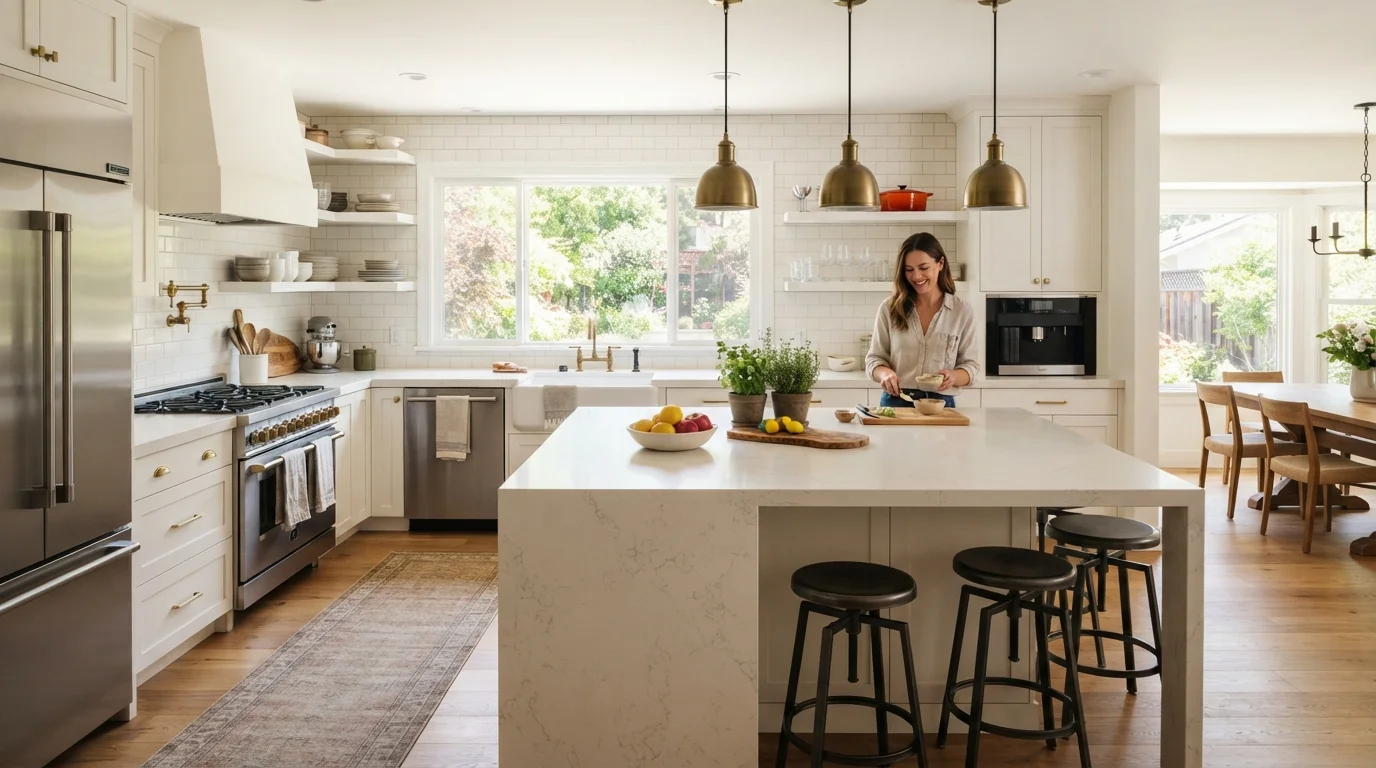
Walking into a kitchen that feels both fresh and familiar is rare. You want a space that looks stunning today but won’t feel dated in ten years. That’s the sweet spot of modern kitchen design ideas — they marry clean lines with lasting appeal.
Whether you are planning a full renovation or just refreshing a few elements, focusing on classic choices saves you money and headaches down the road. Let’s break down the design decisions that stand the test of time.
1. Flat-Panel Cabinetry: The Silent Star
Shaker cabinets have their place, but flat-panel (or slab) doors are the unsung heroes of enduring modern kitchens. Their uninterrupted surfaces create a calm, streamlined look that works with any color palette.
Choose materials like painted MDF, thermally fused laminate, or natural wood veneer. These finishes resist wear and never collect dust in complicated grooves. Pair them with integrated handles or push-to-open mechanisms for that seamless effect.
For a warmer touch, opt for oak or walnut veneers. They add texture without clutter and age beautifully over time. If you prefer color, go for muted tones like sage green, charcoal, or off-white — they stay relevant longer than trendy brights.
2. A Neutral Base with One Statement Element
The most timeless modern kitchens follow a simple rule: keep the foundation neutral and add personality through one standout piece. Think white or light gray walls, quartz countertops, and a bold marble island or a colored range hood.
This approach lets you update the look without ripping out cabinets. Swap out bar stools, change the backsplash tile, or introduce new hardware — the core remains flexible. Designers call this the “anchor and accent” strategy, and it works because it balances calm with character.
Remember that statement elements should feel intentional, not loud. A veined waterfall island or a black matte faucet can carry the whole room without overwhelming it.
3. Open Shelving Done Right
Open shelving is not going away, but the way we use it has matured. Instead of cluttering every surface, modern kitchens reserve open shelves for curated displays — a few ceramic pieces, daily-use glassware, or cookbooks.
Install floating shelves in a material that contrasts with your backsplash. For example, warm oak shelves against a white subway tile wall create depth. Keep the items on display to about 70% decorative and 30% functional to avoid visual noise.
If dusting feels like a chore, limit open shelving to one area, like above the sink or coffee station. The rest of your storage should stay behind closed doors. For more ideas on balancing open and closed storage, check out our blog for deeper dives into layout psychology.
4. Layered Lighting: A Non-Negotiable
One overhead light is the fastest way to make a kitchen feel flat. Modern kitchen lighting ideas rely on three layers: ambient, task, and accent. This combination makes the room functional and inviting at every hour.
Start with recessed ceiling lights for general illumination. Add under-cabinet LED strips to brighten countertops without shadows. Finally, install pendant lights or a linear suspension over the island as a sculptural focal point.
Dimmers are your secret weapon. They let you transition from bright cooking mode to soft dinner ambiance with a twist. Brass, black, or chrome fixtures all work — just pick one metal finish and stick with it throughout the kitchen.
5. Smart Layouts That Respect Workflow
A beautiful kitchen is useless if you keep bumping into corners. The classic work triangle — sink, stove, fridge — still guides good design, but modern floor plans also include distinct zones for prep, cooking, and cleaning.
Incorporate a large island with seating on one side and prep space on the other. Add a pot-filler faucet next to the stove and a dedicated trash pull-out near the sink. These small details make daily cooking feel effortless.
If you are working with a galley or L-shaped kitchen, focus on uninterrupted counter runs. Every inch of counter space should be usable. For comprehensive guidance on arranging your layout, visit our dedicated space planning section.
6. Quality Countertops and Backsplashes
Countertops and backsplashes take the most physical abuse in a kitchen. Choosing durable, low-maintenance materials is essential for longevity. Quartz remains a top choice for its non-porous surface and consistent pattern.
For backsplashes, large-format porcelain tiles or full-slab stone create fewer grout lines, which means easier cleaning. Subway tile laid in a herringbone pattern adds a classic twist without feeling dated. Avoid busy mosaics — they tend to look tired after a few years.
Here is a quick comparison of popular countertop materials for modern kitchens:
| Material | Durability | Maintenance | Best For |
|---|---|---|---|
| Quartz | High | Low (seal-free) | Busy families |
| Granite | High | Medium (annual sealing) | Natural stone lovers |
| Marble | Medium | High (stains easily) | Baking stations |
| Soapstone | High | Low | Farmhouse styles |
7. Integrated Appliances for a Clean Look
Nothing disrupts a modern kitchen’s flow like a bulky refrigerator sticking out six inches. Panel-ready appliances let you attach cabinet fronts so everything blends into one smooth surface.
Built-in refrigerators, dishwashers with custom panels, and drawer-style microwaves are worth the investment. They cost more upfront but add a level of polish that resale buyers love. If your budget is tighter, at least choose counter-depth refrigerators to reduce the visual overhang.
Stainless steel remains the standard for visible appliances, but matte black and white are gaining traction. Choose one finish and repeat it across all small and large appliances for cohesion.
If you are also rethinking your outdoor spaces for better flow, our home design section covers how to connect indoor and outdoor kitchens seamlessly.
8. Thoughtful Storage That Stays Hidden
Clutter is the enemy of modern design. Every item should have a dedicated home, preferably out of sight. Deep drawers for pots, vertical dividers for baking sheets, and pull-out pantry racks maximize every inch of cabinetry.
Consider a walk-in pantry or a tall pantry cabinet if your floor plan allows. If not, use drawer organizers inside base cabinets to keep utensils and spices tidy. The goal is to clear the countertops of everything except the daily essentials (coffee maker, knife block, soap dispenser).
This approach aligns with the minimalist kitchen layout philosophy — less visible stuff means more visual peace. And peace never goes out of style.
For those looking to extend that calm feeling outdoors, explore our outdoor living guides to create a cohesive aesthetic between your kitchen and patio.
9. Natural Materials and Texture
Modern doesn’t have to mean cold. Adding natural elements like wood, stone, or woven textures warms up the space and adds richness. A live-edge wooden shelf, a stone backsplash, or linen barstools can soften sharp lines.
Texture is equally important. Combine glossy cabinets with matte hardware, or pair a smooth quartz island with a ribbed glass pendant. These contrasts keep the eye moving and prevent the room from feeling sterile.
Plants are another easy way to bring life into a modern kitchen. A small herb garden on the windowsill or a trailing pothos on top of a cabinet adds organic movement. For more outdoor and plant inspiration, check out our garden design resources.
Frequently Asked Questions
1. What is the most timeless color for a modern kitchen?
White, soft gray, and warm beige remain the safest choices for cabinets and walls. They create a blank canvas that adapts to changing accessory trends. If you want color, use it on an island or backsplash that can be updated later.
2. How can I make a small modern kitchen look bigger?
Stick to light colors for cabinets and walls, use reflective surfaces like glossy tiles or glass, and install under-cabinet lighting to eliminate shadows. Open shelving also helps by exposing wall space instead of blocking it with upper cabinets.
3. Are open shelves practical for everyday use?
They work best for items you use daily — plates, glasses, oils. For everything else, closed cabinets keep dust away. Combine open shelving with drawers underneath to balance display and storage.
4. What type of flooring works best in a modern kitchen?
Large-format porcelain tiles, luxury vinyl planks, and engineered hardwood are top choices. They are durable, easy to clean, and offer clean lines. Avoid small mosaic tiles that create busy patterns and more grout lines to maintain.
5. Do modern kitchens need an island?
Not always, but an island adds prep space, storage, and seating — making it highly functional. If your kitchen is under 10 feet wide, consider a peninsula or a rolling cart instead of a fixed island.
6. How often should I update my kitchen hardware?
Hardware is one of the easiest things to refresh. Wait for the finish to visibly wear or until you feel the style no longer matches your aesthetic. Every 5–8 years is a reasonable cycle for handles and knobs.
7. What lighting temperature is best for a kitchen?
Use 2700K to 3000K for warm, inviting light that makes food look appetizing. Avoid anything above 4000K, which can feel clinical. Dimmable LEDs give you flexibility to adjust the mood.
Conclusion
Creating a modern kitchen design ideas space that remains stylish for years comes down to smart, restrained choices. Prioritize quality materials, simple silhouettes, and functional layouts over fleeting trends.
Focus on what you use every day — good lighting, durable countertops, and clever storage. Let the design breathe. A kitchen that feels calm, works hard, and reflects your personality will never look outdated.
For more inspiration and detailed guides on building your dream home, visit our blog and explore all categories including home design and space planning.
Recommended external resource: Discover premium home improvement resources tailored for modern living at this home garden expert guide for additional product recommendations and design toolkits.