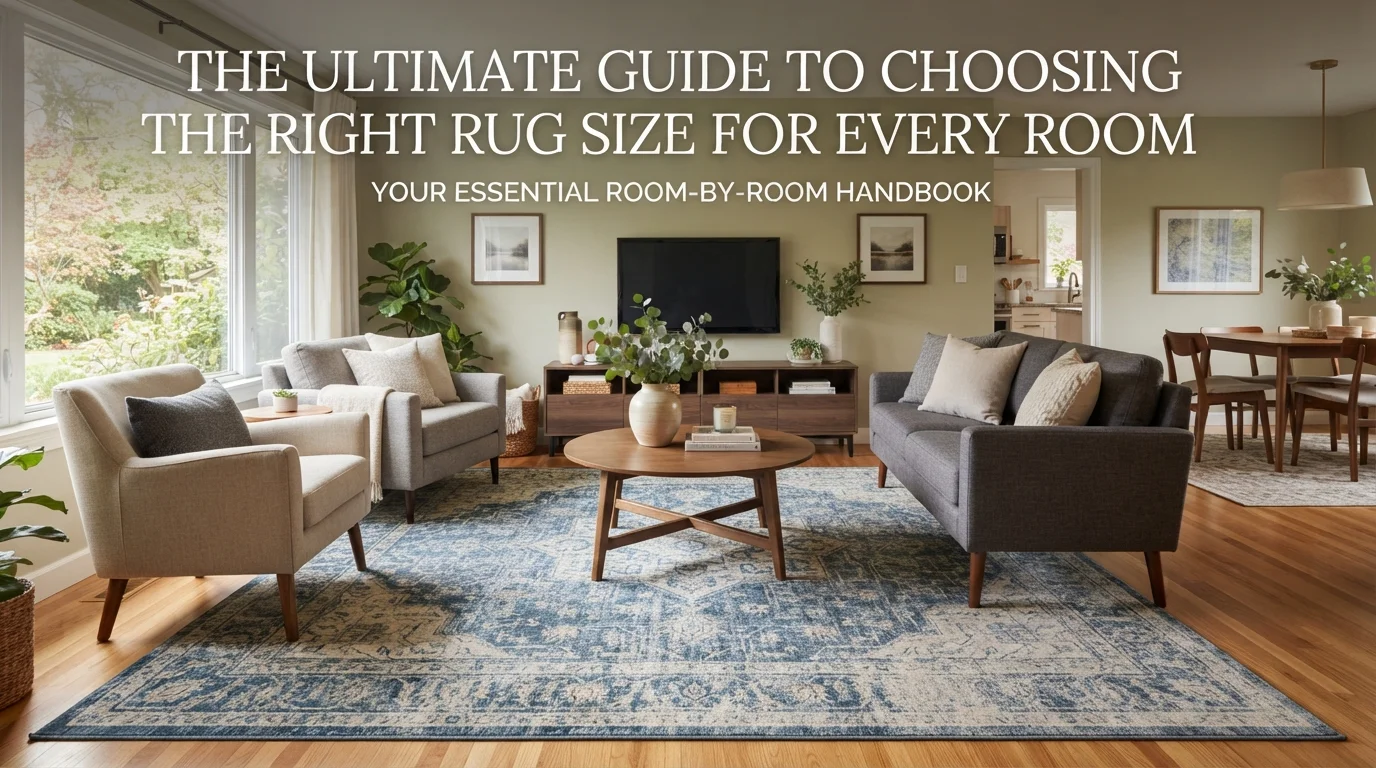
Getting the rug size wrong is one of the most common—and most frustrating—mistakes in home design. A rug that’s too small makes a room feel disjointed, while one that’s too large can overwhelm your furniture layout. After 15 years in this space, I can tell you that choosing the right rug size is the single easiest way to anchor a room and bring everything together.
This guide covers everything you need to know about rug size guide principles, room by room. Whether you’re furnishing a cozy apartment or a sprawling family home, these rules will help you nail the proportions every time.
Why Rug Size Matters More Than You Think
Think of a rug as the foundation for your furniture arrangement. The wrong size can make even an expensive rug look cheap. A properly sized rug defines the conversation area, adds warmth, and creates visual flow. It’s not just a floor covering—it’s a design tool.
When you place a small rug in the middle of a large living room, the furniture ends up floating in space. On the flip side, a rug that extends too far can make the room feel cramped. Getting the dimensions right is the difference between a space that feels pulled together and one that feels like a missed opportunity.
Living Room Rug Size: The Front Legs Rule
For most living rooms, the most reliable guideline is the “front legs rule.” Your rug should be large enough that the front legs of your sofa and chairs sit on the rug, while the back legs remain on the floor. This creates a cohesive seating area without looking like the rug is trapped under the furniture.
Standard living room rug size recommendations are: 8×10 feet for an average room, and 9×12 feet or larger for a spacious layout. If your seating is arranged against walls, an 8×10 works beautifully. For floating sectional arrangements, go up to 10×14 to keep everything connected.
In a small living room, a 6×9 rug can work if your sofa is compact, but never go smaller than that. A rug that’s too dainty will make the room feel even smaller. For more space planning tips, check out our space planning category for layout ideas that maximize every square foot.
Dining Room Rug Size: It’s All About Chair Clearance
The dining room demands precision. The rug must extend far enough beyond the table so that chairs remain on the rug when pulled out. If the back legs of a chair end up on bare floor while your guests are seated, it looks sloppy and can be a tripping hazard.
For a standard 6-person rectangular table (around 36×60 inches), you need at least a 8×10 rug. For a round 48-inch table, try a 7-foot round rug. Add 24 to 30 inches to each side of the table dimensions to find your ideal dining room rug size. If your room is narrow, consider a custom runner to avoid a rug that’s too wide.
Need more inspiration for your home? Browse our home design articles for curated ideas and real-world examples.
Bedroom Rug Placement: Softness Where You Step
In the bedroom, the rug should enhance comfort and define the sleeping area. The most popular choice is placing a rug under the bed that extends at least 18 inches on each side and at the foot. This gives you a soft landing when you get out of bed.
For a queen-size bed, a 6×9 rug works well if placed horizontally under the lower two-thirds of the bed. For a king, go with an 8×10. If you prefer a full-coverage look, use a 9×12 rug that extends beyond all sides of the bed. Just leave at least 12 inches of bare floor between the rug and the wall for a balanced look.
As a quick reference, here’s a handy table for bedroom rug placement:
| Bed Size | Recommended Rug Size | Placement Tip |
|---|---|---|
| Twin / Full | 4×6 or 5×8 | Place horizontally at the foot of the bed |
| Queen | 6×9 | Under lower two-thirds of the bed |
| King | 8×10 | Under bed, extending 18–24 inches on sides |
| California King | 8×10 or 9×12 | Centered under the entire bed frame |
Runners and Hallways: The Minimum Width Rule
Hallway rugs—or runners—require a different approach. The runner should be about 4 to 6 inches narrower than the hallway width on each side. This leaves a nice border of exposed flooring and prevents the rug from curling at the edges.
For a standard 36-inch-wide hallway, a 24-inch or 27-inch-wide runner is ideal. In terms of length, leave at least 4 inches of floor exposed at both ends of the hallway. If the run is long, avoid placing a rug that stops awkwardly in the middle of a doorframe. The same rules apply to area rug dimensions for a foyer or entryway—just scale down proportionally.
Want to extend these ideas outdoors? Our outdoor living guides cover rug sizes for patios and decks, using the same principles with weather-resistant materials.
Common Rug Size Mistakes (And How to Fix Them)
Even seasoned decorators slip up sometimes. Let me walk you through the most frequent errors I’ve seen over the years:
- The floating island: A rug that’s too small and sits alone in the center of the room, with all furniture legs off it. Fix: choose a rug that reaches at least the front legs of your seating.
- Carpet overlap: Layering a small rug over a wall-to-wall carpet can work, but only if the top rug is at least 5×7 to avoid looking like a doormat.
- The door slam: A rug that extends into a door swing path is a major hazard. Always check that the rug sits at least 4 inches away from any door.
- The budget trap: Buying the cheapest size (often 5×7) because it’s on sale, when your room clearly needs an 8×10. Save up—size always beats price in visual impact.
For more depth on tackling layout challenges, take a look at our space planning resources for step-by-step floor plan techniques.
If you’re looking for a complete, step-by-step system to perfect every room in your home, I also recommend the expert course at Home Garden Pro—it’s filled with practical guides on furniture placement and decor sizing.
FAQs: Rug Size Questions Answered
What is the best rug size for a small living room?
A 5×8 or 6×9 rug is usually best for small living rooms. Make sure the front legs of your sofa and chairs sit on the rug. Avoid 4×6, which tends to look too small.
How much space should be between a rug and the wall?
Leave 10 to 20 inches of bare floor between the edge of the rug and the wall. This creates a clean frame and prevents the rug from feeling like wall-to-wall carpet.
Can I use a round rug in a rectangular room?
Absolutely. Round rugs work well under round dining tables or in reading nooks. Just make sure the rug is large enough that the furniture legs rest comfortably on it.
What size rug for a 6-person dining table?
An 8×10 rug is the safest choice for a standard 6-person table. Add 24 inches to each side of your table dimensions to calculate your exact needs.
Is it okay to layer rugs?
Yes, layering is a great design trick. Use a neutral natural fiber rug as a base (like jute or sisal) and top it with a smaller colorful or patterned rug. The bottom rug should be at least 9×12.
Should a rug go under a sofa completely?
Not necessarily. The front legs rule is more common. However, in open-concept spaces, a rug that goes completely under the sofa can help define the zone. Just keep at least 6 to 8 inches of floor visible around the edges.
What if my room is an odd shape?
Custom rugs are a great solution for L-shaped or irregular rooms. You can also use two separate rugs to define different zones, like a reading area and a seating area.
How thick should a rug be in a dining room?
Choose a low-pile rug (under 0.5 inches thick) for dining rooms. High-pile rugs make chairs hard to slide in and out, and they trap crumbs more easily.
Conclusion
Choosing the right rug size doesn’t have to be guesswork. Use these room-by-room guidelines to measure your space, think about furniture proportions, and then pick the dimensions that fit. A well-sized rug is the anchor every room deserves.
Remember: when in doubt, size up. A larger rug always feels more luxurious and intentional than a small one. Start with the table we’ve provided, measure twice, and you’ll have a space that looks professionally designed in no time.
For more design wisdom, don’t forget to check our blog for weekly updates on materials, colors, and layout tips.