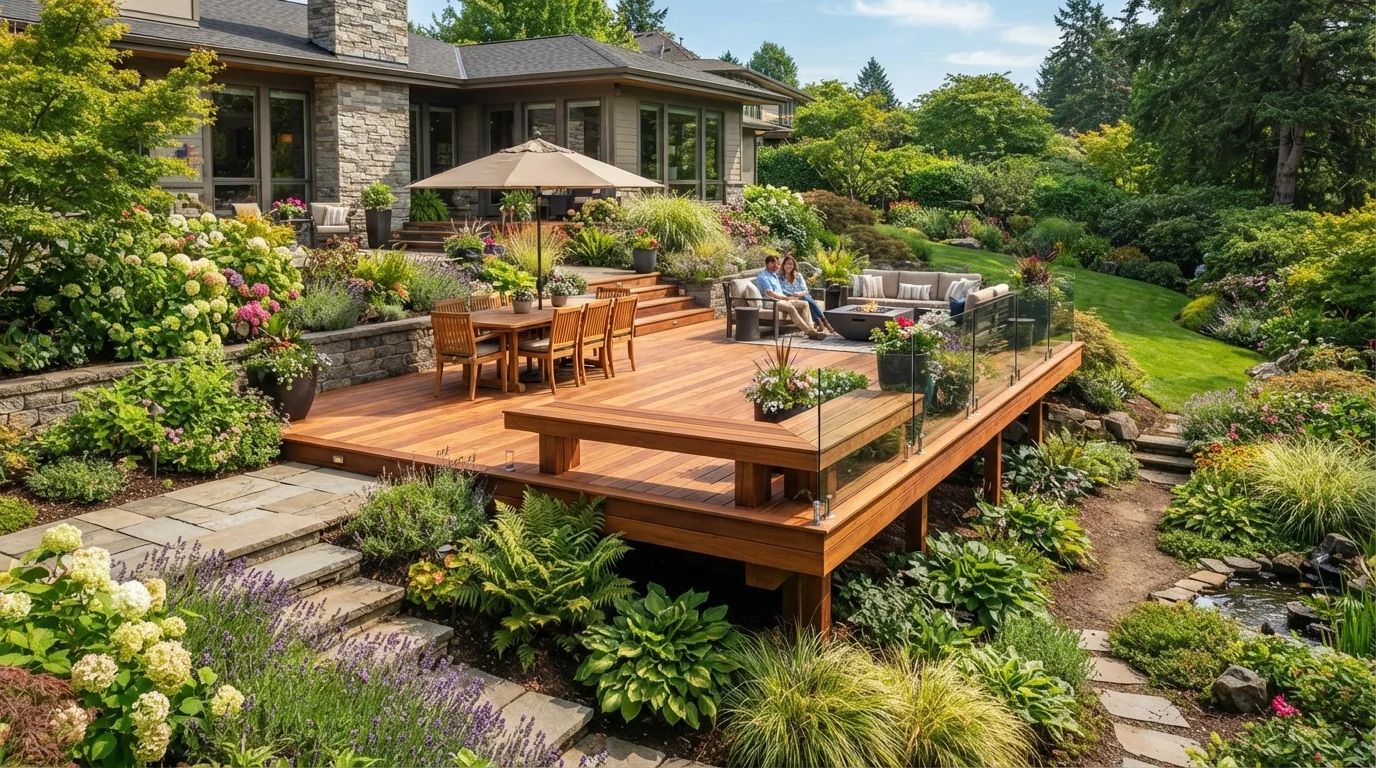
Your garden is more than just soil and plants—it’s an extension of your home. And nothing bridges the gap between indoor comfort and outdoor beauty quite like a well-planned wooden deck. Whether you have a sprawling backyard or a compact urban patio, using wooden decks to elevate your landscaping adds warmth, structure, and value to your property.
In this guide, I’ll walk you through practical strategies, design ideas, and material choices that turn a simple deck into the centerpiece of your outdoor living spaces. Let’s dig in.
Why Wooden Decks Work So Well in Landscaping
Wood has a natural, organic feel that blends seamlessly with greenery, flowers, and stone pathways. Unlike concrete or composite materials, wood ages gracefully and develops a patina that complements changing seasons.
A wooden deck also acts as a transitional zone—a spot where you can place potted plants, outdoor furniture, or a fire pit without muddy shoes. This makes your landscaping feel intentional and lived-in, not just decorative.
Choose the Right Wood for Your Climate and Style
Not all wood is created equal. For humid or rainy regions, pressure-treated pine or cedar resists rot and insects. In dry climates, tropical hardwoods like ipe or teau offer durability and rich color that lasts for decades.
If you want a budget-friendly option, consider pine with a sealant. For a premium look, hardwood decks elevate your landscaping with a smooth finish and natural resistance to warping. Always check the latest home and garden product guides for wood treatments and sealants that extend your deck’s life.
Plan Your Deck Layout Around Garden Features
Before you build, map out your existing landscaping. Do you have a large oak tree, a sloping hill, or a flower bed you want to highlight? Your deck layout should work with these features, not against them.
- Wrap a deck around a tree for a natural canopy effect.
- Use multi-level platforms to handle sloping terrain and create visual interest.
- Place the deck near the kitchen door for easy access during barbecues.
- Leave gaps in the flooring for planters or small shrubs to grow through.
This approach ensures your garden deck design feels cohesive with the rest of your yard. For more ideas on structuring zones, explore articles on space planning in outdoor environments.
Integrate Planting Beds and Raised Borders
One of the best ways to soften the transition from deck to garden is by adding built-in planting beds along the edges. These can be simple boxes framed with the same wood as your deck, filled with seasonal flowers or low-maintenance shrubs.
You can also install raised borders that double as seating. Imagine a low wall of cedar boxes running along the perimeter—guests can sit on the edge while their back rests against a bed of lavender or ornamental grasses. This is a classic move in garden deck design that adds both function and fragrance.
Lighting and Furniture: Making the Deck Inviting
A wooden deck can look stunning in daylight, but it truly shines after sunset with the right lighting. String lights overhead, recessed LED strips along the steps, or solar lanterns tucked into planters all create a warm glow.
Choose furniture that matches the scale of your deck. A small bistro set works for a cozy nook, while a sectional sofa suits a large platform. Add an outdoor rug and throw pillows to pull the color scheme from your landscaping into the deck area.
Use a Table for Quick Material Comparison
If you’re still deciding on decking materials, here’s a handy comparison table to help you choose based on your landscaping goals:
| Material | Best For | Maintenance Level | Average Lifespan |
|---|---|---|---|
| Pressure-treated Pine | Budget-friendly projects | Medium (seal every 2 years) | 10–15 years |
| Cedar | Natural resistance to rot | Low (light oiling) | 15–20 years |
| Ipe (Brazilian Walnut) | High-end deck landscaping ideas | Low (minimal maintenance) | 25+ years |
| Composite/Wood-Plastic | Low-maintenance yard | Very low (rinse with water) | 20–30 years |
Use this table as a starting point, then visit home design resources for deeper comparisons on eco-friendly options.
Maintenance Tips to Keep Your Deck Looking Fresh
Even the best wooden decks need care. Sweep off debris weekly, especially between boards, to prevent moss and mold. Wash the surface once or twice a year with a gentle wood cleaner and a soft brush.
Reapply sealant or stain every couple of years, depending on sun exposure. Spot-treat any scratches or stains immediately—this prevents moisture from seeping into the wood. A well-maintained deck not only looks better but also supports your landscaping by staying clean and slip-resistant.
Seasonal Adjustments for Year-Round Appeal
In spring and summer, your deck landscaping ideas can include bright potted annuals and hanging baskets. Come fall, swap them for mums, dried branches, and warm-toned cushions. During winter, consider evergreen topiaries or a simple fire pit to keep the space usable.
This seasonal rotation keeps your wooden deck a focal point no matter the weather. For more inspiration on outdoor setups, check out the latest blog posts about transforming your garden through the seasons.
Frequently Asked Questions (FAQ)
1. Do wooden decks increase property value?
Yes. A well-built wooden deck can add significant resale value, especially when it enhances your landscaping and provides usable outdoor space.
2. What’s the best wood for a deck near the pool?
Ipe or cedar are excellent choices because they resist moisture and are naturally slip-resistant when textured properly.
3. Can I install a wooden deck myself?
Small ground-level decks are DIY-friendly. Larger or multi-level decks often require professional help for structural safety.
4. How do I prevent weeds from growing between deck boards?
Install a weed barrier fabric beneath the deck and leave proper spacing between boards for drainage.
5. What color stain works best with greenery?
Neutral tones like warm gray, light cedar, or mahogany complement lush plants without competing with them.
6. How long does it take to build a standard wooden deck?
For a 12×12 ft deck, expect 2 to 4 days with a crew. DIY may take a weekend or longer depending on experience.
7. Is it okay to paint a wooden deck?
Paint is possible but requires more maintenance. Stains or sealants are usually better because they penetrate the wood and allow it to breathe.
8. Can I add a wooden deck to a small urban garden?
Absolutely. A small platform deck with vertical planters and compact furniture makes even tiny gardens feel like an extension of your home.
Conclusion
Using wooden decks to elevate your landscaping is one of the smartest investments you can make for your home. From choosing the right timber to blending in plants and lighting, every decision adds depth and personality to your outdoor living spaces. Whether you go for a simple platform or a multi-level masterpiece, a wooden deck turns your garden into a place you’ll actually want to spend time in.
Start planning your layout today, and don’t forget to browse more deck landscaping ideas in our outdoor living section. Your dream garden deck is just a few boards away.