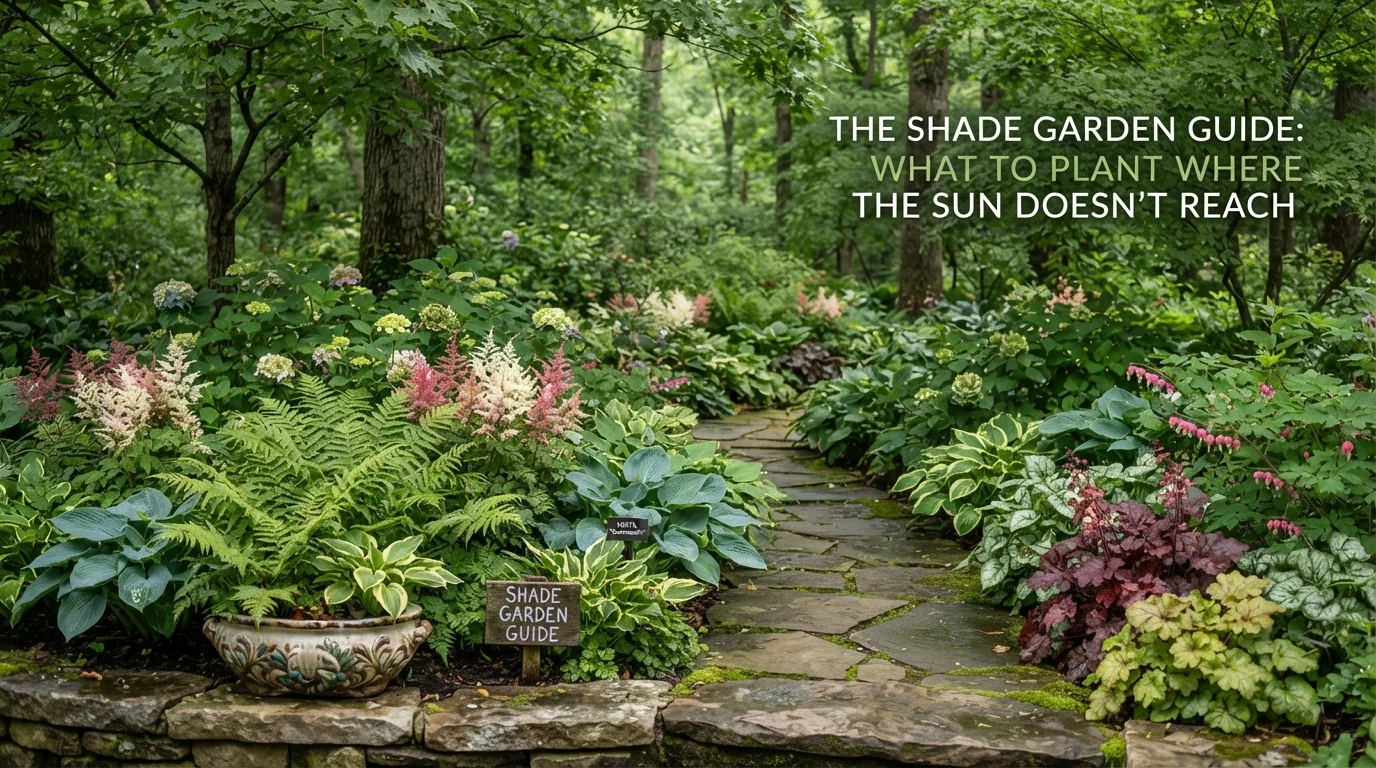
Every garden has that one corner—the north side of the house, the deep pocket under a mature oak, or the narrow strip between fences—where sunlight barely touches. For years, you might have treated it as a dead zone. But here’s the truth: a shade garden can be just as vibrant, textured, and rewarding as a sun-drenched border. In fact, the interplay of foliage shapes, heights, and subtle blooms in low light often feels more intimate and sophisticated.
This shade garden guide is your blueprint for turning those dim spots into the most interesting part of your landscape. We’ll cover what actually grows there, how to design for depth, and the common pitfalls that trip up even experienced gardeners. Whether you’re working with dappled light under trees or a deep, dark corner that never sees the sun, you’ll find actionable advice here.
Understanding Your Shade: Not All Shadows Are the Same
Before you buy a single plant, stop and observe your shady area at different times of day. Shade is not a single condition. Dappled shade—the kind that filters through deciduous trees—is bright and airy. Partial shade means about three to six hours of direct sun, usually morning or late afternoon. Full shade gets less than three hours of direct sun but still receives bright indirect light. Deep shade under evergreens or on the north side of a building is the toughest zone.
A common mistake is treating all shade the same. Hostas thrive in dappled light but sulk in deep, dry shade under a spruce. Ferns, on the other hand, can handle real darkness as long as the soil stays moist. Take a week to chart your light patterns. It’s the smartest hour you’ll invest.
Top Performers for Every Shade Level
Knowing your light level is half the battle. The other half is picking plants that have evolved to thrive without heavy sun. Below are reliable choices, grouped by shade intensity. Remember: even shade plants need some ambient light to photosynthesize—total darkness (like an interior room) won’t work.
- For dappled/partial shade: Hosta (try ‘Sum and Substance’ for bold leaves), Astilbe (feathery plumes in pink or white), Heuchera (coral bells with stunning purple or lime foliage), and Japanese Forest Grass (soft, cascading mounds).
- For full shade (bright, no direct sun): Ferns (Dryopteris, Maidenhair, or Christmas fern), Pulmonaria (spotted leaves with blue flowers), and Brunnera (forget-me-not-like blooms, ‘Jack Frost’ has silver leaves).
- For deep shade (dry and dark): Hellebores (Lenten rose, blooms in late winter), Pachysandra (evergreen ground cover), and Ivy (choose a non-invasive variety for vertical interest).
Designing a Shade Garden Layout That Feels Intentional
A common complaint about shade gardens is that they look flat or messy. That happens when you plant everything at the same height. The fix is layering, and it’s the same principle used in any good garden design. Think of your shade garden as a theater: backdrops, mid-ground characters, and foreground details.
Start with tall structural plants in the back—like a ‘Lady in Red’ fern or a shrubby Hydrangea ‘Annabelle’. Then add mid-height stars: astilbe, hostas, or heuchera. Finally, let low creepers or ground covers like sweet woodruff or lamium spill to the front edge. This creates depth even in a narrow strip. For a more complete breakdown of spatial tricks, check out our space planning category, which translates well from interiors to garden beds.
Repeat key plants at least three times in a bed. Repetition is what gives a garden a sense of rhythm and professionalism. A single hosta looks lost; a drift of three or five feels intentional.
Working with Soil, Moisture, and Trees
Shade gardens are often also dry gardens—especially under large trees where roots drink everything. The soil there is usually thin, acidic, and packed with roots. Don’t try to fight mature tree roots. Instead, work with them by planting in pockets of amended soil or using raised beds filled with rich compost.
Add a layer of organic mulch (leaf mold or well-rotted bark) around your plants. It keeps the soil cool, retains moisture, and slowly feeds the soil. Water deeply once a week in dry spells—shade doesn’t mean you can ignore irrigation. If you’re planning a full overhaul of your backyard layout, our outdoor living resources can help you integrate the shade bed with patios or seating areas.
Below is a quick-reference table for matching common shade plants to soil moisture levels:
| Plant | Light Preference | Soil Moisture | Height |
|---|---|---|---|
| Hosta | Dappled to partial | Average to moist | 12–36 in. |
| Astilbe | Partial to full | Moist, well-drained | 18–24 in. |
| Fern (Dryopteris) | Full shade | Moist, rich | 24–36 in. |
| Hellebore | Deep shade | Dry to average | 12–18 in. |
| Pachysandra | Deep shade | Dry to average | 6–12 in. (spread) |
Adding Seasonal Interest and Color
Shade gardens get a bad rap for being “just green.” But the right plants bring a full calendar of color. Start with spring bulbs: snowdrops, scilla, and early daffodils bloom before trees leaf out, catching every bit of spring light. By summer, hosta flowers and hydrangea heads take over. Fall brings golden fern fronds and the red berries of arum.
Don’t forget foliage color. Heuchera ‘Palace Purple’ and ‘Lime Marmalade’ keep their vibrant tones all season long. Japanese Painted Fern has silver and burgundy tones that pop in the dimmest corner. If you’re looking for structural ideas for year-round appeal, the home design section offers principles of texture and contrast that apply equally to your garden bed.
For more authoritative inspiration on choosing specific varieties and creating a sustainable shade ecosystem, the experts at Home Garden resource guides offer comprehensive lists and seasonal care calendars that pair well with this approach.
Common Shade Garden Mistakes (and How to Fix Them)
Even with the best intentions, shade gardens can fail. Here are the three most common issues I see:
Planting too deep. Many shade perennials (like hostas and heucheras) are shallow-rooted. Burying the crown causes rot. Plant at the same depth they were in the pot, and water in well.
Overwatering. Shade soil dries slowly. If you water on a fixed schedule without checking the soil, you’ll drown roots. Stick your finger in up to the second knuckle—if it’s damp, wait.
Ignoring the tree canopy. Low-hanging branches create dry shade and block what little light there is. Prune lower limbs up to 8–10 feet to let in air and ambient light. This alone can transform a gloomy spot into a viable garden zone.
Frequently Asked Questions
What can I plant in a shade garden that actually flowers?
Plenty! Astilbe, impatiens, fuchsia, torenia, begonia, and columbine all bloom in shade. Some, like fuchsia, prefer consistently moist soil and indirect light.
Can I grow vegetables in a shade garden?
True shade is tough for most veggies. However, leafy greens like spinach, lettuce, kale, and chard can handle 3–4 hours of sun. Avoid tomatoes, peppers, and squash—they need full sun to fruit.
How do I make a shade garden look brighter?
Use plants with white, silver, or variegated foliage. Lamb’s ear, ‘Silver Falls’ dichondra, and variegated ivy reflect light. White flowers like ‘Snowflake’ astilbe also brighten a dark corner.
Do I need to amend the soil under trees?
Yes, but gently. Don’t till deeply where tree roots are—you’ll damage them. Instead, top-dress with 2–3 inches of compost each spring and plant in pockets of rich soil.
How often should I water a shade garden?
Deeply once a week in the first year, then less often once established. In very dry summers, check the soil weekly. Mulch is essential to reduce evaporation.
What is the best ground cover for deep shade?
Pachysandra, vinca minor (periwinkle), and sweet woodruff are solid choices. For native options, consider wild ginger (Asarum canadense) or green and gold (Chrysogonum virginianum).
Can I use artificial light to supplement a shade garden?
If you have a patio under a heavy canopy, subtle landscape lighting (warm LED spotlights) can extend the visual enjoyment of the garden in the evening. For actual plant growth, full-spectrum grow lights work, but they’re more practical for indoor setups.
Conclusion
Your shady spaces aren’t a limitation—they’re an invitation. With the right plant picks, a thoughtful layout, and a little patience, you can create a garden that feels cool, calm, and deeply layered. Start with the light diagnosis we covered, choose a few anchor plants from the table above, and build out from there. For more full-project walkthroughs and seasonal guides, visit our blog for ongoing inspiration. Your garden’s dimmest corner is about to become its most magnetic.