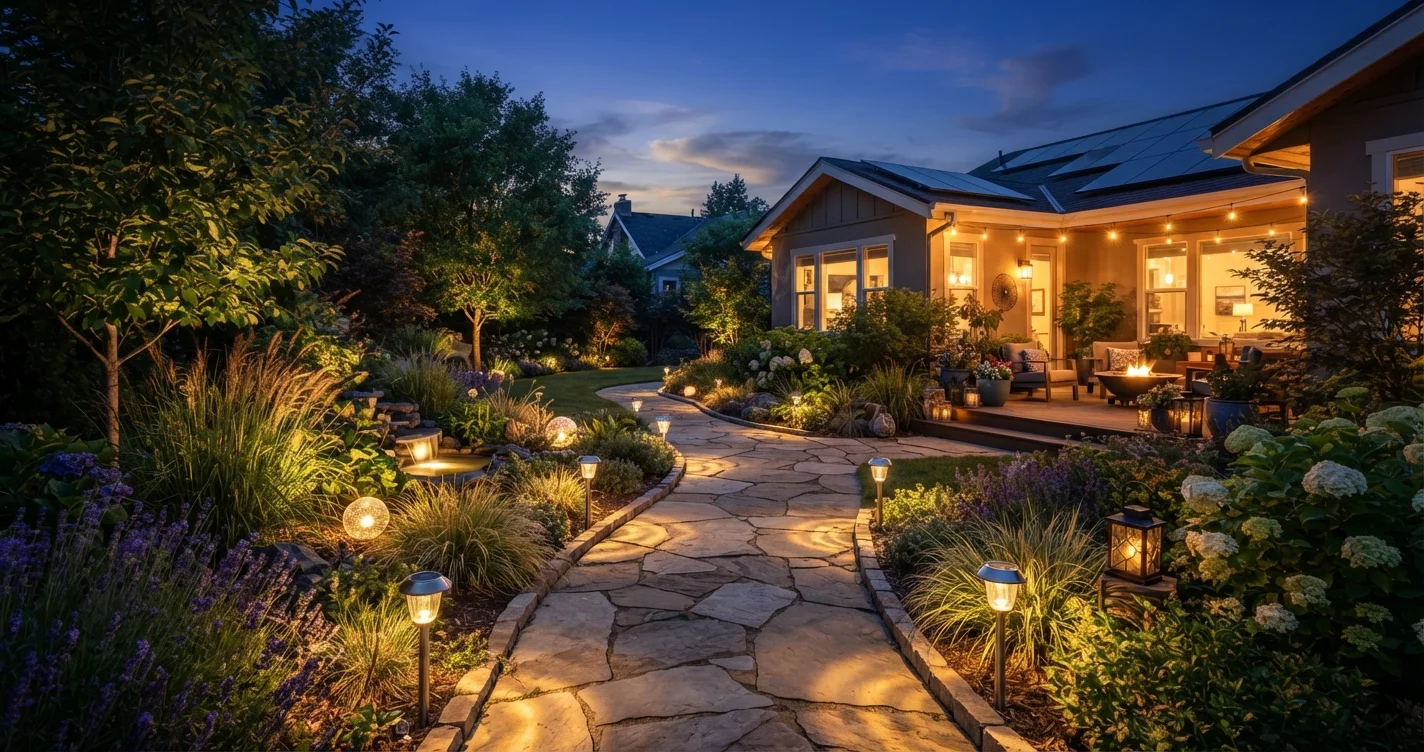
Imagine stepping into your backyard at dusk, and the garden gently glows without adding a cent to your electric bill. Solar lighting makes that dream a reality. It is not just about saving money—it is about creating a mood, highlighting your favorite plants, and boosting your home’s curb appeal, all while being kind to the planet.
Over the years, I have seen homeowners transform dark, neglected corners into warm, inviting spaces using nothing but the sun’s free energy. Whether you are a seasoned gardener or a total beginner, these solar lighting landscaping ideas are practical, stylish, and shockingly easy to install. Let’s dig into how you can brighten your outdoor living area without burning a hole in your pocket.
Why Choose Solar for Your Landscape?
Solar lighting has come a long way from the clunky, dim fixtures of the past. Modern LED bulbs paired with high-efficiency photovoltaic panels now deliver bright, warm light that lasts from dusk to dawn. The biggest perk? Zero ongoing operating costs after the initial purchase.
When you switch to energy-efficient garden lighting, you immediately lower your home’s electricity consumption. Many models charge during the day, even on cloudy weather, and automatically turn on at night. Plus, you avoid digging trenches for wiring—making installation a simple, no-fuss afternoon project.
Illuminate Pathways with Solar Path Lights
One of the easiest ways to start is by lining your walkways, driveways, or garden borders with solar path lights. These stakes come in endless designs, from sleek stainless steel to rustic bronze or even decorative glass globes.
Space them about six to eight feet apart for a balanced glow that safely guides guests to your front door. Pro tip: place them where they get direct sunlight for at least six hours daily. This ensures they shine brightly all night. You can explore more ideas on how to position these lights effectively in our garden design section.
Create a Focal Point with Solar Accent Lighting
Want to highlight a special tree, a water feature, or a sculpture? Use adjustable solar spotlights or floodlights. These units often have a separate solar panel connected by a thin wire, so you can hide the panel in a sunny spot while pointing the light exactly where you want it.
For example, aim a warm spotlight at a flowering shrub or a birdbath. The result is a dramatic, moonlit effect that adds depth to your yard. According to recent insights from landscaping experts featured on this home and garden resource, accent lighting is one of the most effective ways to increase perceived property value while keeping energy use minimal.
Add Ambiance with Solar String Lights and Lanterns
Nothing says “cozy evening” like a canopy of soft, twinkling lights overhead. Solar string lights are perfect for patios, pergolas, or fences. Many models come with a small solar panel that hangs on a hook, making them completely portable.
For a more rustic vibe, use solar lanterns. Place them on tabletops, hang them from tree branches, or line them along a deck railing. They provide a flickering, candle-like ambiance without any fire hazard. Pair these with comfortable seating and you have an instant outdoor living room. Check our outdoor living category for more layout inspiration.
Practical Tips for Maximizing Solar Performance
To get the most out of your fixtures, follow a few simple maintenance habits. Keep the solar panels clean and free from dust, leaves, or snow. Just a quick wipe with a damp cloth every couple of weeks makes a big difference.
- Angle matters: Tilt the solar panel slightly toward the south (in the northern hemisphere) to capture maximum sunlight.
- Battery care: Most solar lights use rechargeable NiMH batteries. Replace them every 1-2 years for peak performance.
- Seasonal storage: In harsh winters, store removable lights indoors to extend their lifespan.
- Mix and match: Combine path lights, spotlights, and string lights to create layers of light, just like indoor lighting design.
Designing a Cohesive Look: A Quick Comparison
Choosing the right type of light for each area can feel overwhelming. Here is a simple table to help you decide based on your specific need:
| Area | Best Light Type | Primary Benefit |
|---|---|---|
| Walkways & Driveways | Solar path lights (stakes) | Safety and guidance |
| Garden beds & Trees | Solar spotlights / floods | Dramatic focal points |
| Patios & Decks | Solar string lights / lanterns | Ambiance and entertaining |
| Steps & Stairs | Solar step lights (recessed) | Prevent trips and falls |
This approach helps you build a cohesive design that feels intentional rather than scattered. If you are also rethinking your overall layout, our space planning guide offers great strategies for organizing every inch of your yard.
Sustainable Landscaping: Beyond Just Lighting
Solar lighting fits perfectly into a broader sustainable landscaping design strategy. Combine it with rain barrels, native plants, and permeable pavers for a yard that works with nature, not against it. You save water, reduce runoff, and eliminate energy costs simultaneously.
Many homeowners start with lighting as a low-risk, high-reward first step. Once you see how simple it is, you might feel inspired to tackle larger eco-friendly projects.
Frequently Asked Questions (FAQ)
Do solar lights work in shaded areas?
They need direct sunlight to charge fully. In shaded spots, look for models with a remote solar panel that you can place in a sunny location while the light itself stays in the shade.
How long do solar lights last at night?
Most quality models provide 6 to 10 hours of light after a full day of charging. This covers typical evening use from dusk until bedtime.
Are solar lights bright enough for security purposes?
For general ambiance and pathway visibility, yes. For high-level security, consider solar-powered motion sensor lights, which are much brighter and only activate when triggered.
Do I need special tools for installation?
No. Most solar lights are tool-less—just stake them into the ground or hang them up. Recessed step lights may require a drill, but it is still a very simple DIY job.
Can I leave solar lights out in winter?
Yes, but battery life and brightness may decrease in extreme cold. If possible, bring portable lights indoors during heavy snow and store batteries in a cool, dry place.
How do I clean solar panels?
Use a soft cloth or sponge with water and mild soap. Avoid abrasive cleaners that can scratch the panel surface and reduce efficiency.
Is solar lighting expensive?
Prices range from $10 for basic pathway stakes to $100+ for heavy-duty floodlight kits. In the long run, you save money on electricity and installation costs compared to wired lighting.
Conclusion
Switching to solar lighting landscaping ideas is one of the smartest investments you can make for your home and garden. You lower your energy bills, reduce your carbon footprint, and create an enchanting outdoor space that you will actually want to use after dark.
Start small with a few path lights or string lights, and watch how quickly your yard transforms. For more inspiration on blending functionality with beauty, browse our home design content to see how interior and exterior spaces can work together seamlessly. The sun is doing the heavy lifting—all you have to do is enjoy the glow.