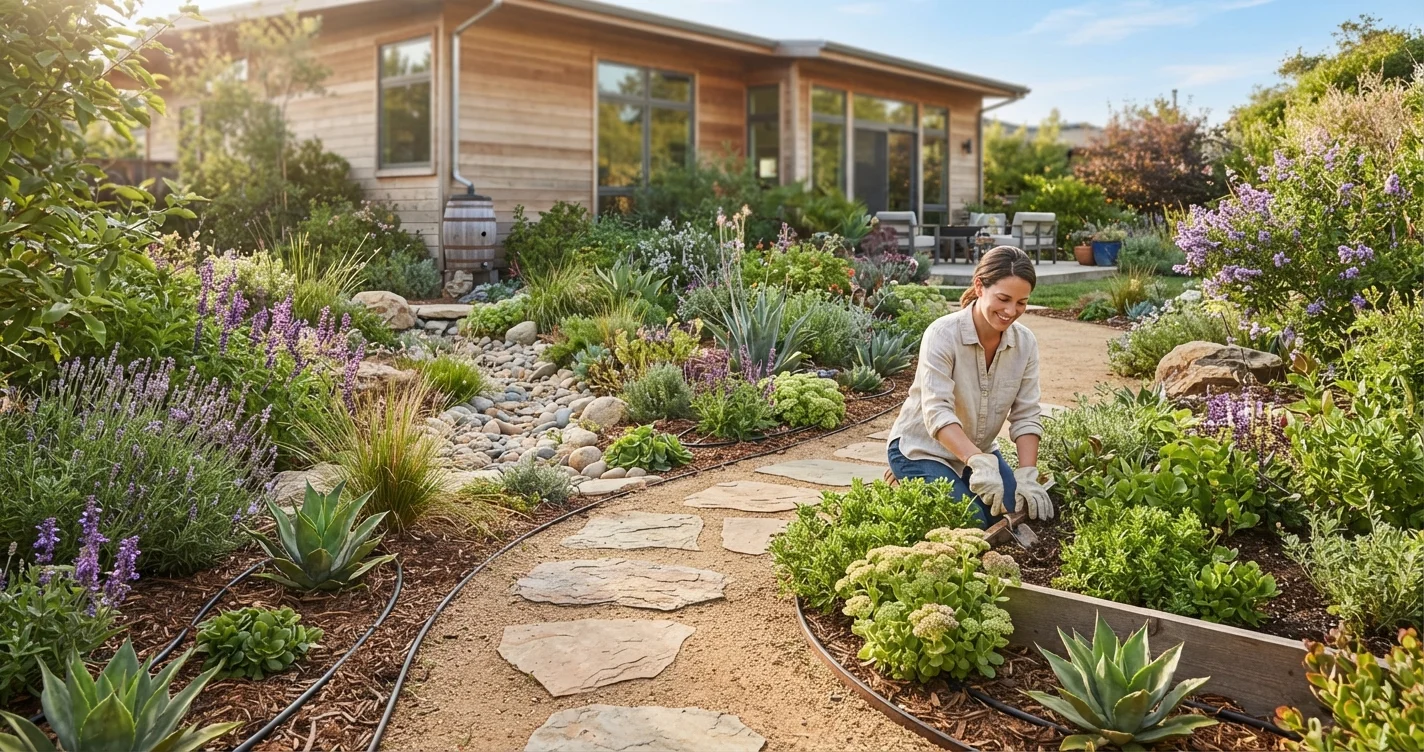
Let’s be honest: a lush, green garden is gorgeous. But keeping it that way can feel like a full-time job—and a huge water bill. With droughts becoming more common and water costs rising, many homeowners are shifting toward sustainable landscaping.
The good news? You don’t have to sacrifice beauty to save water. Sustainable landscaping is all about working with nature, not against it. You can create a yard that thrives with minimal irrigation, supports local wildlife, and turns heads in your neighborhood.
Think of it as designing a garden that’s both resilient and stunning. Whether you’re starting from scratch or retrofitting an existing space, these strategies will help you save water and keep a striking outdoor area.
Why Sustainable Landscaping Matters More Than Ever
Traditional lawns and exotic plants often demand constant watering, fertilizers, and maintenance. In many regions, landscaping accounts for up to 50% of household water use. That’s not just expensive—it’s unsustainable.
By embracing water-wise gardening, you reduce your environmental footprint while creating a lower-maintenance yard. Plus, eco-friendly garden design can increase your property value by up to 12%, according to some real estate studies.
So, you’re not just saving water. You’re making a smart investment in your home and the planet. For more inspiration on blending form with function, check out our garden design ideas that merge aesthetics with sustainability.
Start With Smart Plant Selection
The single most effective way to reduce water usage is choosing the right plants. Native and drought-tolerant species are already adapted to your local climate and soil. They need far less water than exotic ornamentals.
Consider plants like lavender, yarrow, sedum, and ornamental grasses. These thrive in dry conditions and offer texture, color, and fragrance. Succulents and cacti are excellent for arid regions, while Mediterranean herbs like rosemary and thyme work beautifully in temperate zones.
Group plants with similar water needs together. This is called “hydrozoning,” and it prevents overwatering some plants while underwatering others. A well-planned sustainable landscaping design uses this principle naturally.
Upgrade Your Irrigation System
Even the most drought-tolerant plants need some water while establishing. But a standard sprinkler system wastes up to 50% of water through evaporation and runoff. Switching to efficient systems makes a massive difference.
Drip irrigation delivers water directly to the root zone. It reduces evaporation and keeps foliage dry, which also prevents disease. Soaker hoses are a simpler, budget-friendly alternative for flower beds and vegetable gardens.
Don’t forget a smart controller. These devices adjust watering based on weather, soil moisture, and plant type. Some models even connect to your phone, giving you total control. When designing your layout, our space planning resources can help you map zones efficiently.
Rethink Your Lawn
Lawns are water hogs. A typical turf grass lawn drinks about 1.5 inches of water per week during summer. That’s thousands of gallons a year. Reducing its size is one of the biggest water-saving moves you can make.
You don’t need to rip everything out overnight. Start by converting high-traffic areas to groundcovers like clover or creeping thyme. They stay green with far less water and attract pollinators.
For larger sections, consider replacing grass with a xeriscape garden. Use gravel, ornamental rocks, and low-water plants to create a modern, sculptural look. It’s striking, low-maintenance, and incredibly eco-friendly.
Mulch: The Unsung Hero of Water Conservation
A thick layer of organic mulch does double duty. It keeps soil cool, reducing evaporation by up to 70%. And as it breaks down, it feeds the soil, improving its ability to retain moisture.
Apply a 2-to-3-inch layer around shrubs, trees, and flower beds. Use wood chips, bark, or shredded leaves. Avoid piling mulch directly against plant stems to prevent rot.
Inorganic mulches like gravel or pebbles work well in xeriscapes and pathways. They suppress weeds without decomposing, though they don’t enrich the soil. Choose what fits your style and budget.
Design With Water Flow in Mind
Instead of letting rainwater run off into the street, capture it. Rain gardens are shallow depressions planted with native species that absorb stormwater. They look beautiful and recharge groundwater naturally.
Position your rain garden at the bottom of a slope or near downspouts. Use deep-rooted plants like switchgrass and coneflowers. This simple feature can handle runoff from a 1,000-square-foot roof.
Permeable hardscaping is another smart move. Patios and paths made of porous pavers or decomposed granite allow water to soak into the ground instead of pooling. To see more outdoor living enhancements, browse our outdoor living guides for complete design ideas.
Practical Comparison: Traditional vs. Sustainable Garden
Let’s break down the differences in a quick table:
| Feature | Traditional Garden | Sustainable Garden |
|---|---|---|
| Water usage | High (up to 50% of household) | Low (30–70% reduction) |
| Maintenance | Weekly mowing, fertilizing | Minimal pruning, weeding |
| Plant selection | Exotic, high-need plants | Native, drought-tolerant species |
| Irrigation system | Sprinklers, high evaporation | Drip or smart systems |
| Environmental impact | High runoff, chemical use | Low runoff, natural habitat support |
As you can see, the sustainable approach wins on every front. According to guidance from this home and garden resource, even small changes in plant selection and watering habits can cut outdoor water use by half.
Key Steps to Get Started Today
If you’re feeling overwhelmed, don’t be. Sustainable landscaping can happen in stages. Here’s a simple checklist to begin:
- Audit your current water use: Check your irrigation schedule and look for leaks.
- Replace thirsty plants gradually: Swap out one flower bed at a time with natives.
- Add mulch immediately: It’s cheap, fast, and effective.
- Install a rain barrel: Collect water for free during wet months.
- Switch to a smart timer: Automate efficiency without thinking.
Each step moves you closer to a stunning, water-saving garden. Remember, progress beats perfection. For a deeper dive into creating cohesive outdoor spaces, visit our home design section for more integrated ideas.
Frequently Asked Questions
What is sustainable landscaping?
Sustainable landscaping is an approach that prioritizes water conservation, native plants, and eco-friendly materials. The goal is to create a beautiful garden with minimal environmental impact.
How much water can I save with a sustainable garden?
Most homeowners reduce outdoor water use by 30% to 70% after switching to drought-tolerant plants, efficient irrigation, and mulching. Exact savings depend on your climate and garden size.
Do drought-tolerant plants look dull?
Not at all. Many drought-tolerant plants, like lavender, agave, and ornamental grasses, offer vibrant colors, unique textures, and year-round interest. They can be even more striking than water-hungry lawns.
Can I keep a small patch of grass?
Absolutely. You don’t have to eliminate all turf. Just shrink it to areas where you actually use it, like a play zone. Replace the rest with groundcovers or hardscaping.
Is sustainable landscaping expensive to start?
Initial costs can be higher if you install new irrigation or hardscaping. But ongoing savings on water, fertilizer, and maintenance typically offset the investment within two to three years.
What are the best groundcovers for dry shade?
Good options include pachysandra, periwinkle, and wild ginger. These thrive in low-light, low-water areas and create a lush carpet without constant irrigation.
Do I need to change my soil for sustainable plants?
Not usually. Native plants are adapted to your existing soil. In fact, amending soil with rich compost can sometimes encourage excess growth that requires more water. Let the plants adapt naturally.
How often should I water a new sustainable garden?
New plants need regular watering for the first six to eight weeks. After that, gradually reduce frequency. Established drought-tolerant gardens may only need water every two to three weeks, depending on rainfall.
Conclusion
Sustainable landscaping isn’t a trend—it’s a smarter way to garden. By choosing the right plants, upgrading your irrigation, and designing with nature, you can save thousands of gallons of water every season.
And you don’t have to compromise on style. A water-wise garden can be just as lush, colorful, and inviting as any traditional landscape. It’s about working smarter, not harder.
Start small, stay consistent, and your outdoor space will reward you with beauty and resilience for years to come. For more resources, tips, and inspiration, explore our blog on eco-friendly home and garden ideas.