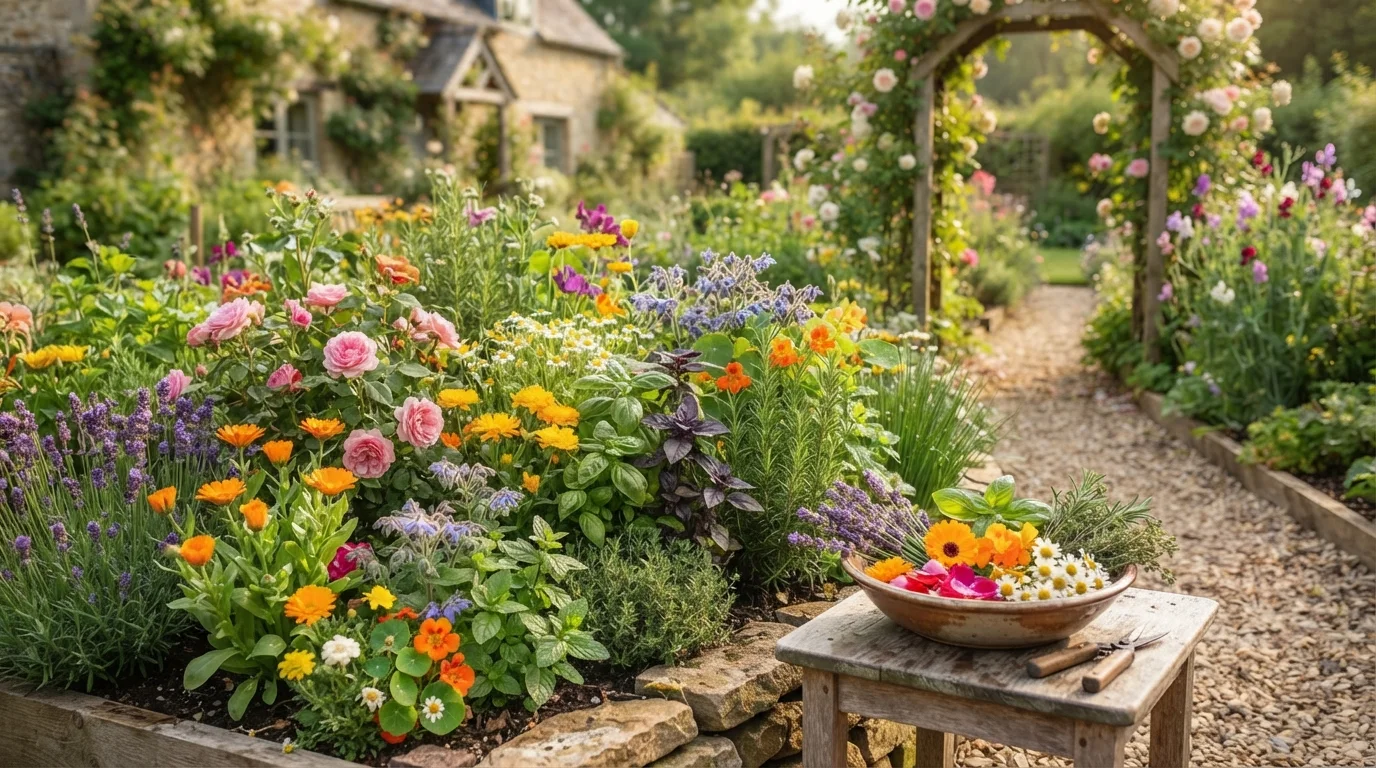
Imagine stepping into your backyard and plucking a sprig of rosemary for your roast, snipping a few lavender stems for a sachet, and picking a nasturtium bloom to brighten your salad — all from the same garden bed. That is the magic of a well-planned edible garden design.
Gone are the days when vegetable patches were hidden behind fences. Today, mixing herbs and flowers into your landscape adds visual drama, supports pollinators, and keeps your kitchen stocked with fresh ingredients. Whether you have a sprawling yard or a tiny balcony, this guide will show you how to combine beauty and utility effortlessly.
Let us walk through the essential strategies, from choosing the right companions to designing beds that look as good as they taste. As you plan your space, you might also enjoy browsing our full collection of garden design ideas for more seasonal inspiration.
Why Mix Herbs and Flowers? The Beauty of Edible Landscaping
Traditional vegetable gardens often prioritize yield over aesthetics. But edible landscaping flips that script. By blending ornamental flowers with culinary herbs, you create a garden that is productive and gorgeous from spring through fall.
Flowers like calendula, borage, and zinnias attract bees and butterflies, which pollinate your tomatoes and squash. Herbs like thyme, oregano, and sage release aromatic oils that repel common pests naturally. This synergy reduces the need for chemical sprays while boosting biodiversity.
Visually, the combination is stunning. The feathery foliage of dill contrasts beautifully with the broad leaves of Swiss chard. Purple basil pops next to golden marigolds. Your garden becomes a living tapestry — and a conversation starter for guests.
Choosing the Perfect Spot for Your Herbs and Flowers Garden
Most culinary herbs and flowering edible plants thrive in full sun — at least six hours of direct light daily. Observe your yard throughout the day to identify sun-drenched patches. A south-facing spot near your kitchen door is ideal for quick harvesting.
Drainage matters just as much. Herbs like rosemary and lavender despise wet feet. If your soil is heavy clay, consider raising the beds or building a gentle slope. For container gardens, choose pots with drainage holes and a quality potting mix.
Accessibility is another factor. Place frequently used herbs — basil, mint, chives — close to the house. Leave taller, more ornamental plants like fennel or sunflowers for the back of the border. Thinking about the overall flow of your outdoor space? Our space planning guides can help you map out the zones efficiently.
Top Combinations That Look and Taste Great
Not every flower is edible, and not every herb plays nice with its neighbors. Here are proven pairings that thrive together in a flowers and herbs garden.
- Roses + Chives: Chives repel aphids that attack rose bushes, while the roses add vertical elegance.
- Tomatoes + Basil + Marigolds: This classic trio improves tomato flavor and deters nematodes and hornworms.
- Lavender + Thyme + Echinacea: A drought-tolerant border that attracts beneficial insects and provides cut flowers.
- Nasturtiums + Cucumbers + Dill: Nasturtiums act as a trap crop for aphids, keeping cucumbers safe.
When planning your layout, group plants with similar water and sun needs. Mediterranean herbs (rosemary, oregano, sage) prefer dry soil, while mint and parsley enjoy consistent moisture. Keep this in mind to avoid overwatering half your bed.
Designing with Purpose: Layout Tips for Maximum Impact
Successful edible garden design is about structure and flow. Start by laying out the “bones” of your garden using paths, edging, or hardscape. Raised beds offer a neat, organized look and make maintenance easier on your back.
Use the thriller, filler, spiller technique borrowed from container gardening. In a border, plant tall “thrillers” like fennel or lovage in the back. Medium “fillers” like basil, calendula, and sage go in the middle. Low-growing “spillers” like creeping thyme or oregano tumble over the edges.
Color coordination matters too. Silver-leaved artemisia softens bright orange calendulas. Blue borage flowers echo the purple of chive blossoms. Think of your garden as a painter’s palette — every plant contributes a texture and hue.
For more structured inspiration, check out our dedicated outdoor living ideas that integrate seating areas with edible borders.
Planting and Care Calendar for a Continuous Harvest
A well-maintained herbs and flowers garden rewards you from spring until the first hard frost. Timing your planting ensures you never run out of fresh flavors.
| Season | What to Plant | Care Tips |
|---|---|---|
| Early Spring | Hardy herbs: parsley, chives, mint, sage | Sow seeds indoors 6 weeks before last frost. Harden off gradually. |
| Late Spring | Warm lovers: basil, marigolds, nasturtiums, zinnias | Plant after soil warms to 60°F. Pinch back for bushier growth. |
| Summer | Succession plant: dill, cilantro, borage | Water deeply in mornings. Deadhead flowers to prolong blooms. |
| Fall | Cool season: calendula, violas, rosemary (in pots) | Mulch roots before frost. Bring tender perennials indoors. |
Deadheading spent flowers not only keeps your garden tidy but also encourages more blooms for cutting and cooking. Regularly harvest herbs by snipping stems — this promotes new growth and prevents plants from becoming woody.
Edible Flowers: Which Ones to Eat and How to Use Them
Adding edible flowers is the easiest way to elevate your edible garden design from practical to breathtaking. But not all blooms are safe to eat. Stick with reliable varieties like pansies, violas, calendula, borage, and squash blossoms.
Harvest flowers in the morning when their petals are fully open and moisture has dried. Rinse gently and use immediately for the best flavor and texture. Stuff squash blossoms with goat cheese and herbs, then bake. Toss nasturtiums and pansies into summer salads for a peppery kick and a pop of color.
A word of caution: always confirm the scientific name before eating any flower. Avoid store-bought flowers, which may be treated with pesticides. For a broader perspective on sustainable gardening practices, you may find value in resources like this comprehensive home garden guide, which covers organic methods that pair perfectly with edible landscaping.
Overwintering and Perennial Picks for Year-Round Structure
One of the smartest moves in edible landscaping is incorporating perennials. Plants like lavender, rosemary, thyme, oregano, sage, and chives return year after year, providing structure and reducing your annual planting work.
In colder climates, give tender perennials a winter coat. Mulch heavily around the crown with straw or leaves. Pots can be moved to an unheated garage or against a south-facing wall for protection.
Even in winter, the dried seed heads of fennel, dill, and echinacea add architectural interest to your garden. They also feed birds, which helps control pests when spring returns. This longevity is what makes edible gardens truly sustainable.
Frequently Asked Questions (FAQ)
Can I grow an edible garden in containers?
Absolutely. Many herbs and edible flowers thrive in pots. Use a large container (at least 12 inches deep) with drainage holes. Group plants with similar sun and water needs together.
What are the easiest herbs for beginners?
Start with mint, chives, parsley, basil, and thyme. These are forgiving, grow quickly, and require minimal maintenance. Just give them sun and well-drained soil.
Which flowers are safe to eat?
Popular edible flowers include nasturtiums, pansies, violas, calendula, borage, chive blossoms, and squash blossoms. Always double-check the Latin name before consuming.
How do I keep pests away without chemicals?
Companion planting is your best organic defense. Marigolds repel nematodes, chives deter aphids, and dill attracts beneficial wasps. Neem oil spray is also effective for outbreaks.
How much sunlight does my edible garden need?
Most herbs and edible flowers require at least 6 hours of direct sunlight per day. A few, like mint and parsley, tolerate partial shade but will be less productive.
Can I mix vegetables with herbs and flowers?
Yes, this is a core principle of edible landscaping. Pair leafy greens with low-growing herbs, and place tall flowers like sunflowers at the back to create natural windbreaks and shade.
When should I harvest edible flowers?
Harvest in the early morning after the dew has dried. Flowers should be fully open but not past their prime. Use them the same day for the best flavor.
How do I design a small-space edible garden?
Use vertical structures like trellises for climbing nasturtiums or cucumbers. Stack tiered planters for herbs. Choose compact varieties like dwarf basil and bush tomatoes.
Conclusion
Creating a beautiful and useful edible garden design is one of the most rewarding projects you can take on. By weaving together herbs, flowers, and thoughtful layout, you turn an ordinary yard into a vibrant, living pantry.
Start small if you are new to gardening — a single raised bed or a cluster of pots is enough to test these combinations. Watch how pollinators flock to your blooms, and enjoy the convenience of snipping fresh herbs steps from your kitchen.
Ready to dive deeper into transforming your home’s exterior? Visit our home design section for more ideas that bridge indoor comfort and outdoor beauty.
Happy planting — and even happier eating.