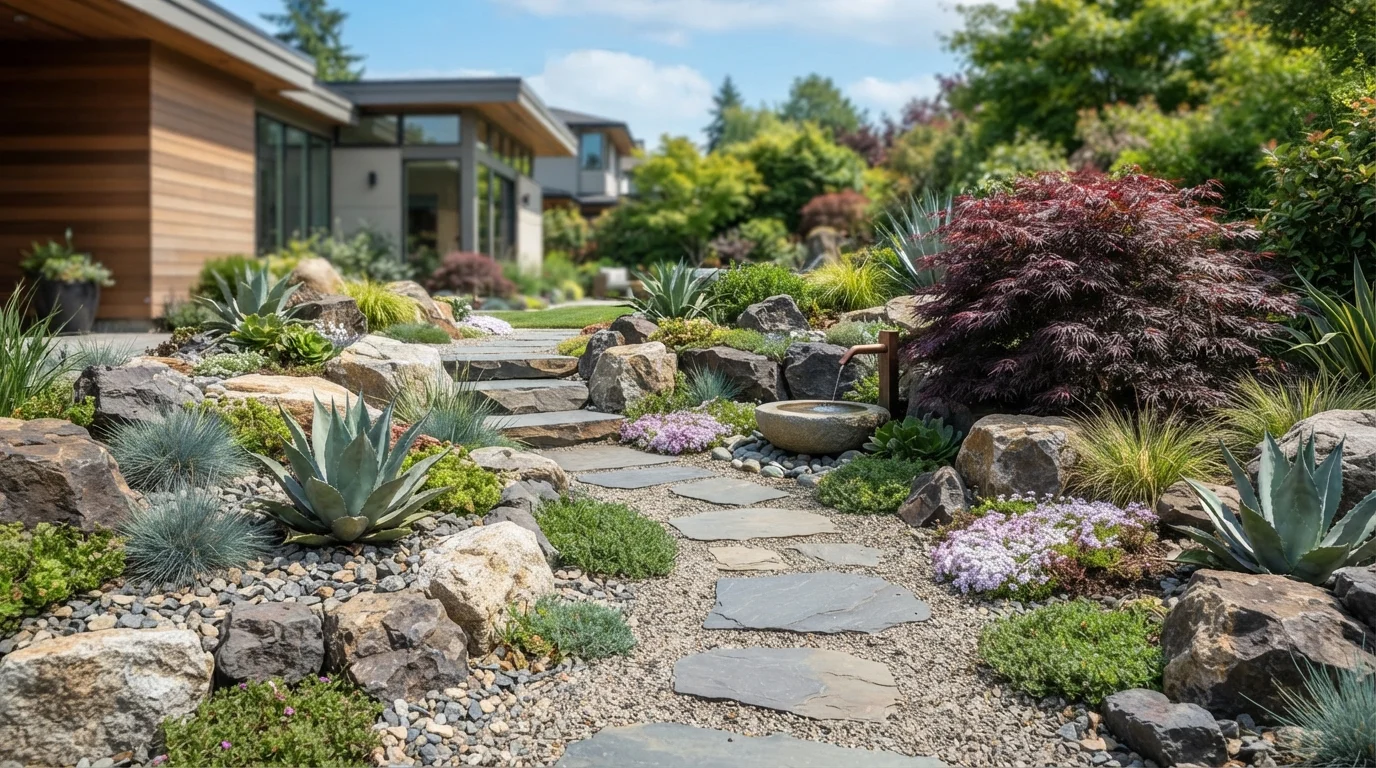
If you think rock gardens are just piles of gravel with a lonely cactus, it’s time to rethink the concept. The modern and sophisticated rock garden is a masterclass in restraint, texture, and natural elegance. It blends clean lines, sculptural stones, and architectural plants to create a space that feels both curated and effortless. Whether you have a sprawling backyard or a narrow side yard, this style works because it plays with contrast rather than clutter. Let’s walk through how to set one up from scratch — without the guesswork.
Why Choose a Rock Garden for Your Modern Landscape
A modern rock garden isn’t just about saving water. It’s about creating a focal point that changes with the seasons yet stays structurally sound year-round. The beauty of this design lies in its low-maintenance landscaping appeal. You’ll spend less time mowing and more time enjoying the texture of weathered stone against soft grasses. Plus, rock gardens naturally improve drainage, which means healthier plants and less runoff. If you’re exploring fresh ideas for your yard, head over to our garden design section for more inspiration on layouts and material choices.
Choosing the Right Stones for a Sleek Look
Stone selection makes or breaks a modern rock garden. Forget random round river rocks. Instead, look for flat, angular stones like bluestone, slate, or fractured limestone. These pieces stack cleanly and create sharp, defined edges. Size matters too: use larger stones as anchor points and smaller gravel or crushed granite for the base layer. Keep the color palette muted — grays, charcoal, warm beige, and deep browns work best. Avoid multicolored stones that look like a bag of skittles. A monochromatic approach feels intentional and calm, which is the whole point of a contemporary rock garden design.
- Anchor stones: large, flat pieces (18–24 inches) for visual weight and structure.
- Filler stones: medium 3–6 inch fragments to fill gaps and create pathways.
- Ground cover: pea gravel or decomposed granite in a single tone for the base layer.
- Accent boulders: one or two dramatic, weathered stones placed off-center for balance.
Pairing Plants That Complement Stone, Not Compete
The wrong plants turn a sophisticated garden into a messy jumble. Stick to species with strong architectural shapes: ornamental grasses like Festuca glauca, succulents like sedum, and low-growing evergreens like dwarf junipers. These plants contrast beautifully with rough stone surfaces without overwhelming them. Remember the rule of thirds — plant in clusters of three or five, never single lonely specimens. For more tips on integrating hardscape with greenery, check out our outdoor living collection.
Layout Principles: Balance Without Symmetry
A modern rock garden avoids perfect symmetry. Instead, aim for asymmetrical balance. Place your largest boulder off-center, then build around it with progressively smaller stones and plants. Create gentle curves in the layout rather than straight lines — unless you’re going for a strictly minimalist grid. Pathways should be wide enough for a wheelbarrow (at least 24 inches) and made of the same crushed stone or large steppers. This keeps the garden cohesive. If you’re working with a tricky plot, our guide on space planning offers smart solutions for awkward corners.
Tackling Slopes and Uneven Ground
Rock gardens love slopes. Gravity works in your favor when you terrace stones into a hillside. Use larger stones as retaining walls to create flat planting pockets. This natural terracing prevents erosion and adds dramatic depth. On flat ground, create slight mounds of soil and gravel to mimic the undulating feel of a dry riverbed. A gentle slope of just 6–8 inches over 10 feet makes a huge visual difference. For those looking to expand their whole home and garden aesthetic, the home design category has ideas that tie indoor and outdoor styles together.
Maintaining Your Rock Garden the Modern Way
Yes, rock gardens require some maintenance, but the time investment is minimal. Pull weeds early — they root easily in gravel beds. Rake the stone surface every few months to keep it looking fresh. Blow out fallen leaves with a leaf blower instead of a rake so you don’t disturb the gravel. Every spring, add a thin layer of fresh crushed rock to replenish the look. This is real low-maintenance landscaping at its finest.
| Task | Frequency | Tools Needed |
|---|---|---|
| Weed removal | Every 2–3 weeks in growing season | Hand weeder, knee pad |
| Raking gravel | Monthly | Metal rake, garden gloves |
| Leaf blowing | Weekly in autumn | Leaf blower |
| Stone replenishment | Once a year | Fresh gravel, shovel |
Frequently Asked Questions
What is the best base layer for a modern rock garden?
A layer of landscape fabric prevents weeds, topped with 2–3 inches of crushed gravel or decomposed granite. Compact it firmly to avoid shifting.
How do I keep my rock garden from looking chaotic?
Stick to a limited color palette (2–3 stone tones max) and use repeating plant clusters. Less variety equals more sophistication.
Can I install a rock garden on a budget?
Absolutely. Source local stone from a quarry instead of a garden center. Use smaller gravel in place of expensive boulders, and propagate plants from cuttings or divisions.
Which rock garden plants do best in full sun?
Look for drought-tolerant species like lavender, sedum, yucca, and ornamental grasses such as blue fescue. These thrive in hot, well-drained conditions.
How do I choose a focal point?
Select one large, interesting stone with natural character — maybe one with a crack, lichen, or unusual shape. Place it about one-third of the way in from the edge. Let it anchor the entire design.
Should I include water features in a modern rock garden?
Yes, but keep it minimal. A small, recirculating fountain made of a single slab of stone or a slim spillway bowl adds sound and movement without cluttering the visual space. For more water-wise ideas and supplies, browse the expert recommendations at this trusted home and garden resource.
How deep should the gravel layer be?
For pathways and sitting areas, aim for 2–3 inches. Around plant beds, keep it 1–2 inches so roots don’t suffocate. A deeper layer only moves around more.
Can I combine a rock garden with a traditional lawn?
Yes, but use a clear edge. A steel border or a row of flat stones separates the two zones neatly. Avoid blending them — let each have its own territory.
Conclusion
A modern and sophisticated rock garden is more than a trend. It’s a long-term investment in your home’s curb appeal and your own peace of mind. With the right stones, plants, and layout, you can transform any patch of dirt into a living sculpture that requires very little upkeep. Start with a clear plan, choose materials that speak the same visual language, and let the natural beauty of stone and texture do the heavy lifting. Your outdoor space will thank you — and so will your weekends.
For more hands-on advice on creating serene outdoor spaces, don’t forget to visit our blog for step-by-step guides and seasonal tips.