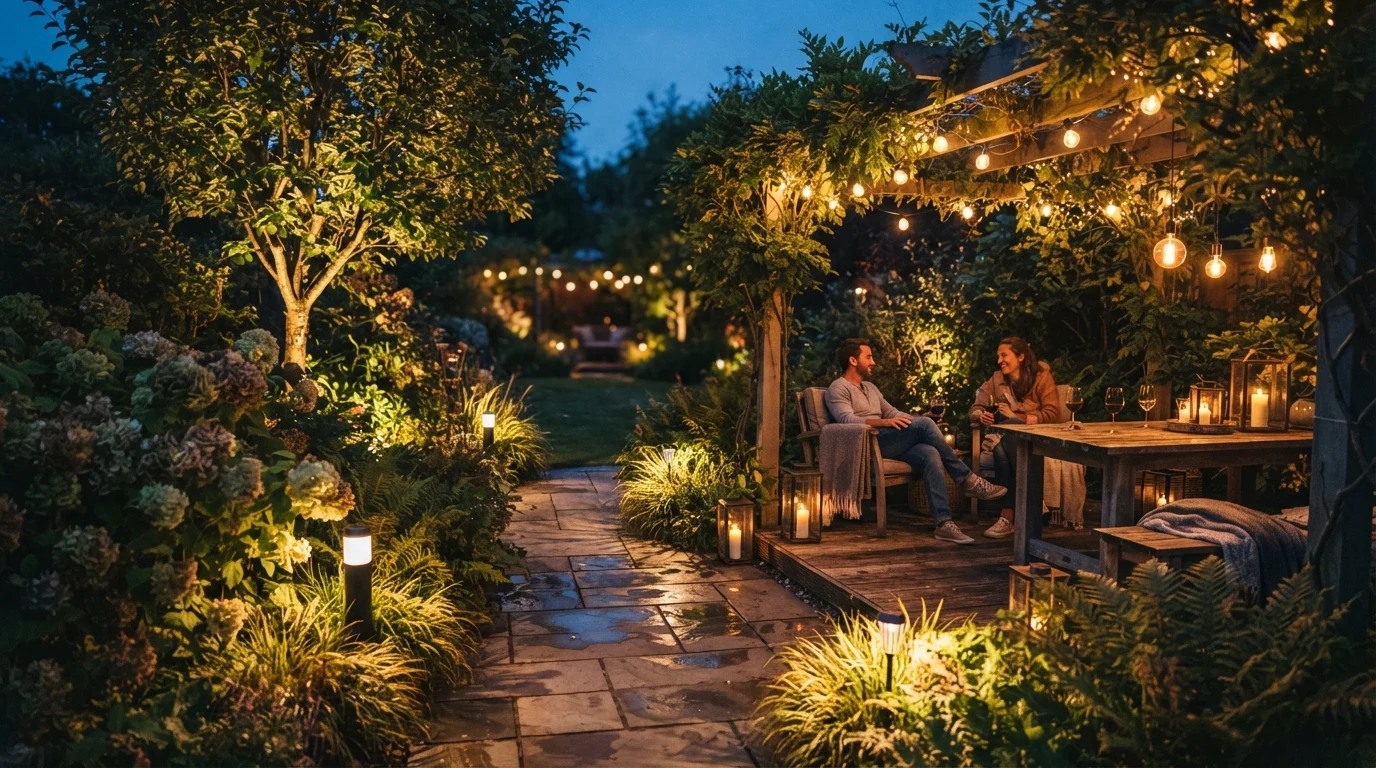
Imagine stepping into your garden at dusk and feeling like you’ve walked onto a film set. The soft glow of a pathway, the dramatic silhouette of a tree, the warm halo around your seating area — that’s the power of cinematic garden lighting. It doesn’t just illuminate your yard; it tells a story. With the right techniques, you can turn an ordinary backyard into a moody, romantic, or even thrilling outdoor space.
Whether you’re hosting a dinner party or enjoying a quiet evening alone, lighting sets the tone. The best part? You don’t need a Hollywood budget. With a few strategic fixtures, some creative placement, and an understanding of contrast, you can achieve that “movie-like” atmosphere. In this guide, we’ll walk through the essential strategies to make your outdoor space feel like a scene from your favorite film.
Understand the Three Layers of Cinematic Lighting
Professional cinematographers don’t rely on a single light source. They layer ambient, task, and accent lighting to create depth. Your garden should do the same. Start with ambient lighting — the general glow that fills the space. Soft bistro string lights or uplights on a wall work beautifully for this base layer.
Next, add task lighting where people actually do things. Think over a grill, next to a reading chair, or along a dark staircase. These lights should be brighter but still warm. Finally, bring in accent lighting to highlight features like a fountain, a sculpture, or a striking tree. This creates the visual “subject” of your garden’s story.
Combining these layers prevents flat, boring light. It gives your garden a 3D feel, just like a movie set. When planning your outdoor living areas, always ask yourself: where’s the mood, where’s the function, and where’s the drama?
Use Light and Shadow for Emotional Impact
Cinema thrives on contrast. Bright light alone is blinding; deep shadows alone are scary. The magic happens in between. In your garden, create pools of light separated by dark paths. This draws the eye and creates a sense of journey. Guests won’t see everything at once — they’ll discover your space step by step.
Try placing a low-grazing light at the base of a rough-textured wall or tree trunk. The light skims across the surface, exaggerating every crack and ridge. This technique, called “texturing,” adds visual richness. Pair it with deep shadow behind a bush for an almost cinematic frame.
Don’t be afraid to leave areas completely dark. A garden fully lit top to bottom loses all mystery. By controlling where the light falls, you direct attention exactly where you want it. For more structured ideas, check out our space planning guides to balance light and layout effectively.
Choose the Right Fixtures for the Mood
The type of fixture you choose matters almost as much as the placement. For a soft, romantic scene, go with low-voltage LED path lights and lanterns. They cast a warm amber tone that mimics candlelight. For a more dramatic or modern look, try stainless steel well lights or linear LED strips under bench seats.
Here are a few go-to fixtures and their best uses:
- Uplights: Place at the base of trees or columns to create tall, dramatic shadows.
- Downlights: Mount on pergolas or eaves to simulate moonlight filtering through leaves.
- Spotlights: Direct at a single focal point, like a statue or water feature.
- String lights: Drape loosely over a patio for a warm, inviting party vibe.
- Step lights: Install flush into stair risers for safe, subtle navigation.
Each fixture has a personality. Mixing them — like using a sharp spotlight next to a soft lantern — creates the visual tension that makes a scene feel alive. For additional inspiration, explore our garden design category, which covers fixture selection in various outdoor settings.
Create a Visual Hierarchy with Focal Points
Every great movie scene has a subject. Your garden should too. Decide what you want the viewer to look at first. It might be a majestic oak, a fire pit, or a reflecting pool. Once you pick your hero, light it brighter than everything else. Use a single strong spotlight or a pair of symmetrical uplights to frame it.
Then, dim everything around it. Secondary elements like flower beds or paths should get less intense light. This hierarchy guides the eye naturally. If everything fights for attention, the scene feels chaotic. If one element shines, the rest becomes supporting actors.
For larger gardens, you can create multiple scenes — a bright dining area, a moody reading nook, a dramatic tree. But each scene should have its own clear hero. Think of them as different shots in a film. When planning this, remember that good landscape lighting ideas often rely on this principle of focus and restraint.
Master Color Temperature for Consistent Tone
Nothing kills a cinematic scene faster than mismatched light colors. A warm 2700K light next to a cold 5000K light feels jarring. Stick to one color temperature throughout your entire garden. For the most cinematic effect, choose warm white (2700K – 3000K). It mimics sunset, candlelight, and vintage film.
Cooler whites (4000K and above) can work for modern, minimalist gardens — especially with metal or concrete features — but they often feel clinical if overused. Avoid mixing both. If you want a pop of color, use colored gels or smart RGB bulbs only for special occasions, not permanent fixtures.
Consistency in color temperature is one of the easiest ways to make your lighting look intentional and professional. It’s a small detail that separates a DIY setup from a curated design. This is a key principle in professional home design, where cohesion makes all the difference.
Compare Popular Lighting Techniques
To help you decide which method fits your scene, here’s a quick comparison table:
| Technique | Best For | Effect | Fixture Example |
|---|---|---|---|
| Uplighting | Trees, columns, walls | Dramatic height, mystery | In-ground well light |
| Downlighting | Pathways, dining tables | Soft, moonlight-like | Pergola-mounted floodlight |
| Cross Lighting | Sculptures, fountains | Reduces flat shadows | Two opposing spotlights |
| Backlighting | Shrubs, hedges | Silhouette, depth | LED strip behind plants |
| Path Lighting | Walkways, driveways | Safety + subtle direction | Low bollard light |
This table gives you a quick reference when planning your garden lighting strategy. Mixing two or three of these techniques will give you the most layered, cinematic result.
Control the Scene with Dimmers and Timers
A movie scene changes lighting between acts. Your garden can too. Install dimmers on your outdoor circuit so you can shift from bright party mode to intimate evening glow with a simple switch. Smart plugs and timers are also a game-changer. Set your accent lights to turn on at sunset and off at midnight.
Consider motion sensors for areas you don’t use often, like side paths. But for the main cinematic zones, always use manual or app-based control. You want to choose the exact moment the light hits — not have a sensor decide for you. The ability to fade lights in and out adds a truly dramatic, professional touch.
Frequently Asked Questions
1. What is the best color temperature for cinematic garden lighting?
Warm white at 2700K to 3000K is ideal. It creates a natural, flattering glow similar to candlelight or sunset. Avoid mixing warm and cool lights in the same scene.
2. Can I create a cinematic effect with solar lights?
Solar lights work for soft ambient glow, but they rarely produce enough intensity for dramatic accent or uplighting. Use low-voltage LED for your main cinematic zones.
3. How many light fixtures do I need for a cinematic look?
Quality over quantity. Start with 3 to 5 strategic fixtures — one for your hero element, two for layering, and one for functional light. Expand as needed.
4. Should I hide my light fixtures or display them?
Hide them. The source should often be invisible. You want to see the light, not the bulb. Well lights, in-ground fixtures, and recessed steps keep the focus on the effect.
5. What’s the most common mistake in garden lighting?
Overlighting. People try to illuminate everything equally. Remember: shadow is your friend. Leave at least 40% of your garden in relative darkness for depth.
6. Can I use smart bulbs in outdoor fixtures?
Yes, but only use bulbs rated for wet or damp locations. Smart RGB bulbs are great for special events, but stick to warm white for your everyday cinematic look.
7. How do I light a water feature for a movie feel?
Use underwater lights for a soft glow from within, plus one or two cross lights from above to catch ripples. Avoid shining light straight onto the surface.
8. Is professional installation necessary?
Not for basic setups. But if you want complex layering, dimmers, or transformer-based systems, hiring a landscape lighting specialist is worth the investment.
Conclusion
Garden lighting is one of the most powerful tools in outdoor design. When done with intention, it transforms a simple yard into a dramatic, emotional space that feels lifted straight from a film. You don’t need expensive gear — just a clear vision of your story, the right placement, and respect for shadow.
Start your cinematic garden lighting by selecting one hero feature. Light it with warmth. Add a second layer of softer light for atmosphere. Then step back and let the shadows do their work. With practice, your garden will become the most captivating scene in the neighborhood.
And if you’re hungry for more inspiration, browse our blog for deeper dives into outdoor living, design trends, and expert tips.