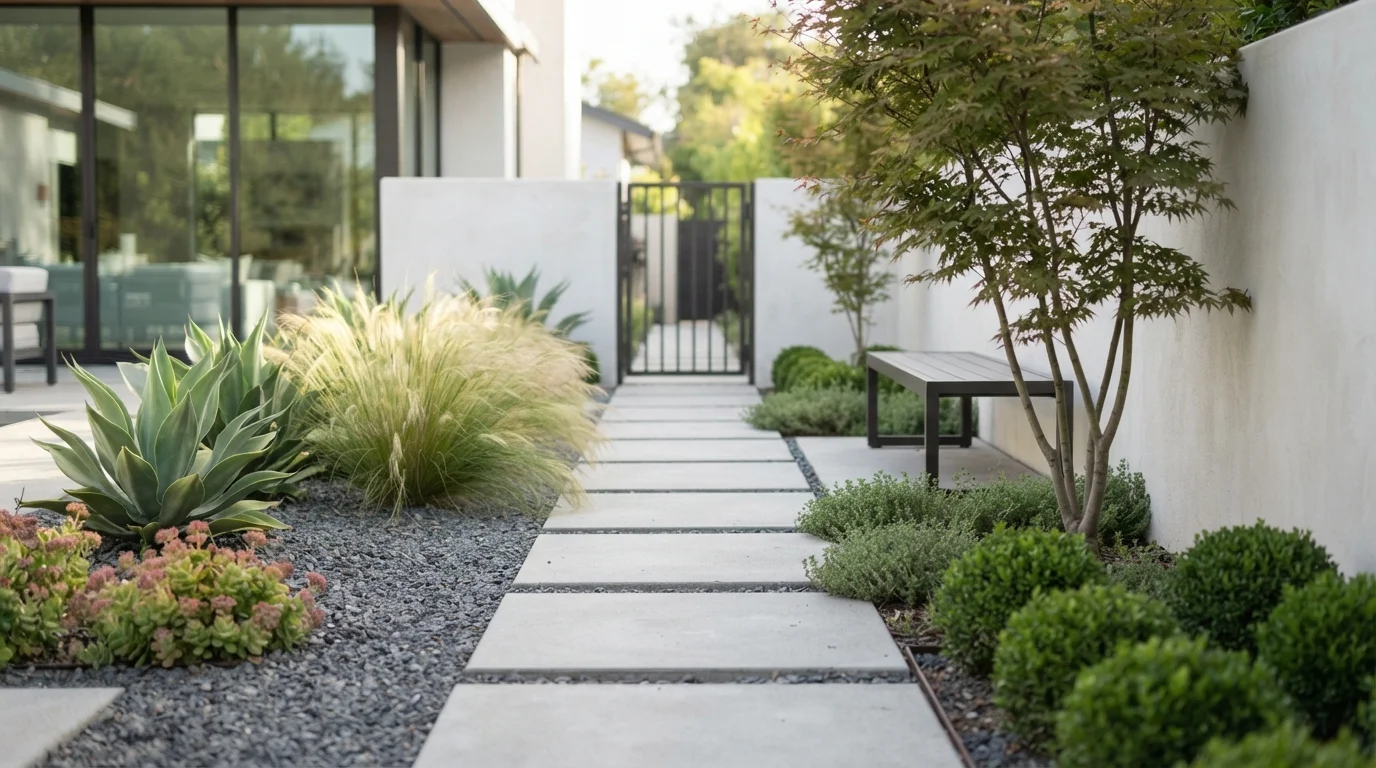
Imagine stepping into your backyard and feeling an immediate sense of calm. No clutter. No endless weeding. Just clean lines, thoughtful greenery, and a space that breathes. This is the power of minimalist garden design—a philosophy that proves less truly is more.
If you are tired of spending every weekend wrestling with overgrown shrubs or fighting an endless battle against weeds, you are not alone. The beauty of a minimalist garden lies in its simplicity and intentionality. It is not about having fewer plants; it is about making every element count.
In this guide, you will learn how to transform your outdoor area into an elegant, low-maintenance sanctuary. We will cover everything from plant selection to hardscaping, ensuring your garden looks stunning without demanding your entire weekend. Let’s start with the core principle behind this style.
Why Choose a Minimalist Garden Design?
Life moves fast. Your garden should be your retreat, not a second job. A minimalist garden design strips away the unnecessary, leaving you with a space that feels open, airy, and incredibly sophisticated.
This approach saves you time, money, and effort. Instead of planting dozens of fussy annuals, you invest in a few high-impact perennials and evergreens. The result is a garden that looks intentional and curated, not neglected. It is perfect for busy homeowners, urban dwellers, or anyone who values peace and quiet over constant maintenance.
For a deeper understanding of how to integrate these outdoor principles with your home’s interior flow, check out our expert advice on home design strategies that complement clean outdoor lines.
Core Principles of a Low-Maintenance, Elegant Outdoor Space
Every great design starts with a solid foundation. For minimalist gardens, three principles guide everything: simplicity, functionality, and harmony.
- Simplicity: Limit your plant palette. Choose two to three types of plants and repeat them in groupings for visual impact.
- Functionality: Every area should serve a purpose—whether it is a seating nook, a path, or a focal point. Eliminate dead zones.
- Harmony: Use consistent materials, colors, and textures. Concrete, gravel, and dark metal create a modern canvas for green foliage.
When you stick to these rules, your garden feels like an extension of your home. It becomes a seamless part of your living space, rather than a chaotic afterthought.
Plant Selection: Less Variety, More Impact
The secret to a low-maintenance garden is choosing the right plants. Forget the crowded flower beds of yesteryears. Minimalist garden design thrives on repetition and structure.
Focus on evergreens like boxwood, dwarf conifers, or ornamental grasses. These plants provide year-round structure without constant pruning. Add a few deciduous shrubs for seasonal interest, such as hydrangeas or smoke bush.
Groundcovers are also your best friend. Instead of battling bare patches of soil, plant creeping thyme, sedum, or mondo grass. They suppress weeds and create a lush, uniform carpet. To make the most of your available area, consider exploring smart space planning techniques that maximize visual openness.
Hardscaping: The Backbone of Your Garden
Hardscaping is where minimalist garden design truly shines. Materials like concrete, gravel, stone, and wood create clean lines and define the space. Think of them as the bones of your garden.
A simple gravel path bordered by steel edging can transform a messy yard into a modern masterpiece. Large concrete pavers for a patio minimize weed growth and require no mowing. Raised planters made of Corten steel or timber add structure and make planting easier.
By reducing the amount of lawn area, you eliminate the need for weekly mowing. Replace turf with decomposed granite or pebble beds. This is not only stylish but also significantly reduces your water bill.
Color Palette and Texture: Creating Visual Interest
Minimalist does not mean boring. The trick is to play with texture and subtle color variations rather than relying on a riot of blooms. This approach keeps the garden looking elegant year-round.
Use a neutral base: think charcoal, slate, warm beige, and white. Against this backdrop, introduce plants with different leaf shapes and textures. Combine the spiky leaves of a yucca with the soft fronds of a fern. Contrast the waxy surface of a magnolia with the fine needles of a pine.
Here is a quick comparison of plant types to use in a minimalist setting:
| Plant Type | Example | Texture | Maintenance Level |
|---|---|---|---|
| Evergreen Shrub | Boxwood | Dense, rounded | Low (prune 1x/year) |
| Ornamental Grass | Feather Reed Grass | Fine, airy | Very low (cut back in spring) |
| Groundcover | Creeping Thyme | Soft, mat-forming | Low (occasional trim) |
| Succulent | Blue Chalksticks | Fleshy, blue-gray | Extremely low |
This curated selection ensures your elegant outdoor space remains beautiful without demanding constant attention. For more inspiration on blending indoor and outdoor aesthetics, take a look at our curated ideas for outdoor living spaces that embrace minimalism.
Maintenance Tips to Keep Your Minimalist Garden Pristine
Even a low-maintenance garden needs a little love. The key is to do less, but do it smarter. Here are actionable tips to keep your space looking high-end with minimal effort.
First, invest in a good drip irrigation system. It delivers water directly to the roots, reduces evaporation, and prevents overwatering. Set it on a timer, and you will only need to check it seasonally.
Second, mulch everything. A 2-inch layer of bark, gravel, or pebbles suppresses weeds, retains moisture, and gives a polished, uniform look. Top it up once a year. Third, keep hardscaping clean. A simple sweep or a quick rinse with a hose makes the entire garden look freshly designed.
Finally, prune with purpose. Only remove dead or crossing branches. Let your plants maintain their natural shape. Over-pruning wastes time and ruins the effortless aesthetic you are aiming for. For foundational advice on shaping your entire property, the garden design resources available on our site offer deeper insights.
Frequently Asked Questions (FAQ)
1. Is a minimalist garden expensive to create?
Not necessarily. The initial investment in quality hardscaping and fewer, larger plants can be similar to a traditional garden. However, you save money long-term on water, fertilizer, and plant replacements.
2. Can I have a minimalist garden in a small space?
Absolutely. Minimalist garden design is perfect for small yards, patios, and balconies. It uses vertical elements and clean lines to make the space feel larger.
3. What are the best materials for a minimalist look?
Concrete, natural stone, gravel, and weathered steel are top choices. They age beautifully and require very little upkeep. Avoid anything too ornate or plastic.
4. How do I add color without high maintenance?
Use colorful containers, textured foliage, or a single flowering shrub like a compact azalea. Avoid large mixed flower beds. A pop of color from a decorative pot is easy to change and maintain.
5. Do I need a professional designer for this style?
Not at all. The principles are simple: reduce, repeat, and use hardscaping. Start with a small area, like your front entrance, and apply the rules. You will see the difference immediately.
6. Is a minimalist garden environmentally friendly?
Yes. Fewer plants mean less water consumption. Using native plants, permeable paving, and reducing lawn area are all eco-friendly. For a reliable source on sustainable gardening techniques, the HomeGarden resource offers a comprehensive guide to eco-conscious landscaping.
7. Will my garden look bare in winter?
Not if you plan it well. Evergreen shrubs, ornamental grasses, and hardscape structures provide winter interest. The clean shapes of bare branches against a crisp sky are part of the minimalist beauty.
8. How do I deal with weeds in a minimalist garden?
Prevention is key. Use a heavy layer of mulch or gravel, install landscape fabric under hardscaping, and regularly sweep paths to prevent seed germination. Hand-pull any weeds you see immediately.
Conclusion: Your Path to an Effortlessly Elegant Garden
Minimalist garden design is more than a trend—it is a lifestyle shift. It gives you back your weekends while surrounding you with breathtaking simplicity. By choosing fewer, better elements, you create a space that feels expansive, serene, and deeply personal.
Start small. Pick one corner of your yard or your front porch. Apply the principles of clean lines, repeated textures, and low-maintenance plants. You will be amazed at how quickly a little restraint transforms your environment. For more stories and inspiration on this journey, visit our home and garden blog.
Your elegant, low-maintenance oasis is waiting. All it takes is a simple plan and the courage to edit.