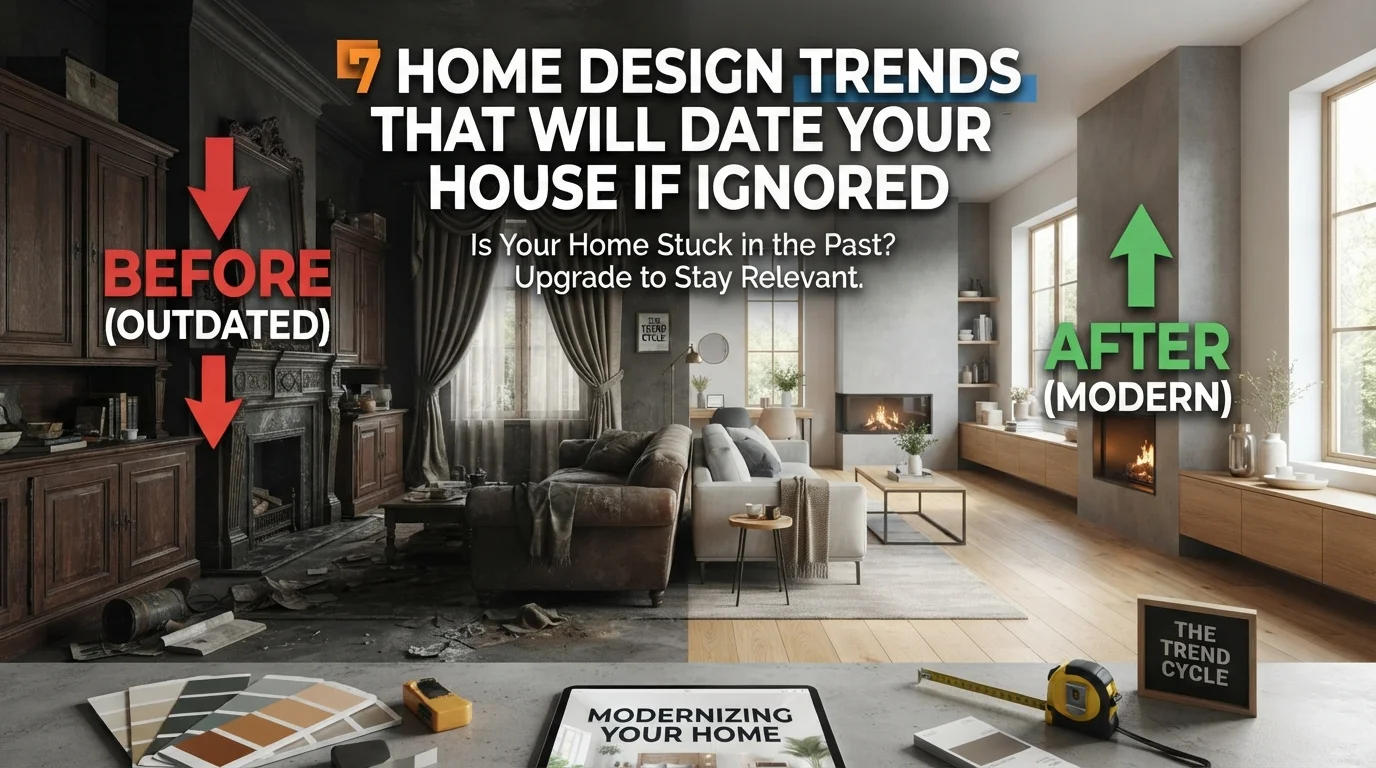
Your home should tell a story—but not one that screams “2008.” Design trends shift faster than most of us realize, and the choices you made five or ten years ago might now be silently dragging your property value down. I’ve spent years studying how small design decisions impact long-term appeal, and trust me: some trends age your house faster than a leaky roof. The good news? You don’t need a full renovation. You just need to know what to watch out for.
In this article, I’ll break down seven common home design trends that will date your house if you ignore them. We’ll cover practical fixes, modern alternatives, and why these shifts matter for both your daily enjoyment and your home’s resale value. Let’s get your space back on track.
1. All-Gray Everything: The Era of Total Neutrals
Gray was the reigning champion of the 2010s. Gray walls, gray floors, gray cabinets, gray furniture. But designers have moved on, and so have buyers. Walking into an all-gray room now feels cold and institutional, like a dentist’s waiting room.
The problem is depth—or the lack of it. Gray absorbs warmth and makes every room feel flat, no matter how much natural light you have. Instead of painting every surface gray, try mixing warm whites, soft beiges, or earthy greens. These tones add dimension and make your space feel alive. If you still love gray, use it as an accent in textiles or tiles, not as the main event.
If you’re planning a bigger update, check out our space planning strategies to reimagine your room’s layout without relying on a single color palette.
2. Matchy-Matchy Furniture Sets
Remember when living rooms came as a full set—sofa, loveseat, armchair, and ottoman all from the same collection? That look is officially out. It makes a room feel like a showroom, not a home. People crave personality and layers today.
Think about it: your grandmother’s perfectly matched parlor felt stiff, and the same thing happens with modern sets. The fix is simple. Mix and match pieces with complementary textures, different wood tones, or contrasting fabric weights. A velvet sofa with linen armchairs and a reclaimed wood coffee table tells a much richer story.
For more ideas on creating layered interiors, visit our home design inspiration hub.
3. Open Shelving in the Kitchen (No, Really)
Open shelving exploded on Pinterest, but the reality is messy. Unless you keep your dishes perfectly styled and dust them weekly, open shelves quickly look cluttered and dated. I’ve seen kitchens where the shelves are just holding dust and mismatched mugs.
Instead, consider upper cabinets with glass fronts or a mix of closed storage with a small open shelf for a few curated objects. This gives you the display option without the daily maintenance headache. A clean kitchen with minimal visual noise always feels more modern.
4. Builder-Grade “Hollywood” Bathroom Lighting
That long fluorescent bar with exposed bulbs above your bathroom mirror? It’s called “Hollywood lighting,” and it was popular in the 1930s and again in the 1990s. It’s back—and not in a good way. This lighting casts unflattering shadows and instantly ages your bathroom.
Swap it for sconces placed at eye level on either side of the mirror. This provides even, flattering light for shaving or makeup. If you have a single fixture, choose a modern backlit mirror or a frosted globe fixture. Good lighting is the easiest upgrade you can make, and it instantly removes that dated look.
5. Over-The-Top Accent Walls (Especially Stone or Brick Veneer)
Accent walls aren’t dead, but the version from 2014—stacked stone veneer, painted red feature walls, or dark wood panels—feels heavy and tired. These walls dominate a room rather than complement it, making the space feel smaller and older.
The modern approach is texture, not drama. Try a subtle limewash paint, vertical shiplap in a soft white, or a wallpaper with a small-scale pattern. These add interest without screaming for attention. Want something bold? Use art and furniture instead.
If you’re also rethinking your exterior, our outdoor living guides can help you connect your indoor and outdoor styles seamlessly.
6. Carpet in Every Room (Especially Bathrooms and Kitchens)
Wall-to-wall carpet in bedrooms is still cozy and acceptable. But carpet in bathrooms, kitchens, or dining rooms? That’s a relic of the 1980s. It traps moisture, stains easily, and screams “outdated” to anyone who walks in.
Replace bathroom carpet with luxury vinyl plank (waterproof, comfortable underfoot) or heated tile. For kitchens, choose hardwood, engineered wood, or large-format tile that’s easy to clean. In dining rooms, area rugs over hard flooring give you warmth and style without the permanence of carpet.
7. Unnecessarily Open Floor Plans (Zero Definition)
Open floor plans were the holy grail for years, but the pendulum has swung back. The problem? No walls mean no separation—no visual cue that you’re leaving the kitchen and entering the living room. This leads to visual chaos, sound bouncing everywhere, and a space that feels like a warehouse.
Today’s designers use partial walls, half-walls, furniture placement, and changes in ceiling height or flooring material to define zones. You don’t need to close everything off, but a little structure makes a home feel intentional. A floating sofa, a slim console table, or a change in floor texture can create that separation without sacrificing openness.
For more on balancing openness with coziness, read our latest blog posts on layout trends.
How to Pivot Without Renovating Your Entire Home
You don’t have to gut your house. Start small: buy new light fixtures, swap out two furniture pieces, or paint one room in a warm neutral. Even changing your throw pillows and curtains to modern textures (linen, velvet, wool) makes a difference.
If you want a deep dive into materials and sustainable choices, this excellent resource on home and garden improvements covers everything from flooring to outdoor spaces with expert-level detail.
Quick Reference: Old vs. New Design Choices
| What’s Dating Your House | Modern Alternative |
|---|---|
| All-gray color schemes | Warm neutrals + earthy greens |
| Matchy-matchy furniture sets | Mix of textures and eras |
| Open kitchen shelving everywhere | Glass-front cabinets + one curated shelf |
| Hollywood bathroom lighting | Side sconces or backlit mirrors |
| Heavy stone or painted accent walls | Subtle texture like limewash or soft wallpaper |
| Carpet in bathrooms/kitchens | Waterproof vinyl or tile + area rugs |
| Totally open floor plan | Zoned with furniture, partial walls, or flooring changes |
Why These Trends Matter for Your Home’s Value
Buyers (and guests) notice these details. A home that feels stuck in the past sells for less and takes longer to move. But more importantly, you live there. You deserve a space that feels current, comfortable, and personal. Small upgrades like switching out dated lighting or painting an accent wall can transform how you feel every single day.
The trick is knowing which trends to follow and which to skip. Not every trend is worth chasing, but ignoring the seven we covered today will quietly date your home. The best approach? Choose classic bones—good layouts, quality materials—and update the cosmetic layers (paint, hardware, textiles) every 5 to 7 years.
Frequently Asked Questions
1. Is gray completely out of style in 2025?
Not entirely, but it’s no longer the default. Warm grays paired with wood and beige are acceptable. Cool, sterile grays are what feel dated. Mix in warm tones to keep it fresh.
2. Can I keep my open kitchen shelves if I style them well?
You can, but you’ll need to be disciplined. Everything must match, be organized, and dusted weekly. For most people, closed storage is more practical and looks cleaner.
3. What’s the most cost-effective way to update my home’s look?
Paint and lighting. A fresh coat of paint in a warm neutral or soft earthy tone, plus modern light fixtures, gives the biggest bang for your buck.
4. Are shiplap walls still in style?
Horizontal shiplap in a crisp white is still acceptable, especially in coastal or farmhouse styles. But vertical shiplap or wide planks feel more current. Avoid painting it dark colors.
5. What flooring is best for avoiding a dated look?
Engineered hardwood, luxury vinyl plank, and large-format porcelain tile are timeless choices. Avoid small mosaic tiles (except in showers) and wall-to-wall carpet outside of bedrooms.
6. How do I add personality without making my home look outdated?
Use art, plants, books, and textiles. These are easy to swap. Keep your walls and floors neutral, and let your accessories bring the color and character.
7. Should I follow every new trend I see on social media?
No. Pick trends that match your home’s architecture and your lifestyle. A trend that works in a loft apartment won’t work in a suburban ranch. Stick to timeless bones and layer in trends with small, replaceable items.
Final Thoughts: Don’t Let Your House Fall Behind
Design trends are tools, not rules. But ignoring the major shifts—like all-gray schemes, matchy furniture, or carpet in bathrooms—will quietly date your home. The goal isn’t to chase every Instagram fad; it’s to make intentional choices that keep your space feeling fresh and welcoming for years to come.
Start with one room. Swap a light fixture. Replace a piece of furniture. Paint a wall. Small changes add up, and your home (and your wallet) will thank you. For more inspiration, don’t forget to explore our garden design ideas to extend that modern feel outdoors.